Use & Dosage
CBD in food: dosage and safety explained
By Vapor Spirit Fachteam
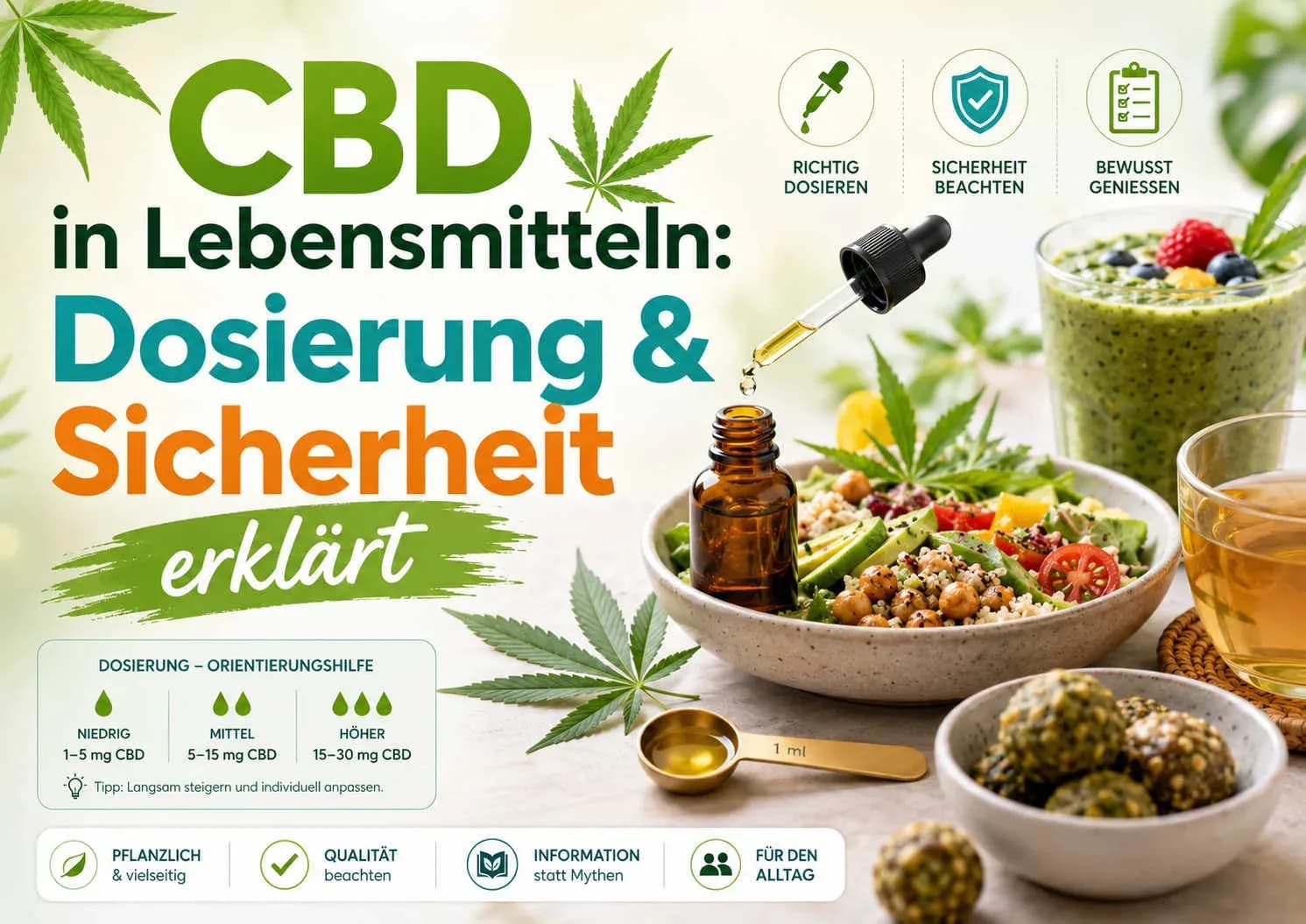
CBD is ending up in food more and more often – in drinks, cooking oils, chocolate or functional snacks. In short: CBD taken in through food takes effect with a delay (usually after 30 to 90 minutes), but lasts longer and more evenly than oil under the tongue. There is no universal dosage – the principle is to start low and increase slowly. In Switzerland, CBD foods are legal as long as the THC content is below 1 percent and the requirements of food law are met. This article puts effects, dosage, safety and the legal situation into context objectively.
What is CBD and why is it ending up in food?
CBD is a naturally occurring compound from the hemp plant. Unlike THC, it is not psychoactive – it does not cause a high. Manufacturers use cannabidiol in food because many consumers hope it will bring relaxation in everyday life or a boost in well-being. On top of this comes the trend towards functional foods – products that promise a benefit beyond pure nutritional value.
Compared with classic CBD oils, which are dropped under the tongue, foods are easier to integrate into familiar routines: a tea in the morning, a bar in the afternoon, a few drops of hemp oil on a salad.
What types of CBD foods are there?
The range is now wide. The following overview categorises the most common types:
Product type | Examples | Special feature |
Drinks | Hemp tea, wellness drinks, shots | Easy to dose, no counting of drops |
Cooking oils | Hemp cooking oil, enriched oils | For cold dishes, not for heating |
Confectionery | Gummy bears, chocolate, pralines | Popular, but CBD content often low |
Capsules and powders | Dietary supplements | Fixed dose per unit |
Functional foods | Bars, snacks with additional claims | Check the declaration particularly carefully |
Good to know: depending on the product type, the bioavailability – that is, how much CBD actually reaches the body – and the time until the effect begins can differ considerably. You can find details specifically on drinks in the article CBD drinks in Switzerland.
How does CBD work when you eat or drink it?
When CBD enters the body through food, it takes a different route than when it is vaporised or used under the tongue. It passes through the digestive tract and is first metabolised by the liver – experts call this the first-pass effect. Only after that does the active ingredient enter the bloodstream.
This results in three typical characteristics: a delayed onset of effect of usually 30 to 90 minutes, a longer duration of effect than with inhaled forms, and a gentle, even course without an abrupt onset. This form is particularly suitable for people who prefer a long-lasting, mild effect to a fast one.
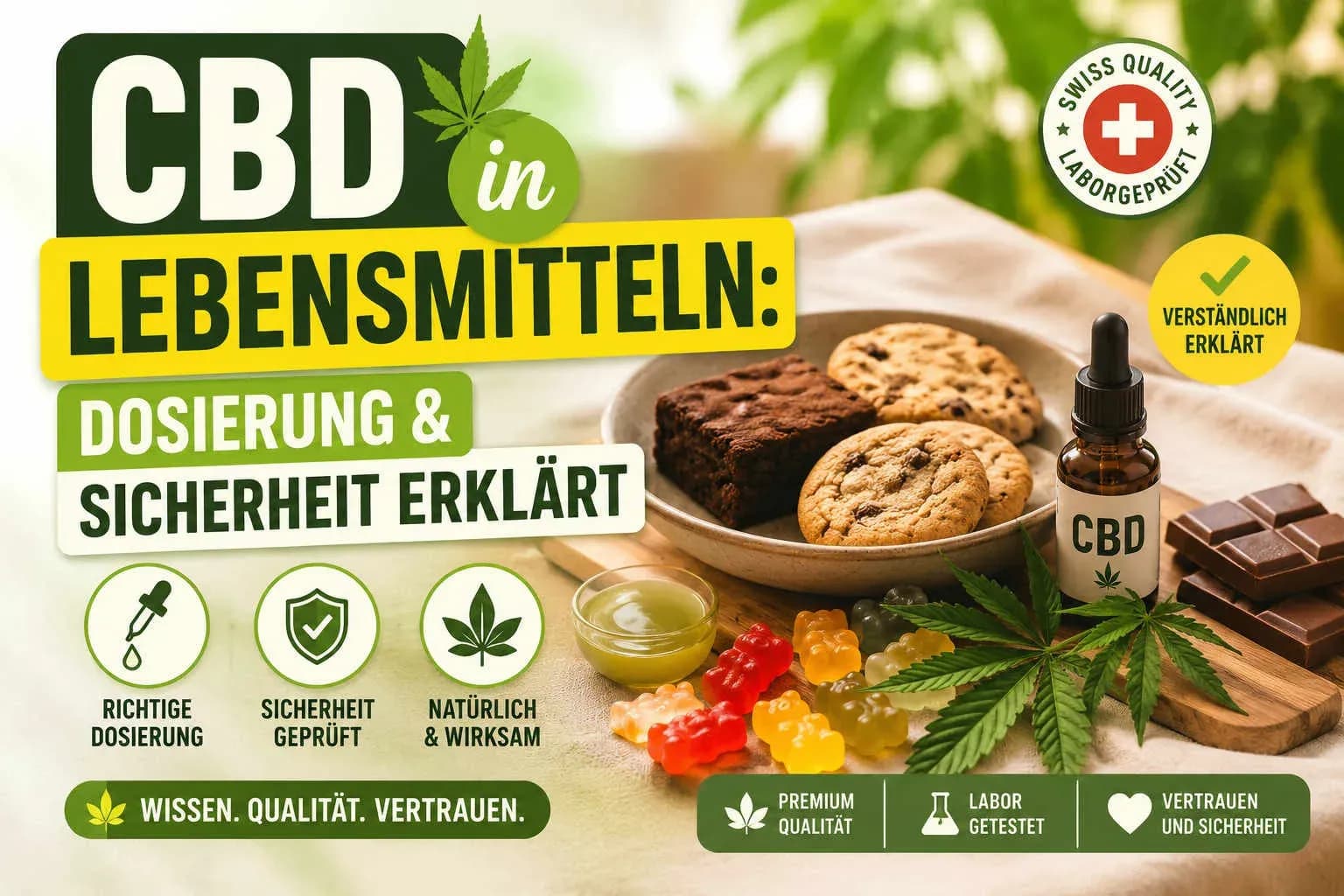
CBD dosage in food: what matters
A universal dosage recommendation cannot be given responsibly. How much CBD makes sense depends on body weight, personal sensitivity to cannabinoids, the CBD concentration in the product, metabolism and frequency of use.
Instead of a fixed number, a simple principle applies: start carefully. Because the effect only becomes noticeable after a while, it is tempting to take more too early – a classic mistake. If you take more too quickly, you risk unnecessary side effects. Approaching it slowly, on the other hand, helps you find your personal comfortable dose. A detailed guide is available in the guide to CBD oil dosage and intake.
Is CBD in food safe?
The World Health Organization (WHO) generally considers cannabidiol to be well tolerated. This does not mean that side effects are ruled out – they can occur, especially with larger amounts. Possible but rarely observed side effects include tiredness or sluggishness, a dry mouth, gastrointestinal complaints and changes in appetite. As a rule, these effects depend on the dose and disappear as soon as the amount is reduced.
Interactions with medication
CBD can influence liver enzymes that are responsible for breaking down certain medicines. This particularly concerns blood thinners, antidepressants, painkillers and sedatives. If you take medication regularly, you should seek advice from a doctor or pharmacist before consuming CBD foods. An overview is provided in the article CBD and interactions with medication.
Legal situation in Switzerland
In Switzerland, CBD products are generally legal according to the Federal Office of Public Health (BAG) – provided the THC content is below 1 percent. For use in food, additional food law requirements of the Federal Food Safety and Veterinary Office (BLV) apply. Depending on the product, a novel food assessment or a special authorisation may be required.
Quality criteria for high-quality CBD foods
When shopping, it is worth checking five points: traceable origin of the hemp used, independent analyses from a third-party laboratory, transparent declaration of all ingredients, gentle processing such as CO2 extraction, and clear, verifiable manufacturer information. How to read a certificate of analysis is explained in the article on CBD laboratory analysis. Especially with regular intake, quality is not a detail but decisive.
CBD in food compared with other forms of intake
Which form is right depends on the goal: a fast, short-term effect or an even course over several hours. The overview compares the common forms:
Form of intake | Onset of effect | Duration of effect | Route of absorption |
Food & drinks | 30–90 minutes | long | Digestive tract, first-pass |
CBD oil, sublingual | 15–45 minutes | medium | Oral mucosa |
CBD capsules | 45–90 minutes | long | Digestive tract |
CBD Vape | a few minutes | short | Lungs |
Our selection includes, among other things, our CBD oil, the THC-free CBD oil and CBD Vapes.
Common mistakes when consuming CBD foods
The same pitfalls come up again and again: too high a starting dose, taking more too early, a lack of information about product quality and not enough patience while waiting for the effect. A conscious, informed approach is the most important factor for a good experience.
Conclusion:
Used correctly, CBD foods can be an uncomplicated addition to everyday life. What matters are realistic expectations, a dosage adapted to your own body, high-quality products with a certificate of analysis and attention to possible interactions. You can find our laboratory-tested range in the CBD shop.
Frequently asked questions about CBD in food
What does CBD in food mean?
The term describes products in which cannabidiol is integrated as an ingredient into drinks, oils or other edible products. These are not medicinal products, but foods or novel food categories.
Is CBD in food permitted in Switzerland?
CBD products are permitted in Switzerland provided the THC content is below 1 percent. For foods, food law regulations also apply, and depending on the product, possibly a novel food assessment.
How does CBD work when it is taken in through food?
After consumption, CBD passes through the digestive tract and is metabolised in the liver. The effect therefore begins with a delay, usually after 30 to 90 minutes, and lasts longer.
Is there a recommended dosage for CBD in food?
A universally valid amount cannot be given. Body weight, personal sensitivity and the CBD concentration in the product all play a role. The usual approach is to start with a low amount and adjust slowly if needed.
Can CBD in food have side effects?
International assessments generally classify CBD as well tolerated. In individual cases, tiredness, gastrointestinal complaints or changes in appetite are possible, especially with larger amounts.
Can CBD interact with medication?
Yes. CBD can influence enzymes involved in breaking down certain medicines. If you take medication regularly, professional advice beforehand is recommended.
How does CBD in food differ from CBD oil?
CBD from food is absorbed through the digestive tract and takes effect with a delay, but usually lasts longer. CBD oil is used sublingually and works faster.
Can you use CBD oil for cooking?
CBD oil is suitable for cold dishes, for example in salads or smoothies. Strong heating should be avoided, as cannabinoids are sensitive to heat.
Note: This article is intended solely for general information and does not constitute medical advice. Cannabidiol (CBD) is not a medicinal product; no promises of healing or health benefits are made. In the case of health complaints, during pregnancy and breastfeeding or when taking medication, a medical professional should always be consulted. The legal information refers to Switzerland. Sold to adults only. Last reviewed: July 2026.
Categories