Effects & Health
CBD and the liver: side effects, metabolism and current studies
By Vapor Spirit Fachteam
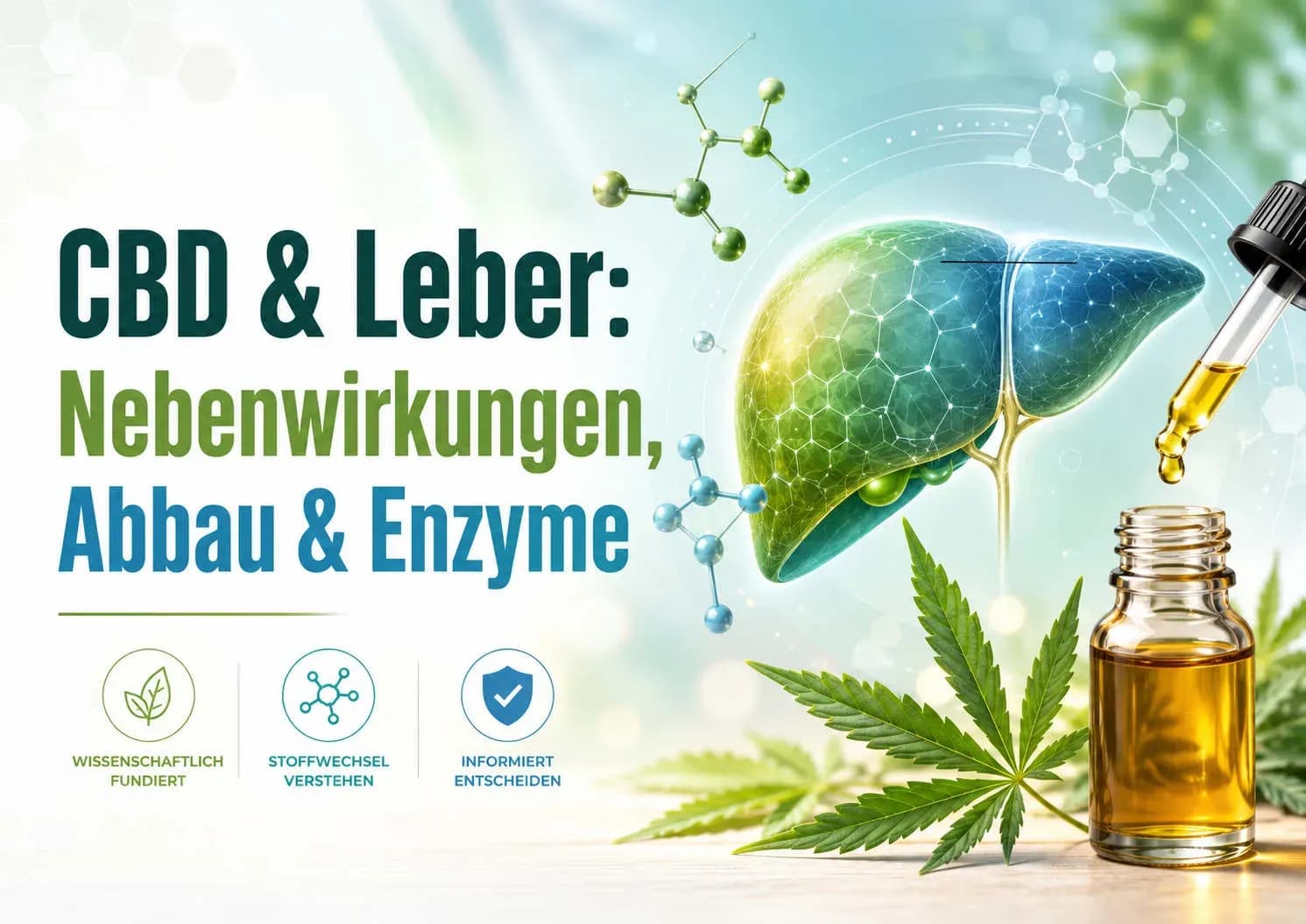
The liver is the central metabolic organ of the human body. It breaks down, converts and eliminates substances – from nutrients and alcohol to medicines and plant compounds. Cannabidiol, CBD for short, is also processed this way. That is exactly why the same questions keep coming up about CBD and the liver: How is CBD broken down in the liver? Is CBD harmful to the liver? Which CBD side effects affect the liver – and from what amount?
This article puts the evidence into objective context: what clinical studies actually measured, where caution is advised and where common claims go beyond what the data support.
Medical notice: This article is for general information only and does not replace medical advice. CBD products are not medicines and are not recommended here for the treatment, prevention or cure of liver diseases. No dosage recommendations are given. People with existing liver disease, elevated liver values or who take medication regularly should consult a medical professional before taking CBD.
CBD and the liver: the key facts at a glance
Question | Short answer |
How is CBD broken down? | Via cytochrome P450 enzymes in the liver, mainly CYP3A4, CYP2C19 and CYP2C9. |
Does CBD inhibit these enzymes? | Yes, depending on the dose and temporarily. Technically: enzyme inhibition, not blockage. |
Are elevated liver values documented? | Yes, at high doses. In an FDA study in 2025 in 5,6 % of participants, in the placebo group in 0 %. |
From what amount? | Documented from about 5 mg/kg body weight daily, i.e. around 250–550 mg per day over several weeks. |
Is CBD harmful to the liver? | There is no general answer. What matters are dose, duration, pre-existing conditions and medication use. |
What is the greater risk? | Interactions with medicines that are broken down by the same enzymes. |
When should you seek medical advice? | With liver disease, elevated liver values, medication use, pregnancy and breastfeeding. |
How is CBD processed in the liver?
After oral intake, cannabidiol reaches the liver via the gastrointestinal tract and is metabolised there before it enters the bloodstream. This process is called the first-pass effect and explains why, with CBD oil, it is often recommended to hold the drops under the tongue for a short time – part of it then enters the circulation directly through the oral mucosa and bypasses the first pass through the liver. How quickly and how strongly the effects of CBD set in therefore depends largely on the form of use; more on this in the article CBD duration of effect.
CBD metabolism in the liver: cytochrome P450 enzymes
Enzymes of the cytochrome P450 family, CYP450 for short, are responsible for breaking down CBD. They are located mainly in liver cells and handle most of the metabolism of foreign substances. For cannabidiol, three of them play a particular role:
Enzyme | Breaks down, among others | Relevance for CBD |
CYP3A4 | A very large share of all common medicines, statins, immunosuppressants | Main pathway of CBD metabolism, most common cause of interactions |
CYP2C19 | Acid blockers, some antidepressants, clobazam | Relevant for combinations with antiepileptic drugs |
CYP2C9 | Anticoagulant substances such as warfarin | Relevant when blood thinners are taken at the same time |
Via these enzymes, cannabidiol is converted into breakdown products, including 7-hydroxy-cannabidiol, which are then eliminated via the kidneys and bile. THC and CBD as well as numerous medicines partly use the same metabolic pathways – this is the starting point for practically all relevant interactions.
Does CBD prevent or inhibit metabolic enzymes in the liver?
This question is asked often, and the common phrasing “CBD prevents metabolic enzymes in the liver” is not quite accurate from a scientific point of view. Enzymes are not prevented – they are inhibited. The technical term is enzyme inhibition.
The difference is more than a matter of wording. An inhibited enzyme works more slowly; it does not stop working. The practical consequence: a substance that is normally broken down by exactly this enzyme stays in the body longer and can accumulate more than intended. With medicines that have a narrow therapeutic window, this can noticeably increase their effect – which is why caution is advised when taking CBD together with certain medicines.
Important for context: this inhibition is dose-dependent. It is documented mainly at higher dosages, such as those used in therapy with pharmaceutical cannabidiol. With very small amounts from over-the-counter CBD-containing products, the effect is correspondingly smaller.
CBD side effects on the liver: what current studies show
For a long time, the discussion relied almost entirely on studies with medical cannabis or with high-dose, prescription cannabidiol used in epilepsy treatment. There, at dosages of 10 to 20 mg per kilogram of body weight, some patients showed elevated liver values – particularly often in combination with the antiepileptic drug valproate. The objection was obvious: these amounts have little to do with what consumers usually take.
The FDA study with 201 healthy adults (JAMA Internal Medicine, 2025)
This gap was closed by a randomised clinical trial funded by the US Food and Drug Administration (FDA) and published in JAMA Internal Medicine in July 2025. It specifically examined CBD in healthy adults – at an amount at the upper end of the range that users of over-the-counter products actually report.
The study design in brief:
Parameter | Details |
Publication | JAMA Internal Medicine, 7 July 2025 (Florian J. et al.), funded by the US FDA |
Participants | 201 healthy adults, 18 to 55 years |
Study design | Randomised, double-blind, placebo-controlled |
Dosage | 5 mg CBD per kg body weight daily (2,5 mg/kg twice daily) |
Absolute daily amount | Around 250 mg to 550 mg, depending on body weight |
Duration | 28 days, weekly blood samples, follow-up on day 35 |
Test substance | Pure CBD as a pharmaceutical oral solution |
Result | In 5,6 %, ALT or AST rose to more than three times the upper limit of normal; placebo group 0 % |
Course | No serious events, values returned to normal, no hormonal changes |
Limitations | Short duration, no older participants, no data on lower doses |
Based on the participants' body weight, this corresponded to a daily intake of around 250 mg to 550 mg of cannabidiol. For comparison: depending on concentration and use, over-the-counter CBD oils often provide in the range of 20 mg to 50 mg daily; 200 mg or more per day is already well above typical consumption.
The result
In 5,6 percent of participants in the CBD group, the liver values ALT or AST rose to more than three times the upper limit of normal. In the placebo group, this did not occur in anyone. No serious events were reported, and the values returned to normal. No changes were seen in endocrine hormones.
The study authors and an accompanying expert commentary drew a clear conclusion: doctors should specifically ask about CBD use when liver values are elevated without explanation. As limitations, the authors cite the short study duration, the exclusion of older people and the lack of data on lower doses and long-term use.
What this study shows – and what it does not: Studies show that high CBD doses have a measurable effect on liver values in a small proportion of healthy adults. They do not show that CBD in typical amounts would damage the liver – lower doses were not tested at all in this study. In addition, elevated enzyme values are a warning sign, not liver damage.
Is CBD harmful to the liver?
There is no general answer, and any definitive answer in one direction or the other would not be credible. Whether CBD has a harmful effect depends strongly on several factors at once: the CBD dosage, the duration of use, the condition of the liver, pre-existing conditions and, above all, whether medicines are taken at the same time.
What can reasonably be concluded from the data:
• At high amounts and over longer periods, an effect on liver values is measurable and documented.
• For lower doses, as typical for most over-the-counter CBD products, reliable data in either direction are lacking.
• The far more common risk factor is not CBD alone, but its combination with certain medicines.
• Elevated liver values usually cause no noticeable symptoms and only show up in blood tests.
If you take larger amounts regularly and over a longer period, you can have your liver values checked as part of a routine blood test. A general overview of other possible effects can be found in the article CBD oil side effects.
CBD effect on the liver: are there protective effects too?
Some research points in the opposite direction. In cell culture and animal models, antioxidant and anti-inflammatory modulating properties have been described for cannabidiol. Among other things, researchers examined whether oxidative stress in liver tissue can be reduced – a process that plays a role in various types of liver strain.
Individual preclinical studies suggest that CBD can show protective effects under certain experimental conditions. Such effects are partly mediated by the endocannabinoid system, a regulatory system of the body that is involved in inflammatory processes, metabolism and pain processing. How the individual plant compounds interact is described in the article on the entourage effect.
Context: These findings come overwhelmingly from cell and animal experiments. They cannot be transferred to humans and do not justify any recommendation for use. CBD products are not medicines and are not intended for the treatment of liver diseases.
Interactions of CBD with certain medicines
Because cannabidiol and many medicines use the same metabolic pathways in the liver, this is the most important practical point of the whole topic – more relevant than the question of direct strain on the liver. Consulting a doctor is particularly important with:
Drug class | Examples | Why it matters |
Antiepileptic drugs | Clobazam, valproate | Best-documented combination; in studies, elevated liver values occurred particularly often with valproate |
Blood thinners | Warfarin | Effect may be increased, risk of bleeding rises |
Sedatives | Benzodiazepines | Sedative effect may be increased |
Antidepressants | SSRIs such as citalopram | Metabolised via CYP2C19, concentration may increase |
Immunosuppressants | After organ transplantation | Narrow therapeutic window, level monitoring required |
Statins | Cholesterol-lowering drugs | Metabolised via CYP3A4, risk of side effects may increase |
Opioid painkillers | Various | Increased effect possible |
More detail on individual groups: CBD and blood thinners.
A practical rule of thumb from pharmacology helps with a first assessment: if the package leaflet contains a warning about grapefruit, the substance is very likely broken down by the same CYP enzymes that cannabidiol also uses. In that case, it is advisable to seek medical advice before taking CBD.
For more in-depth information: CBD interactions with medicines and How CBD can affect medicines.
Alcohol and CBD
Alcohol is also broken down by the liver and, regardless of cannabidiol, is by far the most relevant factor for liver health. Regular consumption puts direct strain on the organ. If you want to protect your liver, you will achieve far more by starting here than with the question of CBD. A comparison can be found under CBD, nicotine or alcohol.
CBD dosage and the liver: why the amount matters
The common thread running through all the studies is the dose. The documented effects on liver values consistently concern the upper range – 5 mg/kg body weight and more, i.e. several hundred milligrams daily over weeks. Much lower amounts, such as those resulting from typical use of CBD oils, have so far hardly been studied systematically in this context.
Order of magnitude | Daily amount | Data on liver values |
Typical use of over-the-counter oils | about 20–50 mg | Hardly studied systematically |
Higher consumption range | about 200 mg and more | Above typical consumption, little data |
Study dose FDA trial 2025 | about 250–550 mg (5 mg/kg) | Elevated values in 5,6 % over 28 days |
Therapeutic epilepsy dose | 10–20 mg/kg | Elevated liver values documented, especially with valproate |
This is not a free pass, but it does suggest a sensible priority: if you keep an eye on the amount, you address exactly the factor that was decisive in the studies. Specific information on concentration and use can be found in the articles CBD oil dosage and How to take CBD oil correctly. Vapor Spirit does not give individual dosage recommendations – these belong in the hands of a doctor.
Does the form of use play a role?
Yes, a considerable one. How much the liver metabolism is involved at all depends on the route by which cannabidiol enters the body:
Form of use | Route of absorption | First-pass effect | Load on liver metabolism |
Oral intake (oil, drops, capsules) | Gastrointestinal tract | Complete | High – the liver processes the largest share |
Sublingual use | Oral mucosa and gastrointestinal tract | Partly bypassed | Medium |
Inhalation (vape, flower, hash) | Lungs | Largely bypassed | Low |
External use (cosmetics) | Skin | Bypassed | Very low – hardly any systemic absorption |
Related product pages: CBD oil, CBD Vape, CBD flower, CBD hash and CBD Cosmetics.
For people who want to put as little load as possible on their liver metabolism, external use is therefore the obvious option. With a sensitive stomach, the carrier substance can also play a role – more on this under Hemp oil and CBD oil for stomach complaints.
When is special caution advised?
In the following situations, the use of CBD-containing products should be discussed with a doctor beforehand:
• with existing liver diseases such as fatty liver, hepatitis or cirrhosis
• with already elevated liver values or unclear blood test results
• with regular use of medicines, especially the groups listed above
• with regular alcohol consumption
• when planning to use high CBD doses over a longer period
• during pregnancy and breastfeeding
• in children and adolescents
The reason is not that harm has been established – but that in these situations the individual circumstances determine the assessment, not a general text.
Legal situation in the DACH region
The legal treatment of CBD differs considerably within the German-speaking region – not in terms of the substance itself, but in terms of limit values, product categories and distribution channels. This is indirectly relevant to the question of the liver: how a product is classified determines which quality and labelling requirements apply to it.
Country | THC limit | Classification of oral CBD products | Special feature |
Switzerland | 1 % | Depending on intended purpose, commodity, cosmetic, food or medicine | Highest limit in the DACH region |
Germany | 0,3 % | Novel food without completed EU authorisation, mostly sold as an aroma or cosmetic product | THC limit raised from 0,2 % to 0,3 % since the KCanG |
Austria | 0,3 % | Novel food, mostly sold as an aroma or care product | Dried CBD flower assigned to the tobacco monopoly |
Liechtenstein | Based on CH | Based on Swiss practice | Customs treaty with Switzerland, also an EEA member |
Switzerland
In Switzerland, CBD products are legally available as long as the THC content is below the legal limit of 1 % and the other requirements are met. Swissmedic points out that CBD products are classified differently under the law depending on their composition, intended purpose and advertising – as a commodity, cosmetic, food or medicine. The Swiss limit is therefore considerably higher than in the neighbouring EU countries.
Germany
In Germany, since the Consumer Cannabis Act (KCanG), a THC limit of 0,3 % in dry matter applies to industrial hemp and flower; previously it was 0,2 %. Cannabidiol itself is not a narcotic within the meaning of the BtMG (Narcotics Act). At the same time, however, EU law applies: CBD extracts for oral intake are considered novel foods under the Novel Food Regulation, and no completed EFSA authorisation exists so far. This is why CBD oils in Germany are mostly placed on the market as aroma, wellness or cosmetic products rather than as food.
Austria
In Austria, possession and consumption of CBD are legal for adults, and the THC limit of 0,3 % follows the EU rules. The novel food approach corresponds to the German one: CBD oils are mostly sold as aroma or care products. A special Austrian feature concerns dried CBD flower – it has been assigned to the tobacco monopoly and is therefore primarily reserved for tobacconists (Trafiken).
Liechtenstein
Liechtenstein is closely linked to Switzerland through the customs treaty and is at the same time part of the EEA. In practice, its approach is strongly based on the Swiss rules. In any case, the national provisions currently in force are decisive.
Important for cross-border orders: A product that is legal in Switzerland with up to 1 % THC does not meet German and Austrian requirements. For customers from Germany and Austria, Vapor Spirit offers a separate range designed for the EU limits. This information does not replace legal advice and may change – the national rules in force at the time are decisive.
For the EU: CBD shop Europe, CBD oil for Germany and Austria, CBD oil without THC (EU) and CBD flower and hash for the EU. For the distinction between over-the-counter products and medical cannabis, see Is CBD classified as a medicine?; more answers in the CBD FAQ.
Quality as a safety factor
If metabolism runs through the liver, what else the product contains besides cannabidiol is crucial. Solvent residues, pesticides or heavy metals put additional strain on the metabolism – and are a real issue with unregulated products. Useful criteria:
• traceable origin and cultivation
• clear labelling of CBD and THC content
• laboratory analyses or proof of quality
• clean extraction methods, such as CO₂ extraction
• no exaggerated promises of effects
• compliance with the limits applicable in the respective country
The Vapor Spirit range includes, among other things, CBD oil, organic CBD oil without THC, CBD tincture drops, CBD isolate and CBD Cosmetics. A comparison of the oils is provided by the CBD oil comparison.
Conclusion
CBD is broken down in the liver by cytochrome P450 enzymes and can inhibit them in a dose-dependent way. This leads to the real core of the topic: the focus is not on the liver alone, but on the interplay with substances that are processed via the same pathways.
Current studies – above all the FDA-funded study with 201 healthy adults – show that high CBD doses over several weeks can cause measurably elevated liver values in a small proportion of users. These results cannot be transferred directly to the much lower amounts from typical use, but they do suggest a sensible principle: keep an eye on the amount, take interactions seriously, and seek medical advice beforehand if you have pre-existing conditions or take medication.
Responsible use, transparent product information and compliance with the applicable limits remain the decisive quality features.
Frequently asked questions about CBD and the liver
How is CBD broken down in the liver?
CBD is metabolised by enzymes of the cytochrome P450 family, in particular CYP3A4, CYP2C19 and CYP2C9. This produces breakdown products such as 7-hydroxy-cannabidiol, which are eliminated via the kidneys and bile. Part of the cannabidiol is converted before it even enters the bloodstream – this process is known as the first-pass effect.
Does CBD prevent metabolic enzymes in the liver?
Cannabidiol does not prevent enzymes but inhibits them – the technical term is enzyme inhibition. An inhibited enzyme works more slowly, so substances broken down by the same pathway stay in the body longer and can accumulate more. This effect is dose-dependent and documented mainly at higher dosages.
Which CBD side effects affect the liver?
In clinical studies, elevated liver values in the form of the transaminases ALT and AST were observed. In a study published in JAMA Internal Medicine in 2025 with 201 healthy adults who took 5 mg CBD per kilogram of body weight daily for 28 days, these values rose to more than three times the upper limit of normal in 5,6 percent of participants; in the placebo group, this did not occur in anyone.
Is CBD harmful to the liver?
There is no general answer. It depends strongly on the dosage, the duration of use, the condition of the liver, pre-existing conditions and possible medication use. Documented effects on liver values concern high amounts over several weeks. For lower doses, reliable data in either direction are lacking.
From what amount does it become relevant for the liver?
The effects observed in studies occurred at about 5 mg per kilogram of body weight daily, which corresponds to around 250 to 550 mg of cannabidiol per day. Depending on concentration and use, over-the-counter CBD oils usually provide considerably smaller amounts. Individual dosage questions belong in the hands of a doctor.
Which medicines are critical in combination with CBD?
Relevant are substances that are also broken down by cytochrome P450 enzymes: antiepileptic drugs such as clobazam and valproate, blood thinners, sedatives, antidepressants, immunosuppressants, statins, opioid painkillers and medicines with a narrow therapeutic window. As a guide: if the package leaflet contains a note about grapefruit, medical advice is recommended.
Does CBD also have protective effects on the liver?
In cell culture and animal models, antioxidant and anti-inflammatory modulating properties have been described for cannabidiol, including in connection with oxidative stress in liver tissue. These findings come from preclinical research and cannot be transferred to humans. They do not justify any recommendation for use.
Does CBD oil put more strain on the liver than CBD cream?
With oral intake, cannabidiol passes through the full liver metabolism. With external application to the skin, only a very small proportion enters the systemic bloodstream, which is why the liver plays a much smaller role. With inhalation, too, the first pass through the liver is largely bypassed.
Should you use CBD if you have an existing liver disease?
If you have an existing liver disease, elevated liver values or take medication regularly, you should always consult a medical professional before use. Over-the-counter CBD products are not medicines and are not intended for the treatment of liver diseases.
Is CBD legal in Switzerland, Germany and Austria?
CBD is legally available to adults in all three countries, but the limits differ. In Switzerland, the THC limit is 1 %, in Germany and Austria 0,3 %. In Germany and Austria, CBD extracts for oral intake are also considered novel foods under the Novel Food Regulation without completed EU authorisation, which is why CBD oils there are mostly sold as aroma or care products. A special Austrian feature concerns dried CBD flower, which is assigned to the tobacco monopoly.
Notice
This article is for general information only. Cannabidiol (CBD) is not a medicine. No healing, efficacy or health claims and no dosage recommendations are made. In case of health complaints, liver disease, elevated liver values or regular medication use, you should consult a medical professional.
Legal notice DACH
The legal requirements for CBD products differ from country to country: Switzerland up to 1 % THC, Germany and Austria up to 0,3 % THC. Depending on the type of product, composition and intended use, additional requirements may apply, in particular the Novel Food Regulation in the EU. This information does not replace legal advice; the national rules in force at the time of purchase are decisive.
Sources
Florian J. et al., “Cannabidiol and Liver Enzyme Level Elevations in Healthy Adults: A Randomized Clinical Trial”, JAMA Internal Medicine, 7 July 2025 (DOI: 10.1001/jamainternmed.2025.2366) · Stall N. M. et al., “Elevated Concerns About Cannabidiol and Liver Enzymes”, JAMA Internal Medicine 2025 · Swissmedic, information on cannabidiol-containing products · Consumer Cannabis Act (KCanG), Germany · Novel Food Regulation (EU) 2015/2283
Categories