Products & Strains
What does CBD mean? Cannabidiol simply explained
By Vapor Spirit Fachteam
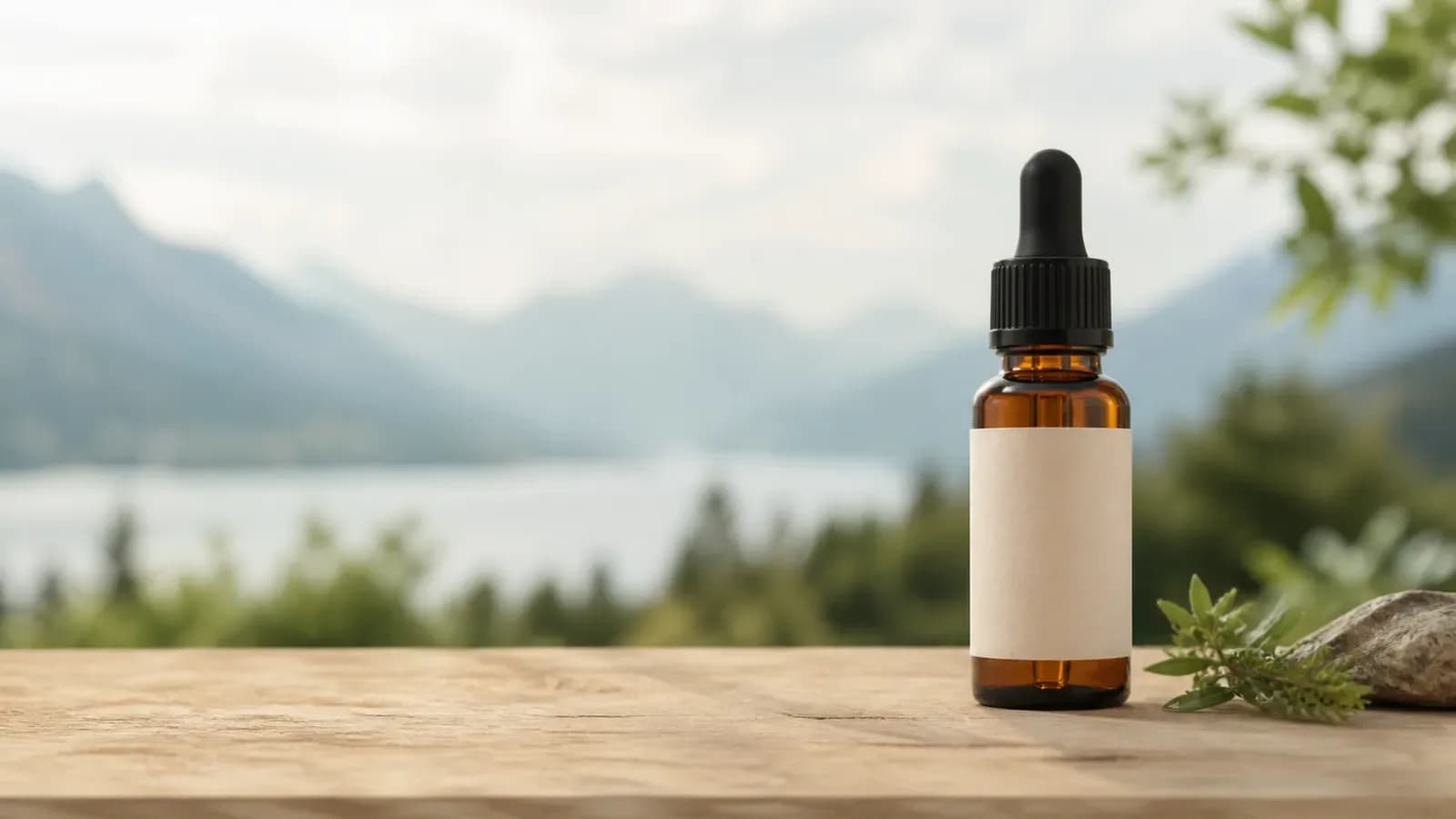
Cannabidiol, CBD for short, is one of the best-known natural components of the
hemp plant. Many people are interested in CBD products but first want to
understand what exactly cannabidiol means, where it comes from and what they should look out
for when buying.
This article explains cannabidiol in a simple, factual and understandable way. The information
is intended solely for general orientation and does not replace medical or
legal advice. CBD products are not medicinal products and must not be
advertised with healing claims.
What is cannabidiol?
Cannabidiol, abbreviated as CBD, is a natural plant component of the hemp plant. It
belongs to the group of so-called cannabinoids. Cannabinoids are compounds that occur naturally in Cannabis Sativa L.
Unlike THC, i.e. tetrahydrocannabinol, cannabidiol is not intoxicating. CBD
does not cause a classic state of intoxication and is therefore often chosen by
consumers who are interested in hemp products without a psychoactive
effect.
Today, CBD is used in various product forms, including CBD oil, CBD
flower, CBD cosmetics, CBD Vape products or aroma products. The exact legal
classification always depends on the product category, the labelling and the legal
requirements.
The history of cannabidiol
Cannabidiol was already described scientifically in the 1940s. In
recent years, however, interest in CBD has risen significantly, as hemp products have
become more visible in many countries.
Today, cannabidiol is one of the best-known constituents of the hemp plant.
At the same time, CBD continues to be studied scientifically. The important point here: for freely
available CBD products, no established medical efficacy claims may
be made.
What does cannabidiol mean from a chemical point of view?
From a chemical point of view, cannabidiol is a plant-based active substance from the group of
phytocannabinoids. In the hemp plant, CBD is often originally present in its acidic
precursor CBDA. Through heat or processing, CBDA can be converted into CBD
form.
In CBD oils, cannabidiol is usually combined with a carrier oil. Commonly used for this
are hemp seed oil, MCT oil or other suitable vegetable oils. This makes
the product easier to dose and use.
How is cannabidiol researched in the body?
The human body has a so-called endocannabinoid system. This
system is studied scientifically in connection with various of the body's own
regulatory processes.
These include, among other things, general biological processes in the body. The exact
relationships between cannabidiol, the endocannabinoid system and freely
available CBD products, however, remain the subject of current research and
have not been conclusively clarified.
Important: no medical claims may be derived from such research approaches for
freely available CBD products.
Scientific research on cannabidiol
Cannabidiol is being studied scientifically worldwide. Studies deal, among
other things, with the properties, safety, interactions and possible
areas of application of cannabinoids.
What matters for consumers:
- Research on cannabidiol has not yet been completed in all areas.
- Results may vary from study to study.
- Freely available CBD products in Switzerland are generally not approved medicinal products.
- CBD products must not be advertised with healing, diagnostic or treatment claims.
Information about CBD should therefore always be viewed factually, cautiously and without exaggerated
expectations.
How is cannabidiol obtained?
Cannabidiol is obtained from suitable hemp plants. A well-known method is
CO₂ extraction. In this process, plant components are extracted under controlled
conditions.
Depending on the process, in addition to cannabidiol, other natural plant substances such as
terpenes or other cannabinoids may also be retained. The exact composition depends
on the raw material, the extraction method and subsequent processing.
Reputable suppliers provide transparent information about origin, production, ingredients and
laboratory analyses.
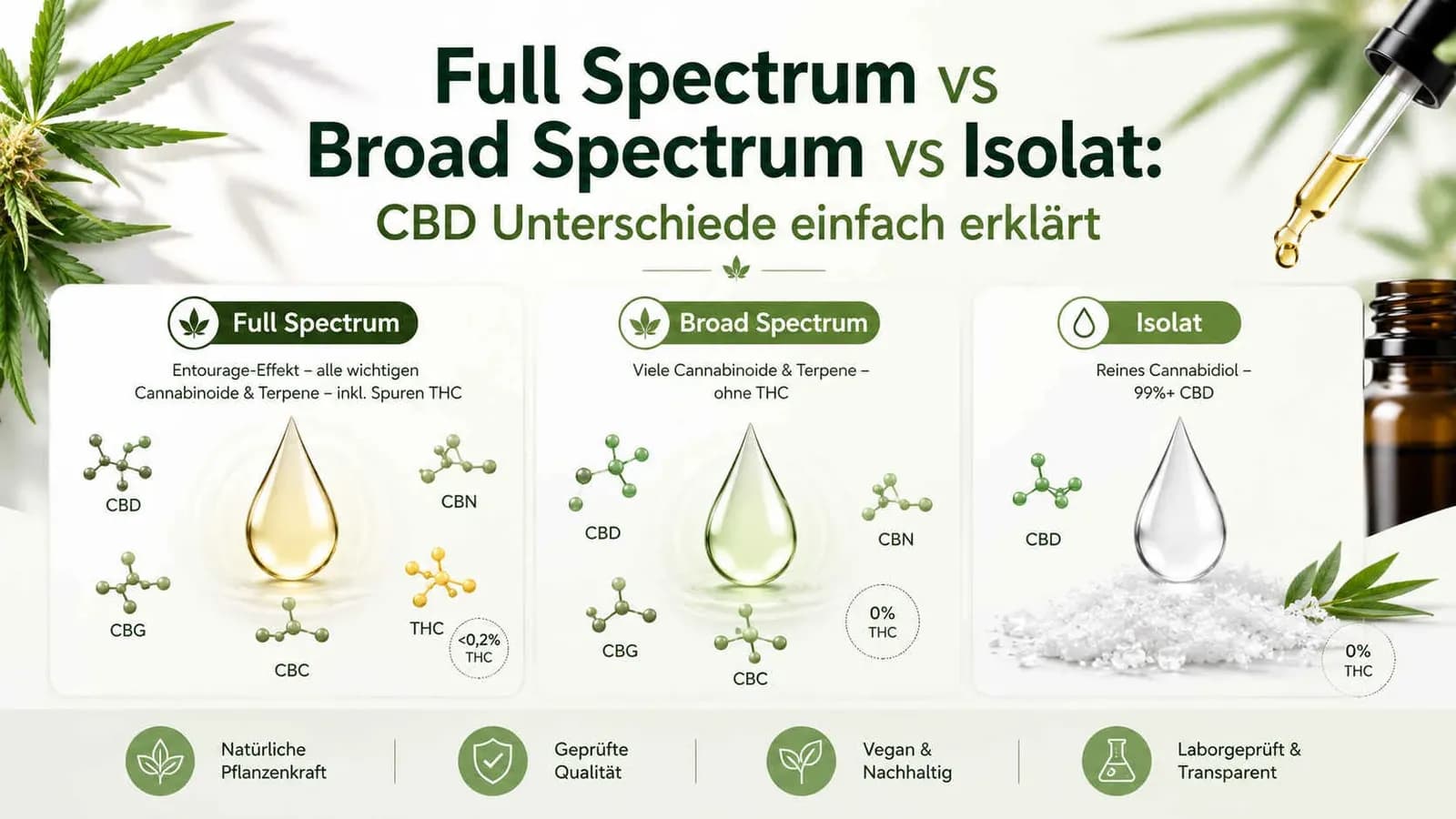
Full spectrum, broad spectrum or isolate – what is the difference?
CBD products can have different compositions. A distinction is often made
between full spectrum, broad spectrum and isolate.
Full Spectrum
Full spectrum products contain not only CBD but also other natural
components of the hemp plant. These can include terpenes and other
cannabinoids. Depending on the product, very small amounts of THC may also be present, provided
these are within the legal limits.
Broad Spectrum
Broad spectrum products also contain several plant components, but
THC is usually removed or greatly reduced. The exact composition should always
be checked against the product information and laboratory analyses.
Isolate
CBD isolate contains isolated cannabidiol without other relevant plant components. It
is a particularly reduced form of CBD.
The so-called entourage effect describes a scientifically debated concept in
which various plant components are considered together. For freely
available CBD products, however, no established medical
statements can be derived from this.
Which cannabidiol products are available?
Cannabidiol is available in various product forms. These include, among others:
- CBD oil
- CBD flower
- CBD Vape products
- CBD Cosmetics
- CBD Hash
- Aroma products
It is important to note that the classification can differ depending on the type of product. CBD oil, CBD
cosmetics, CBD flower or aroma products may be treated differently
under the law. Consumers should therefore always pay attention to the information provided by the
supplier, the labelling and the applicable legal requirements.
Is cannabidiol legal in Switzerland?
Cannabidiol is generally legal in Switzerland, provided the legal requirements
are met. The THC content is particularly important here. CBD products are permitted in
Switzerland if the THC content is below 1% and the product is correctly
labelled.
The legal classification also depends on the product category. A product can
for example be offered as a cosmetic product, aroma product or other freely available product,
provided the respective requirements are met.
Anyone who wants to buy CBD products in Switzerland should therefore look for transparent
information on THC content, origin and laboratory analyses.
Why Swiss cannabidiol is particularly in demand
Swiss CBD products are popular with many consumers because
Switzerland is known for quality awareness, transparent production and a clear legal framework.
Many reputable suppliers pay attention to:
- controlled cultivation
- traceable origin
- transparent product information
- regular laboratory analyses
- clear information on THC content
- factual product descriptions without healing claims
Trust is particularly important in the CBD market. Good product information helps
to assess quality better and to make informed purchasing decisions.
Conclusion: cannabidiol simply explained
Cannabidiol is a natural component of the hemp plant and belongs to the
so-called cannabinoids. CBD is not intoxicating and is now offered in various product forms.
For consumers, it is particularly important to have realistic expectations,
to look for transparent suppliers and to know the legal
framework. What matters are traceable product information, laboratory analyses, clear
information on THC content and reputable communication without medical
healing claims.
Anyone who wants to buy cannabidiol products in Switzerland should choose suppliers
who provide open information about quality, origin, composition and legal
classification.
Note
This article is for general information only and does not constitute
medical or legal advice. Cannabidiol products are not medicinal products
and are not intended for the diagnosis, treatment or cure of diseases. For
health-related questions, a qualified professional should be consulted.
Categories