Products & Strains
Can CBD Help with Allergies? What the Research Shows
By Vapor Spirit Fachteam
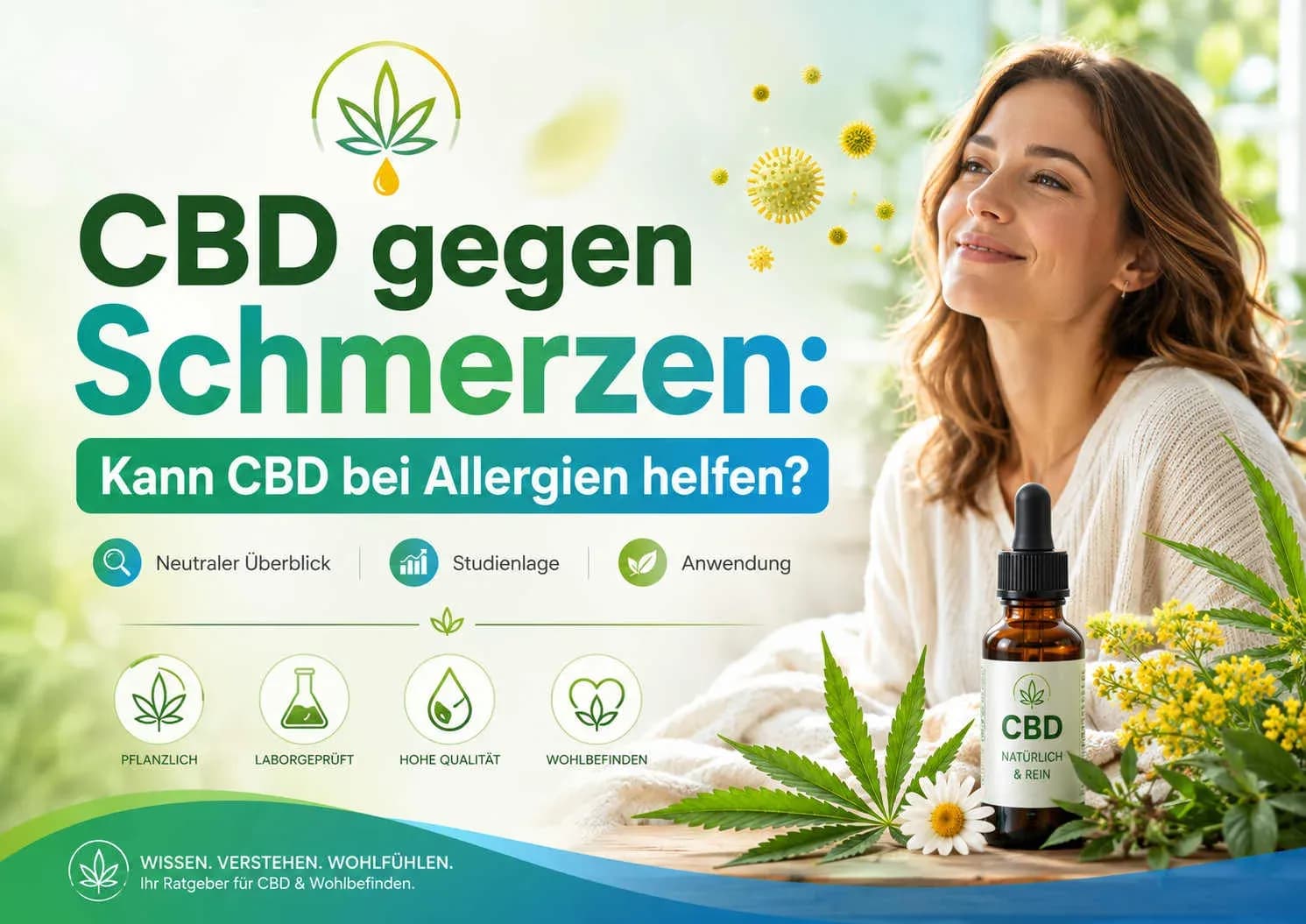
To be clear and honest from the start: there is no scientific evidence that CBD treats, relieves or cures allergies. CBD is not an anti-allergy medication and replaces neither antihistamines nor medical treatment. In laboratory and animal models, CBD is attributed anti-inflammatory properties, which is why a connection with allergic reactions is being researched – but nothing has been proven in humans. This article gives a neutral overview of CBD and allergies and explains what you should really pay attention to if you have allergies.
Important note: allergies can be harmless, but they can also be life-threatening (anaphylactic shock). Prescribed medication such as antihistamines or an emergency kit must never be replaced by CBD. If you have allergies, your doctor is the right point of contact.
What is an allergy?
In an allergy, the immune system overreacts to substances that are actually harmless – such as pollen, house dust mites, animal hair or certain foods. The body releases messenger substances such as histamine, which leads to the typical symptoms: sneezing, itchy eyes, a runny nose, skin rashes or, in extreme cases, shortness of breath. Common forms are hay fever (allergic rhinitis), allergic asthma and contact allergies.
Can CBD help with allergies? What the research shows
Based on current knowledge, the question «Can CBD help with allergies?» can be answered clearly: there are no reliable clinical studies that prove a benefit of CBD for allergies in humans. What does exist is preclinical work – studies on cell cultures and animal models in which CBD showed anti-inflammatory effects.
Aspect | What was studied | Assessment |
Inflammatory response | Anti-inflammatory properties of CBD in laboratory and animal models | Preclinical, no evidence for allergies in humans |
Immune system | Possible interaction with the endocannabinoid system, which is involved in immune processes | Early research, no clinical recommendation |
Allergic symptoms | Isolated animal models on allergic skin reactions | Not transferable to humans |
The reason CBD is discussed in connection with allergies at all lies in these anti-inflammatory properties and the interaction with the endocannabinoid system, which is involved in regulating immune processes. Both are starting points for research, not proven effects against allergies.
CBD and hay fever
Especially with hay fever (allergic rhinitis), many people look for natural alternatives. Here, too, there is no evidence that CBD relieves pollen allergy. It is also important to know about a possible reverse effect – some people are themselves allergic to cannabis pollen. So if you are prone to allergies, you should try CBD products with care and ideally after consulting a doctor.
CBD and allergic skin reactions
For contact allergies and itchy skin, CBD is sometimes mentioned in the form of creams. Cosmetic CBD products may be advertised exclusively for skin care, not as a treatment. They can care for the skin, but they are not a remedy for the allergic reaction itself. If you would like to try CBD in external care, you will find products under CBD Cosmetics. If skin reactions persist, the cause should be investigated by a dermatologist.
Can CBD itself trigger an allergy?
Yes, this is possible. As with many plant substances, some individuals may react allergically to cannabidiol or to accompanying substances in the product – such as the carrier oil or terpenes. Signs would be skin redness, itching or irritation after use. If you use a CBD product for the first time, you can test it on a small area of skin. If there is a reaction: stop using it and have it checked by a doctor.
What really helps with allergies
The proven approaches to allergies go through your doctor: avoiding the triggers, antihistamines, corticosteroids if needed and, in suitable cases, hyposensitisation (allergen-specific immunotherapy). These measures are scientifically supported. CBD is not, in this context. If you suffer from allergies, discuss the treatment with your doctor or an allergist.
Trying CBD: what should you look out for?
If you would like to try CBD independently of the allergy topic – for example for general relaxation – you should pay attention to quality: a CBD content declared in milligrams, a certificate of analysis for each batch and a complete list of ingredients, which is especially important if you are prone to allergies. How to read a lab certificate is explained in the article on CBD lab analysis. If you take medication, clarify the use with a doctor beforehand, as there may be interactions with medication. Our lab-tested CBD oil is transparently declared.
Frequently asked questions about CBD and allergies
Does CBD help against allergies?
There is no scientific evidence that CBD relieves or cures allergies. The anti-inflammatory effects described come from laboratory and animal studies.
Does CBD help with hay fever?
There is no evidence. In addition, some people can themselves be allergic to cannabis pollen, which is why caution is advised if you are prone to allergies.
Can CBD itself trigger an allergy?
Yes, some individuals can react allergically to CBD, the carrier oil or terpenes. A test on a small area of skin before the first use is advisable.
Can I take CBD in addition to antihistamines?
Only after consulting a doctor or pharmacist. CBD can interact with medication.
Does CBD replace my allergy emergency kit?
No, under no circumstances. An emergency kit for severe allergies is vital and must never be replaced by CBD.
Is CBD legal in Switzerland?
Yes, as long as the THC content is below 1 percent. However, CBD products are not considered remedies and may not be advertised with health claims.
Conclusion: can CBD help with allergies? According to current knowledge, there is no evidence for this. Although anti-inflammatory properties are attributed to CBD, an effect against allergies in humans has not been proven – and CBD can even trigger allergic reactions itself. If you suffer from allergies, rely on medically proven treatments. If you are interested in CBD for other reasons, you will find more information about our CBD oil.
Important note: CBD products are not medicinal products and are not intended to treat, relieve or prevent diseases. This article is for general information only, reflects the publicly available state of research and does not replace medical advice. If you have allergies, contact a medical professional and never stop taking prescribed medication on your own. The legal information refers to Switzerland. Sold to adults only. Last reviewed: July 2026.
Categories