Use & Dosage
CBD for polyneuropathy – information, use and context
By Vapor Spirit Fachteam
CBD and polyneuropathy: state of research and context
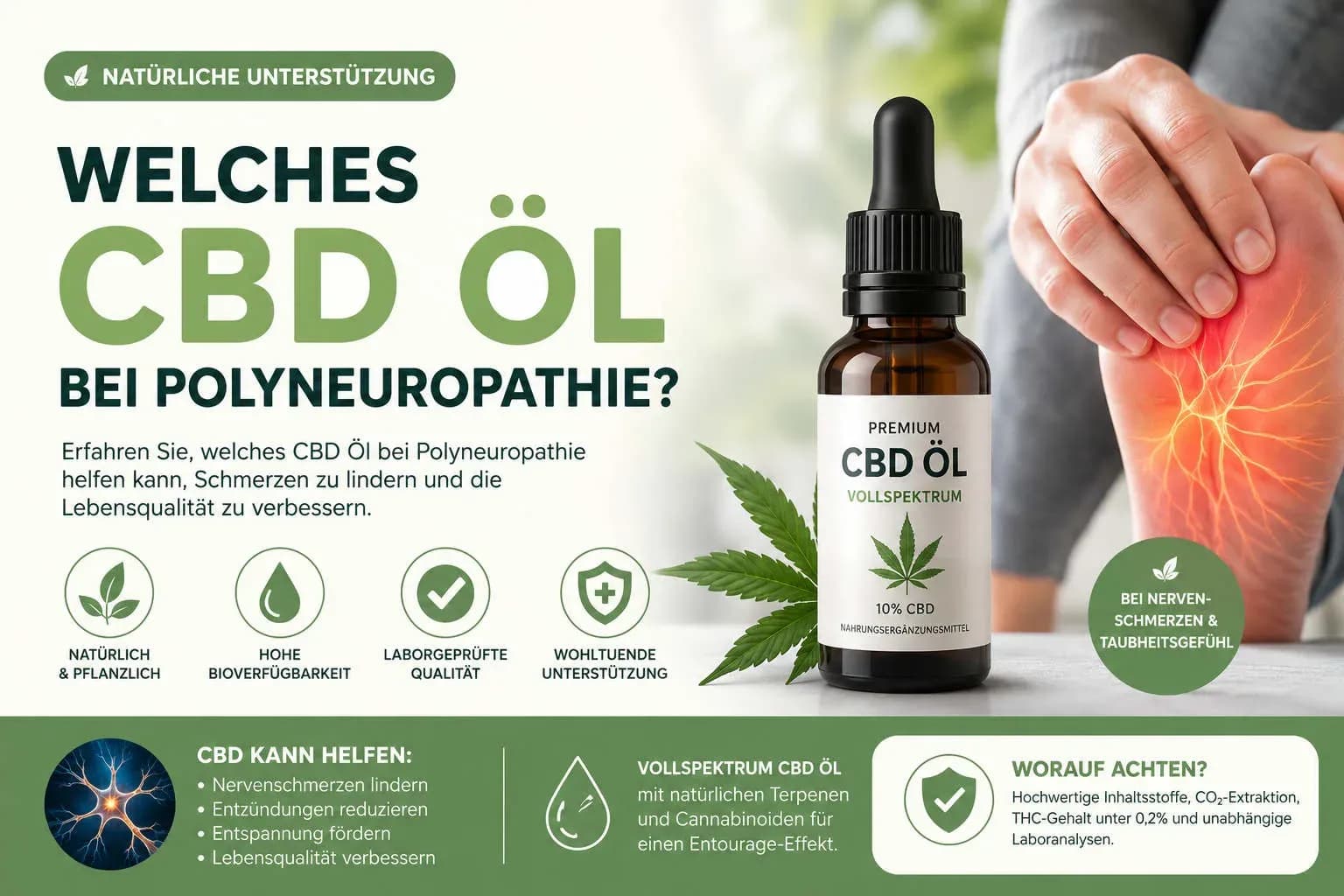
Many people with polyneuropathy wonder whether CBD could be an option for them. Clinical studies on neuropathic pain have mainly examined cannabinoid combinations. Important to note first: CBD is not an approved medicinal product for polyneuropathy and does not replace medical treatment. This article neutrally summarises the current state of research and explains the common product forms – any use should be agreed with your doctor.
Important note: Polyneuropathy is a serious condition that must be examined and treated by a doctor. The following information is intended solely for general education and does not constitute a healing claim or a treatment recommendation.
What is polyneuropathy?
Polyneuropathy refers to damage to several peripheral nerves outside the brain and spinal cord. Typical complaints are tingling, numbness, burning or neuropathic pain, usually starting in the feet and hands. The most common cause is diabetes mellitus – this is then referred to as diabetic polyneuropathy. Other triggers can be alcohol, medication, infections or autoimmune diseases. Such complaints can considerably impair everyday life.
CBD and polyneuropathy: what the studies show
The question “does CBD help with polyneuropathy” cannot yet be answered conclusively from a scientific point of view. However, there is a growing number of studies on the use of CBD and other cannabinoids for neuropathic pain. Individual randomized, placebo-controlled studies and a randomized controlled trial on THC-CBD combinations point to a possible relief of neuropathic pain, for example in peripheral neuropathy or in connection with multiple sclerosis. At the same time, reviews emphasize that the data is heterogeneous and that larger clinical studies are lacking.
Important for context: some of the positive results come from studies with medical cannabis, i.e. with THC-CBD combinations, not with pure CBD. Pure CBD products, as freely sold in Switzerland, have less often been studied in isolation.
How CBD works in the body: the endocannabinoid system
CBD interacts with the endocannabinoid system, a regulating network that extends throughout the entire body and the central nervous system. Among other things, it includes the receptors CB1 and CB2 (also referred to as CB1 and CB2 receptors). While THC binds directly to CB1, CBD acts more indirectly and in a modulating way. In laboratory models, CBD is attributed anti-inflammatory and neuroprotective properties – these anti-inflammatory and neuroprotective effects are one reason why the effect of CBD on nerve disorders is being researched. Since chronic inflammation plays a role in some forms of neuropathy, this approach is the subject of current research. However, proven healing effects in humans cannot be derived from this.
Polyneuropathy and CBD oil: an overview of the product forms
CBD products come in various forms. The following overview categorises the common CBD products:
Product form | Features | What to look out for |
Full spectrum CBD oil | Contains CBD plus minor cannabinoids and terpenes – entourage effect | May contain traces of THC (below 1 %) |
Broad spectrum CBD oil | Like full spectrum, but practically THC-free | For anyone who wants to avoid THC completely |
CBD isolate | Pure CBD, no entourage effect | Neutral in taste, but without accompanying substances |
Topical application (cream) | Locally on the skin | For external care |
In addition to CBD, full spectrum oils contain other cannabinoids and terpenes – their interaction is referred to as the entourage effect. You can read more about carrier oils in the comparison of MCT vs. hemp seed oil, and our article on CBD laboratory analysis explains how to check a laboratory certificate.
CBD oil experiences with polyneuropathy
Online you can find numerous CBD oil experiences with polyneuropathy – ranging from noticeable relief to no effect at all. Such experience reports are subjective and do not replace scientific evidence: what helps one person does not necessarily work for another. However, they show that CBD is experienced very differently from person to person – one more reason to proceed slowly and in consultation with your doctor.
CBD polyneuropathy dosage: why there is no recommendation
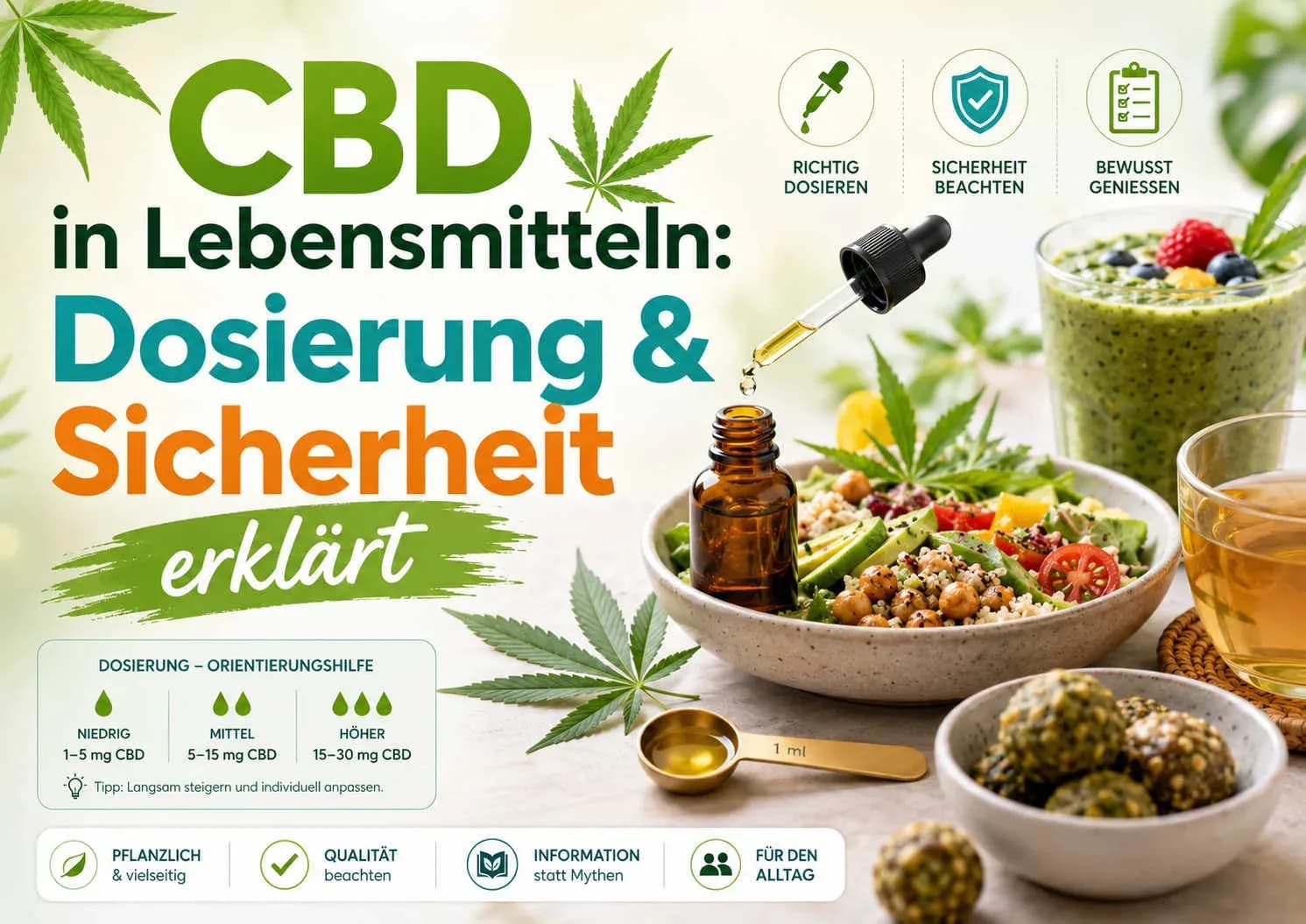
There is no recommendation for the dosage of CBD for polyneuropathy – any use in connection with an illness should be agreed with a doctor. In general, the principle for CBD products is to start with a low amount and increase it slowly; the following overview is a general orientation and does not replace medical advice:
Phase | Procedure | Note |
Start (week 1) | Low amount according to the package information | Monitor tolerance |
Increase (weeks 2–4) | Only increase after consulting a doctor | “Start low, go slow” |
Maintenance | Keep to the individually determined amount of mg CBD per day | Spread over 2–3 doses |
How many mg of CBD you take in per drop depends on the concentration of the oil. You can find detailed instructions including sample calculations in our guide to CBD oil dosage and intake. Especially important with polyneuropathy: many people affected already take medication – so find out in advance about possible interactions of CBD with medication and discuss the intake with your doctor or pharmacist.
CBD for diabetic polyneuropathy
Since diabetes mellitus is the most common cause, a large proportion of those affected have diabetic polyneuropathy. Particular caution is required here: CBD can influence metabolism and the effect of other medication. Anyone taking blood sugar medication should always have the use of CBD supervised by a doctor and keep an eye on their blood sugar.
Is CBD legal in Switzerland?
Yes. CBD products with less than 1 % THC are legally available in Switzerland. However, they are not considered medicinal products and may not be advertised with healing claims. More on this in our article Is CBD legal in Switzerland?.
Frequently asked questions about CBD and polyneuropathy
Is there a CBD oil specifically for polyneuropathy?
No. CBD oils are not intended for use in polyneuropathy. Studies on neuropathic pain have mainly examined cannabinoid combinations. It is best to discuss with your doctor whether a product is an option for you.
How quickly does CBD show an effect?
There is no reliable information on this. Experiences vary greatly from person to person, and an effect on polyneuropathy has not been proven.
Can CBD heal nerve damage?
No. There is no scientific evidence of a healing or nerve-regenerating effect of CBD in humans. Only a possible relief of symptoms such as neuropathic pain is being studied.
Should I take CBD in addition to my medication?
Only after consulting your doctor. CBD can interact with other medication – combining them on your own or stopping prescribed medication can be dangerous.
Full or broad spectrum – what is the difference?
Full spectrum contains all cannabinoids including traces of THC (below 1 %) and makes use of the entourage effect. Broad spectrum is practically THC-free, but also offers several cannabinoids.
Conclusion: The state of research on CBD and polyneuropathy is not conclusive; mainly cannabinoid combinations for neuropathic pain have been studied. CBD is not a remedy and, in the case of a serious illness such as polyneuropathy, should always be accompanied by a doctor. You can find our laboratory-tested organic CBD oils in full spectrum quality in the shop.
Important note: CBD products are not medicines and are not intended to treat, cure or prevent any disease. The information in this article does not replace medical advice, diagnosis or treatment. If you have polyneuropathy and before using CBD – especially if you are already taking medication – please consult your doctor. Last reviewed: July 2026.
Categories