Effects & Health
CBD Effects & Areas of Use – the Complete Guide 2026
By Vapor Spirit Fachteam
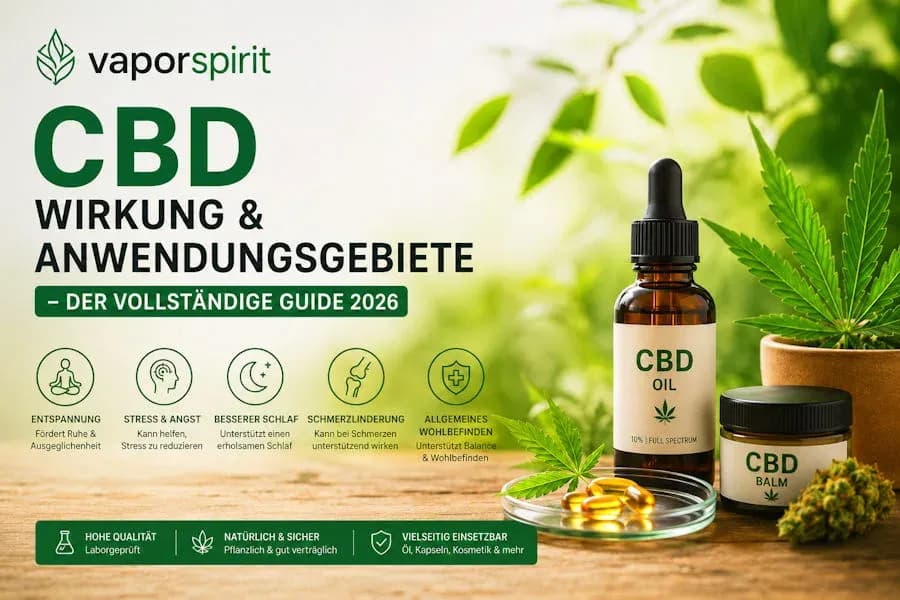
CBD cannabidiol has been established in Switzerland for years as a legal, non-psychoactive cannabinoid. But what can CBD really do – and where are its limits? This guide gives you a neutral, scientifically oriented overview of how CBD works in the human body, the most important areas of use and what you should look out for when buying. Note: CBD is not a medicine and never replaces medical advice for health complaints.
How does CBD work in the body? The endocannabinoid system explained simply
CBD is one of more than 100 cannabinoids in the hemp plant. Unlike THC, CBD is not psychoactive – so you will not get “high”. Instead, CBD interacts with the body's own endocannabinoid system (ECS), a network of receptors (CB1, CB2), enzymes and the body's own messenger substances that is active in many organs, in the nervous system and in the immune system. Among other things, the ECS regulates pain perception, the sleep-wake cycle, mood, appetite and the immune response. CBD binds only weakly to CB1 and CB2 receptors but influences numerous other receptors such as serotonin (5-HT1A), vanilloid (TRPV1) and adenosine receptors. It is precisely this diversity that explains why the reported effects of CBD are so wide-ranging and can vary from person to person.
General effects of CBD – what users report
In Switzerland and internationally, CBD is mostly used as a wellness and lifestyle product. Users often describe a feeling of inner calm, a more pleasant evening routine and less tension in everyday life – such reports are subjective. Scientific studies discuss, among other things, anti-inflammatory, anxiolytic, antispasmodic and antioxidant properties of CBD. Reliable evidence of effects in humans is still lacking for many of these points. Important: the quality of the data varies depending on the area of application, and the individual response depends on factors such as body weight, metabolism, product form and dosage. How quickly CBD takes effect and how long the effect lasts depends greatly on the form of intake – more on this later.
Topic | Classification | Common product form |
Pain & inflammation | Being investigated in studies, no reliable evidence | CBD oil, capsules, cosmetics |
sleep | Part of the evening routine, effect not proven | CBD oil, capsules |
Stress & inner restlessness | Frequently requested, limited data | CBD oil, flower, vape |
Skin | Care for dry, sensitive skin | CBD Cosmetics (topical) |
General well-being | Part of personal wellness routines | CBD oil |
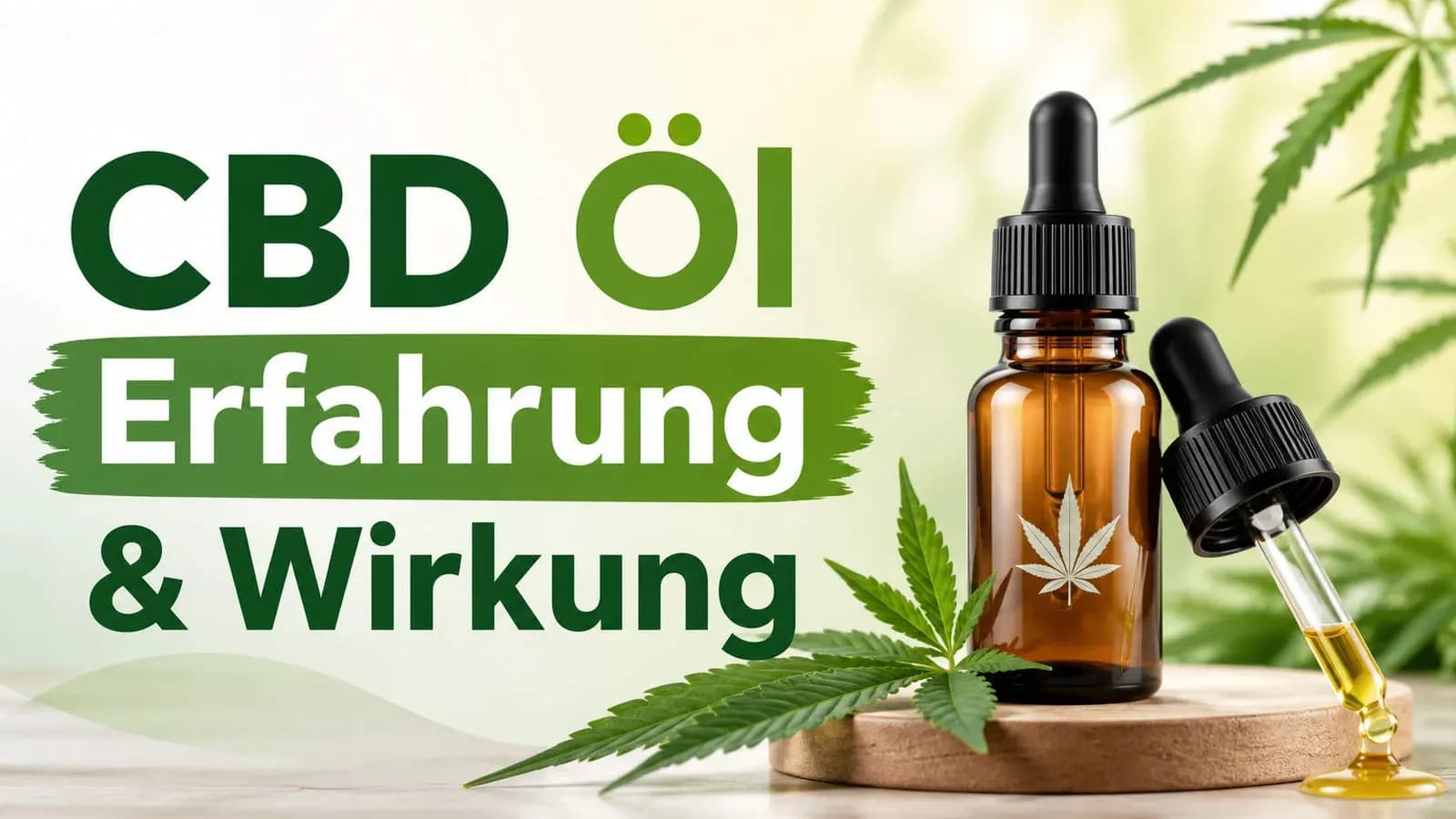
Cannabidiol (CBD), pain and inflammation: what research says
Pain is one of the most common topics for which people are interested in CBD – especially
in the case of chronic or inflammation-related complaints. Research is investigating whether cannabidiol (CBD), via the ECS and
TRPV1 receptors, is connected with pain perception. Initial, mostly smaller studies look at joint complaints, muscle tension, headaches, migraine and neuropathic pain, among other things; there is no reliable evidence so far. CBD is not a substitute for painkillers or a medical examination.
CBD and sleep problems: restless nights
Difficulty falling asleep and staying asleep is often linked to inner tension, brooding or stress regulation that is out of balance. CBD is frequently asked about in this context. Some users report that they use CBD as part of their evening routine; such reports are subjective. CBD is not a sleeping pill, and whether it influences sleep is being investigated in studies – there is no reliable evidence so far. Common product forms are CBD oil or capsules. If sleep disorders persist, a medical examination is advisable.
CBD and stress, inner restlessness and anxious phases
In everyday life, many people are under constant stress – work, family, sensory overload. CBD is in particularly high demand in this context. In individual studies on acute use in stressful and anxiety-inducing situations (e.g. public speaking, exams), a calming effect was observed, which is discussed as being mediated partly via serotonin and GABA pathways. The data is limited.
Some users subjectively report less tension; there is no solid evidence of an effect against stress symptoms such as palpitations, shallow breathing or inner tension. CBD does not replace psychotherapeutic treatment for anxiety disorders or depression – if complaints persist, a professional assessment is important.
CBD and skin – from acne to atopic dermatitis: what is known
CBD is increasingly used in skincare and cosmetic products. The skin has its own cannabinoid receptors, which is why topical application (i.e. via creams, ointments or serums) attracts interest in research. CBD is being investigated in connection with acne, atopic dermatitis and psoriasis, among other things; there is no reliable evidence so far, and skin diseases require medical treatment. CBD cosmetics are intended for care – for example of dry or sensitive skin.
Onset and duration – how quickly does CBD work?
How quickly CBD works depends mainly on the form of intake. CBD oil under the tongue (sublingual) typically takes effect after 15–30 minutes and lasts 4–6 hours. CBD capsules and edibles first have to pass through the gastrointestinal tract and the liver – here the effect sets in after 30–90 minutes, but can last up to 8 hours. CBD flower and CBD Vape products work the fastest (within a few minutes), but also for the shortest time (1–3 hours). Topical applications such as creams work locally and are often felt after 10–20 minutes. Important: CBD often only builds up to its full effect after several days to weeks of regular use.
Dosage, safety and side effects
CBD is considered well tolerated. Possible side effects are rare and usually mild: tiredness, dry mouth, a slight drop in blood pressure or gastrointestinal complaints at very high doses. However, CBD can influence the breakdown of certain medications in the liver (via the CYP450 system). If you take medication regularly – especially blood thinners, antiepileptic drugs or certain psychotropic drugs – you should discuss its use with your doctor. A low starting dose, slow increases and avoiding CBD during pregnancy and breastfeeding are important. You can find detailed instructions on the correct dosage and all legal framework conditions in our further guides.
What you should look out for when buying CBD products in Switzerland
The effect stands or falls with the quality. When buying, look out for the following points: Swiss origin or a reputable EU supplier, organic cultivation without pesticides, full spectrum or broad-spectrum extract for the natural entourage effect, transparent laboratory analyses (CoA) of the CBD and THC content, clear declaration of the concentration (e.g. 5 %, 10 %, 20 %) and carrier oils such as hemp seed, MCT or olive oil. In Switzerland, CBD products must contain less than 1 % THC – from 1 % upwards, cannabis products are legally classified as narcotics. If you plan to travel, you should also check the respective national regulations, as CBD is not permitted everywhere in Europe.
CBD oil effects: experiences and user reports
Besides the state of research, it is above all experience reports that many people draw on when deciding on CBD oil. The reported CBD experiences from Switzerland vary: some users describe noticeably more calm and better sleep, others notice only a subtle effect or need a few weeks before anything happens.
This is normal – the effect of CBD oil is individual and depends on dose, product, form of intake and personal constitution. It is important to put this into context: such experience reports are subjective and do not replace scientific evidence. However, they give a realistic impression of how broad the range of feedback is.
If you want to gather your own experience with CBD oil, it is best to start with a low dose, stay with the same amount for a few days and observe the effect over a period of two to four weeks. This is the best way to assess whether CBD makes a noticeable difference in your everyday life.
Conclusion: CBD is versatile – but not a miracle cure
CBD is discussed in connection with many topics: pain, sleep problems, stress, skin and general well-being. For most of these areas there is no reliable evidence so far, and perception is individual. If you use CBD products, you should have realistic expectations, choose high-quality, laboratory-tested products and start low. For medical complaints: talk to your doctor first – CBD is never a substitute for necessary therapy.
You can find more on safe use and dosage in our
CBD dosage & intake guide. The complete legal framework for CBD in Switzerland is explained in our
CBD law & legality in Switzerland guide.
Frequently asked questions about the effects of CBD
How does CBD work in the body?
CBD interacts with the body's own endocannabinoid system, which is involved in processes such as sleep, mood and pain perception. It is not intoxicating.
What is CBD used for?
Commonly mentioned are pain, sleep problems, stress and skin issues. CBD is a wellness product, not a medicine.
How quickly does CBD work?
That depends on the form of intake: CBD oil under the tongue often after 15–30 minutes, capsules after 30–90 minutes, flower and vape within a few minutes.
What do users report about the effects of CBD?
Experiences vary widely and are subjective – from clearly noticeable to barely perceptible. They are not scientific evidence of effects.
Does CBD have side effects?
CBD is considered well tolerated. Tiredness, dry mouth or gastrointestinal complaints at high doses are rare and usually mild.
Is the effect of CBD scientifically proven?
There are indications from studies for some areas, but larger clinical evidence is lacking for many. Research is still ongoing.
Categories