CBD Knowledge
Hemp oil & CBD for COPD, asthma and bronchitis: what studies show
By Vapor Spirit Fachteam
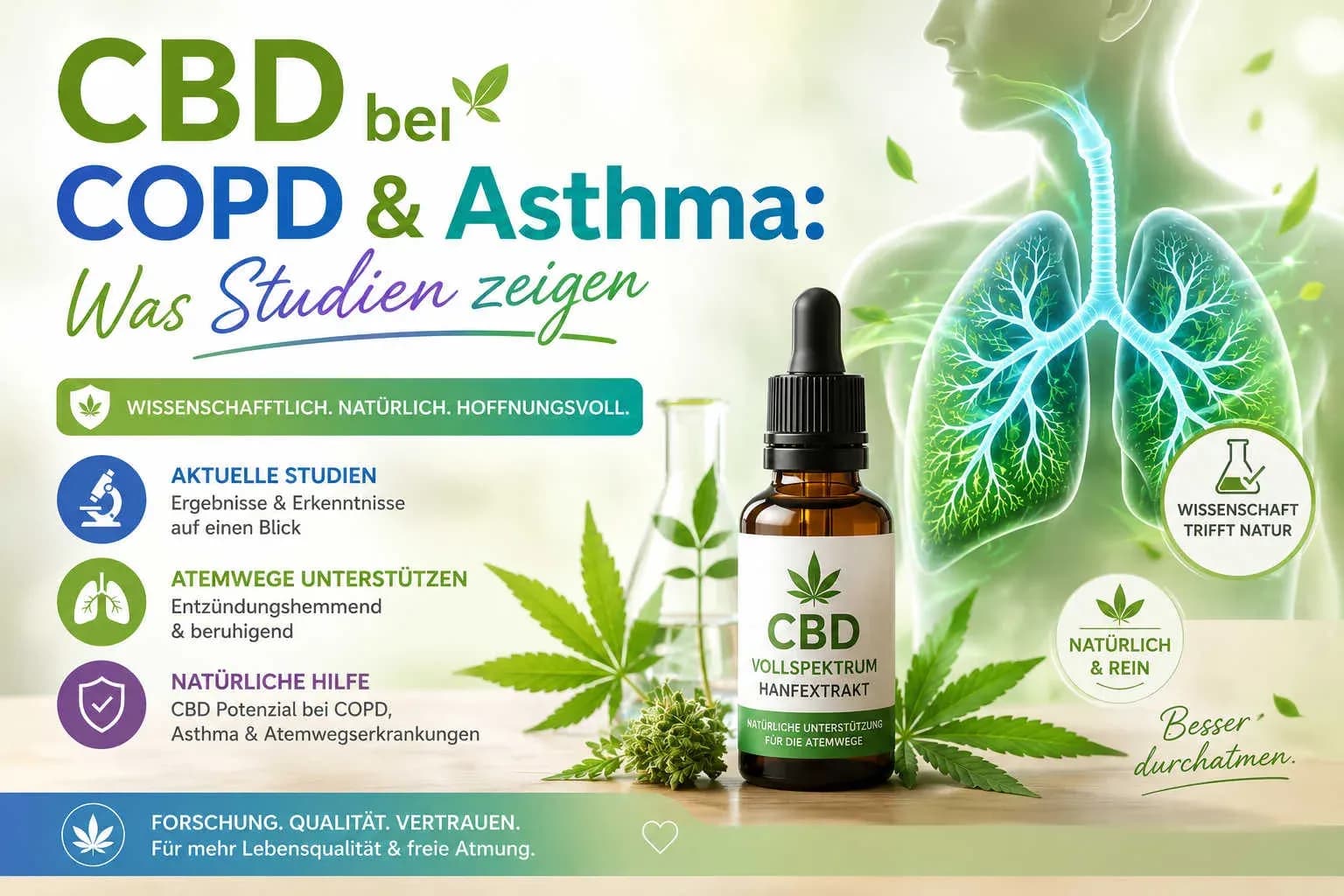
In short: To date, there is no reliable clinical evidence that CBD treats, relieves or halts COPD, asthma or bronchitis. The anti-inflammatory properties of cannabidiol have been described almost exclusively in laboratory and animal studies, not in meaningful human studies involving these conditions. Especially important for those affected: smoking and vaporizing are not a sensible form of use for lung disease – regardless of whether it is tobacco, cannabis or CBD. This article puts the available data into context and does not replace medical treatment.
Important note: COPD and asthma are serious conditions that must be diagnosed and treated by a doctor. Prescribed medications such as bronchodilators or corticosteroids must never be stopped on your own or replaced with CBD. This article is for information purposes only and does not constitute a treatment recommendation.
What is COPD?
COPD stands for chronic obstructive pulmonary disease (COPD). It includes chronic bronchitis and pulmonary emphysema. It is characterized by a permanent narrowing of the airways, which leads to breathing difficulties, as well as persistent inflammation of the lung tissue.
Typical symptoms are a chronic cough with sputum, shortness of breath on exertion and a feeling of tightness in the chest. By far the most common cause is long-term smoking. COPD cannot be cured; treatments aim to slow its progression and relieve symptoms. The single most important factor remains quitting smoking.
What is asthma – and how does it differ from COPD?
Asthma is also a chronic disease involving inflammation of the airways, but it progresses differently. It is often allergic asthma, which already begins in childhood. Asthma patients experience attack-like symptoms, between which they are often largely symptom-free, and the narrowing of the airways is largely reversible.
Feature | COPD | Asthma |
Course | Progressive, not curable | Episodic, often symptom-free between episodes |
Typical symptoms | Chronic cough with sputum, shortness of breath on exertion | Shortness of breath, wheezing, tightness in the chest |
Main cause | Usually long-term smoking | Often allergic asthma, frequently from childhood |
Narrowing of the airways | Permanent, barely reversible | Largely reversible |
Common denominator | Chronic inflammation of the airways | Chronic inflammation of the airways |
How CBD works in the body: the endocannabinoid system
Cannabidiol (CBD) is one of more than a hundred cannabinoids in the hemp plant. It interacts with the endocannabinoid system, a regulatory network with the receptors CB1 and CB2. CB1 receptors are found mainly in the nervous system, CB2 receptors predominantly on immune cells – which is why they could play a role in inflammatory processes.
Unlike tetrahydrocannabinol (THC), CBD does not bind directly to CB1 and has no intoxicating effect. Among the cannabinoids, particularly CBD and CBG, anti-inflammatory effects have been described in cell culture and animal models. However, no conclusions can be drawn from this about an effect in people with COPD or asthma.
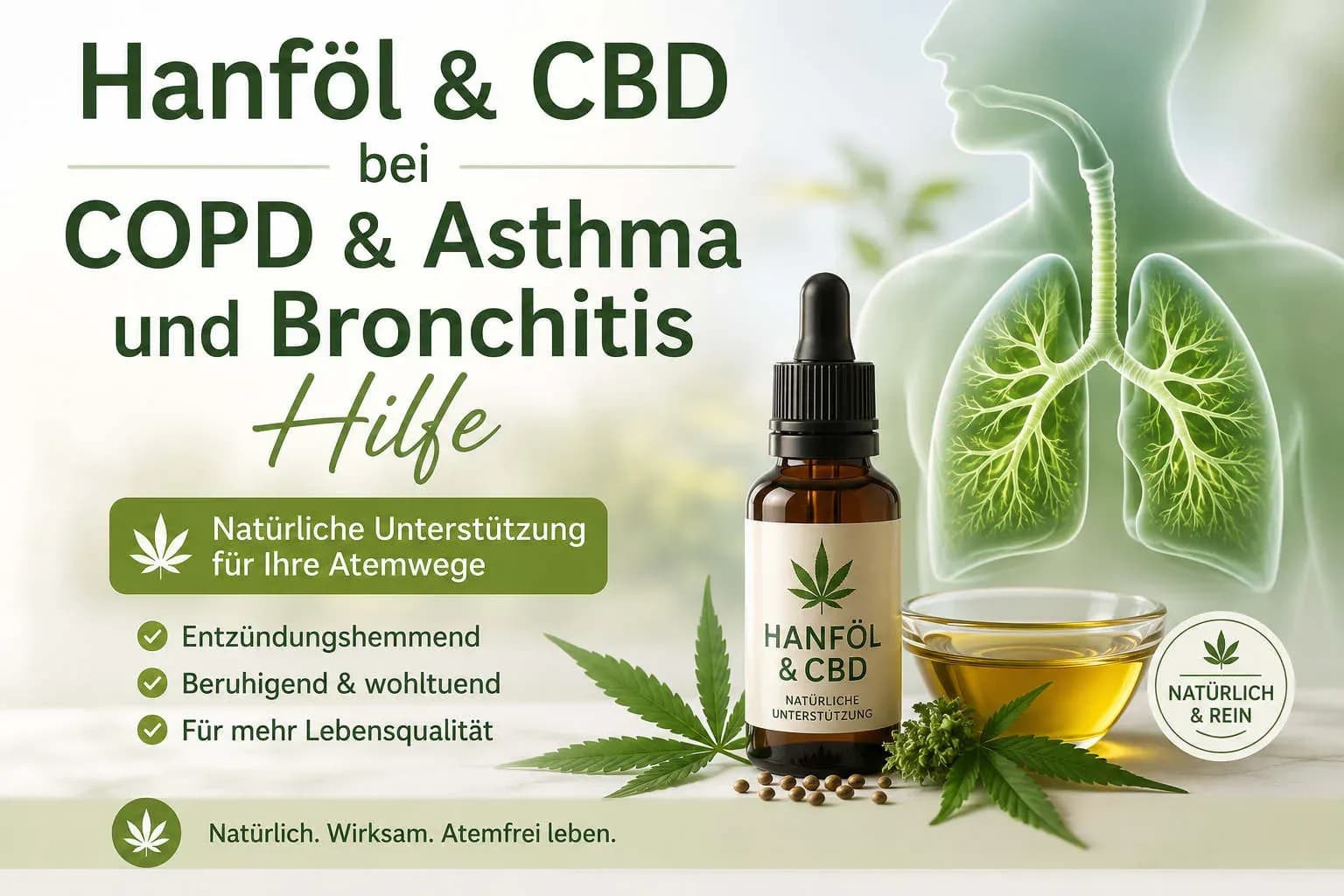
Does CBD help with COPD? What studies show – and what they don't
On the question “does CBD oil help with COPD”, the answer based on current knowledge is sobering: there are no controlled clinical studies proving a benefit of CBD in COPD patients. What does exist is preclinical work – studies on cell cultures and animal models in which CBD was able to reduce inflammation. Such results are a reason for further research, but not proof of efficacy.
With chronic inflammation of the airways, an anti-inflammatory approach would be interesting in theory. Whether CBD achieves this effect in humans to a relevant extent, at what dosages, and whether higher dosages would even be safe remains open. If you find statements online such as “CBD against COPD”, you should therefore check critically what they are based on.
CBD for asthma and bronchitis: the same gap
The same applies to using CBD for asthma or chronic bronchitis. Here too, there are animal models of allergic asthma in which anti-inflammatory effects were observed, but no convincing studies in asthma patients. Phrases such as “CBD against asthma” or “CBD for bronchitis” describe a direction of research, not a proven use.
A detail that is often overlooked: asthma attacks can be life-threatening. Replacing an emergency medication with CBD would be dangerous. Even with a minor infection involving a cough and a cold, people with lung disease should have any deterioration checked by a doctor.
Why smoking and vaporizing are not an option here
This is the most important section of this article. Smoking cannabis or CBD flower produces combustion products that irritate the airways. Studies on smoking cannabis describe links with coughing, sputum and bronchitic symptoms – exactly the symptoms that those affected already have.
Vaporizing is not a harmless alternative either if you have an existing lung disease. Although it produces no smoke, hot vapor and the carrier substances it contains can further irritate sensitive airways. A CBD liquid is therefore not a suitable form of administration for COPD or asthma. If you currently smoke, quitting will achieve many times more than any CBD product – it is the only measure with a proven effect on the course of the disease.
Which forms of administration could be considered at all?
If you are searching for “which CBD oil for COPD” or “CBD drops for COPD”, you should first know this overview:
Form of administration | For lung disease | Reason |
Smoking flowers or joints | Not suitable | Combustion products put additional strain on already damaged airways |
CBD liquid or vape | Not suitable | Vapor also irritates the airways; with COPD and asthma, inhaling is the wrong direction |
CBD oil or CBD drops | To be discussed with a doctor | Oral intake bypasses the lungs; interactions with medications must be checked |
Capsules, CBD gummy bears | To be discussed with a doctor | Like oil, but harder to dose precisely |
Creams and balms | Not relevant | Act locally on the skin, not on the airways |
Oral forms such as CBD oil or CBD gummy bears do bypass the lungs, but they do not replace therapy. If you are considering them as a supplement, talk to your doctor first. You can find general information on use in the guide to CBD oil dosage and intake.
Interactions with COPD and asthma medications
This point is particularly relevant for lung diseases, because most of those affected take medication long-term. CBD can influence liver enzymes that are also involved in breaking down other active substances. As a result, medication levels can rise or fall – with possible consequences for effects and side effects.
Before any use of CBD, you should therefore talk to a doctor or pharmacist and go through your complete medication list. You can find more background in the article on CBD and interactions with medications.
Medical cannabis: a different path
Medical cannabis, which is prescribed by a doctor, must be distinguished from over-the-counter CBD products. In Switzerland, a prescription is possible under certain conditions, but not as a standard therapy for COPD or asthma. If you want to explore this route, discuss it with your treating doctor – not with an online shop.
Summary in English
To date, there is no reliable clinical evidence that CBD treats chronic obstructive pulmonary disease (COPD) or asthma. The anti-inflammatory effects of CBD have mostly been described in laboratory and animal research, not in controlled human trials with patients who have these conditions. If you experience shortness of breath or a worsening cough, consult a physician instead of relying on CBD products.
If you are still considering CBD oil alongside your treatment, talk to your doctor first: CBD can interact with medications and cause side effects, and the amount of CBD varies widely from product to product. Smoking or vaping is not a suitable option for people with lung disease, as it raises the risk of further irritating the airways.
When you should seek medical advice
You should have increasing shortness of breath, a worsening cough, fever, changed sputum or a new feeling of tightness in the chest checked by a doctor immediately. In case of acute shortness of breath, call the emergency number, not a search engine. And in general: if you are thinking about CBD because of a chronic lung disease, that is a good reason to review your existing therapy with your doctor.
Frequently asked questions
Does CBD oil help with COPD?
Based on current knowledge, there is no clinical evidence for this. The anti-inflammatory effects described come from laboratory and animal studies and do not allow any conclusions about a benefit for COPD patients.
Which CBD oil is best for COPD?
Since no efficacy has been proven, this question cannot be answered seriously. If you still want to use CBD as a supplement, choose a lab-tested product with a clearly declared CBD content and discuss its use with a doctor.
Can I smoke or vaporize CBD if I have COPD?
This is not advisable. Smoke and vapor further irritate the airways. If you have an existing lung disease, inhaling is not a suitable form of use.
Do CBD gummy bears help with COPD?
No, there is no evidence for this. Gummy bears differ only in the form of administration, not in the data – and they are also harder to dose precisely than drops.
Does CBD make sense for asthma?
Here too, meaningful studies in patients are lacking. Emergency and long-term medication must under no circumstances be replaced with CBD.
Can CBD affect my lung medications?
Possibly. CBD can affect the breakdown of other active substances via liver enzymes. So discuss its use with your doctor or pharmacist beforehand.
Conclusion: Looking into CBD for COPD, asthma or chronic bronchitis is understandable – but the research simply does not support what some suppliers promise. So far, the only established finding is that cannabidiol shows anti-inflammatory properties in laboratory models. For those affected, other things matter more: a well-adjusted therapy, quitting smoking and regular medical check-ups. If you want to try CBD as a supplement, choose oral products with a laboratory analysis and discuss it with your doctor beforehand.
Important note: CBD products are not medicinal products and are not intended to treat, relieve or prevent diseases. This article is for general information only, reflects the publicly available research and does not replace medical advice, diagnosis or treatment. If you have COPD, asthma or another lung disease, consult a medical professional and never stop prescribed medications on your own. The legal information refers to Switzerland. Sale to adults only. Last reviewed: July 2026.
Categories