Wirkung & Gesundheit
CBD for Stress Management: Facts, Research & Swiss Law
Von Vapor Spirit Fachteam
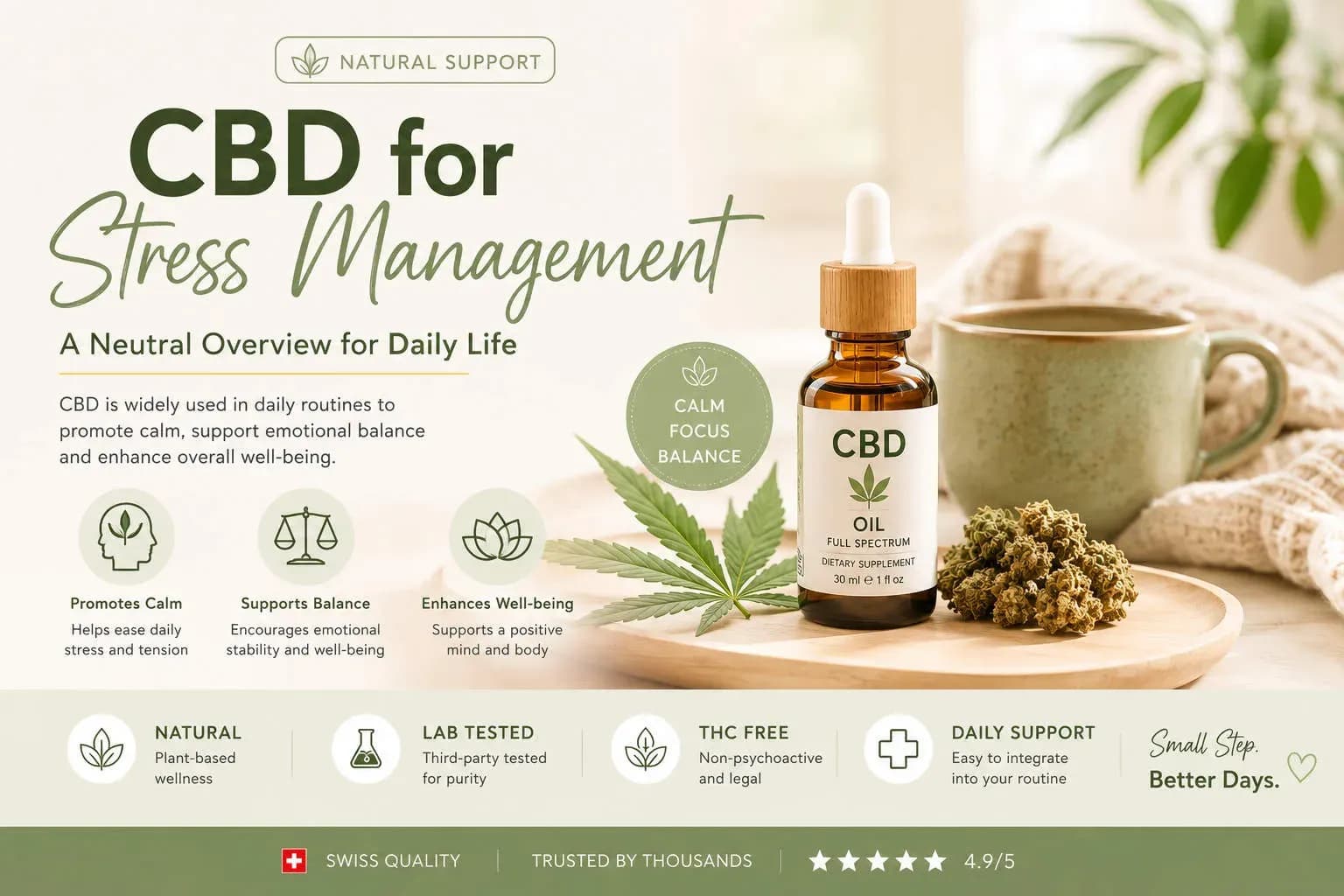
CBD for stress management is a topic of growing interest in Switzerland and across Europe. Cannabidiol (CBD) is a non-intoxicating compound derived from hemp that is frequently discussed in connection with stress perception, relaxation routines and general well-being. CBD is not a medicinal product and research is still evolving — this article provides a neutral overview of CBD oil, the current state of research, responsible use and the legal framework in Switzerland, without making medical or therapeutic claims.
Key Facts at a Glance
• CBD is a non-intoxicating hemp compound — unlike THC, it does not cause a high
• CBD is legal in Switzerland if the THC content stays below 1%
• Research examines how CBD interacts with the endocannabinoid system and serotonin receptors — findings do not constitute proof of therapeutic effects
• CBD is not a medicine and does not replace professional care
• Quality markers: independent lab testing, clear THC labeling, traceable Swiss hemp origin
Is CBD Useful for Stress Management?
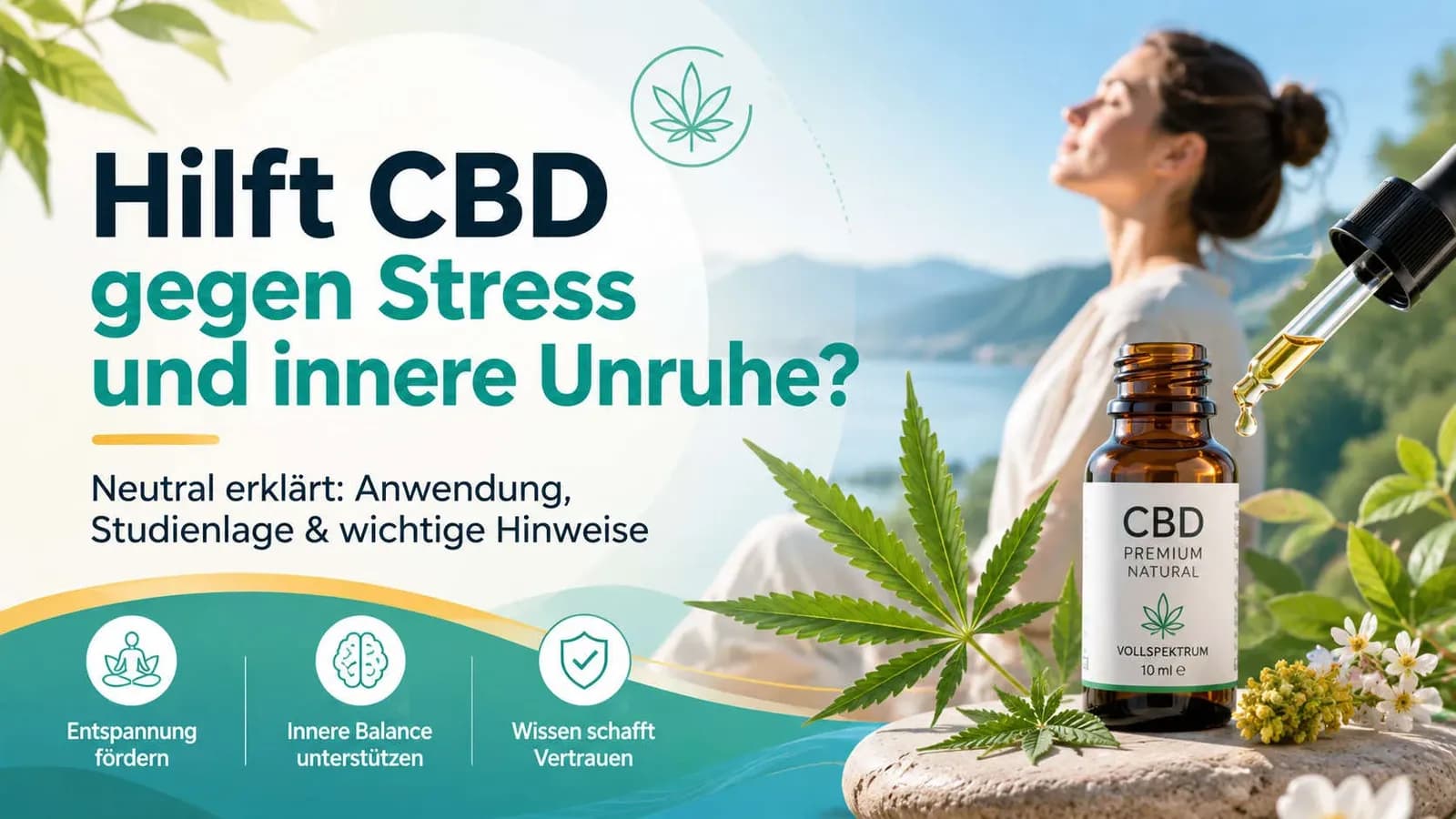
Whether CBD is useful for stress management cannot be conclusively answered by current science — CBD is discussed in the context of stress perception and relaxation routines, but it is not a medicinal product and no therapeutic effect is proven. Stress is influenced by environmental, psychological and social factors, and many people combine lifestyle adjustments, mindfulness techniques and wellness-oriented routines. Within these discussions, cannabidiol has attracted attention because of its non-intoxicating profile. A German-language version of this topic is available here: Hilft CBD gegen Stress und innere Unruhe?.
How Does CBD Interact With the Endocannabinoid System?
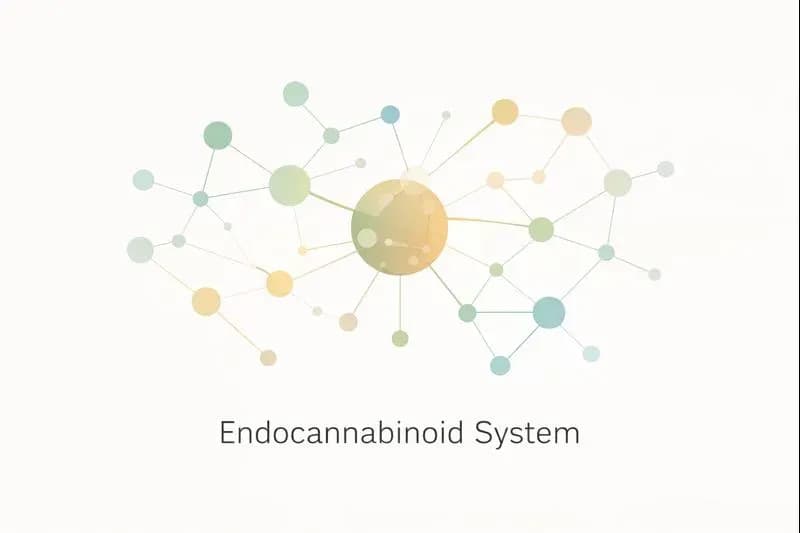
CBD is commonly examined through the lens of the endocannabinoid system — a regulatory network involved in maintaining physiological balance in humans and other mammals. Unlike THC, CBD does not cause intoxicating effects. Preclinical and observational studies additionally explore CBD’s interaction with serotonin receptors and stress-associated signalling pathways. These research findings are context-dependent and do not prove medical outcomes. A German-language explainer on the system: Endocannabinoid-System einfach erklärt.
What Does the Research Say About CBD and Stress?
Scientific interest focuses on how CBD interacts with receptors involved in mood regulation and stress perception. Current studies primarily aim to better understand biological mechanisms rather than confirm treatment effects. During stressful situations, the body activates hormonal and neurological responses as part of its natural adaptation — research explores how cannabinoids may interact with these systems, but no conclusions can be drawn regarding disease treatment or stress reduction, and individual responses vary significantly.
Is CBD Legal in Switzerland?
Yes — CBD is legal in Switzerland provided the THC content does not exceed 1%, a higher threshold than in most EU countries. Compliant CBD products are generally classified as consumer goods or food supplements depending on formulation and intended use; medical claims are not permitted. Products such as THC-free CBD oil additionally remove residual THC entirely.
Which CBD Product Formats Exist? Neutral Comparison
CBD products are available in various non-medicinal formats. Each format differs in handling and consumer preference but does not imply effectiveness:
Format | Description | Consideration |
Oil / tincture | Liquid with dropper | Flexible handling, most common format |
Capsule | Pre-measured | Fixed intake amount |
Herbal tea | Infused hemp blends | Slower absorption |
Topical / cosmetic | Applied to skin | Cosmetic use only |
Pet formulations | Animal-specific products | Veterinary guidance required |
How to Recognise Quality CBD Products in Switzerland
Quality CBD products in Switzerland can be recognised by transparency and compliance, not by promises:
• independent third-party laboratory testing
• clear THC content labelling (below 1%)
• documented extraction methods (e.g. CO₂ extraction)
• traceable hemp origin and organic certification (e.g. Bio Suisse / Demeter)
These factors support informed consumer decisions without implying health effects.
How to Use CBD Responsibly
Responsible CBD use means starting with low amounts, observing the individual response, choosing verified products — and never combining CBD with medications without professional advice, as interactions are possible (German-language background: CBD Wechselwirkungen mit Medikamenten). CBD is not a substitute for medical care, and long-term effects are still under investigation.
Frequently Asked Questions About CBD and Stress
What is CBD?
CBD (cannabidiol) is a non-intoxicating compound derived from hemp, studied for its interaction with the body’s regulatory systems such as the endocannabinoid system.
Is CBD a medicine?
No. CBD is not classified as a medicinal product in Switzerland, and no therapeutic claims may be made for CBD consumer products.
Can CBD replace medical treatment for stress?
No. CBD should never replace professional medical care. Anyone experiencing persistent stress-related symptoms should consult a qualified healthcare professional.
Is CBD legal in Switzerland?
Yes — CBD products are legal in Switzerland if the THC content stays below 1% and the products are correctly declared.
Which CBD format is best for beginners?
There is no “best” format — oils with a dropper are the most common starting point because amounts can be adjusted flexibly. The choice is a matter of personal preference, not effectiveness.
Conclusion: CBD and Stress Management in Switzerland
CBD is a legal, non-intoxicating hemp compound in Switzerland that is widely discussed in the context of stress and well-being — but it is not a medicine, and current research does not prove therapeutic effects. Consumers who choose CBD should focus on lab-tested, transparently declared Swiss products and use them responsibly. More background on CBD in general: CBD Wirkung & Anwendungsgebiete Guide.
Legal Notice (English – Switzerland, updated July 2026)
This article is provided for general informational purposes only and does not constitute medical advice. Cannabidiol (CBD) is not a medicinal product. No therapeutic or health-related claims are made. CBD products are legal in Switzerland provided that the THC content does not exceed 1% and the products are correctly declared under Swiss law (including the Therapeutic Products Act and food legislation). If you have health-related concerns, pre-existing medical conditions, or are taking medication, consult a qualified healthcare professional before using CBD products. This article does not constitute legal advice.
Rechtlicher Hinweis (Deutsch – Schweiz, Stand: Juli 2026)
Dieser Beitrag dient ausschliesslich der allgemeinen Information und stellt keine medizinische Beratung dar. Cannabidiol (CBD) ist kein Arzneimittel; es werden keine Heil- oder Gesundheitsversprechen abgegeben. CBD-Produkte mit einem THC-Gehalt unter 1% sind in der Schweiz legal, sofern sie korrekt deklariert sind und die gesetzlichen Vorgaben (u.a. Heilmittelgesetz HMG und Lebensmittelgesetzgebung) eingehalten werden. Bei gesundheitlichen Beschwerden, bestehenden Erkrankungen oder Medikamenteneinnahme sollte vor der Verwendung von CBD-Produkten immer eine qualifizierte medizinische Fachperson konsultiert werden. Dieser Beitrag stellt keine Rechtsberatung dar.
Kategorien