Use & Dosage
CBD for headaches & migraine – what research says
By Vapor Spirit Fachteam

Headaches and migraine are among the most common health complaints.
Many people suffer from occasional tension headaches, others from
severe headaches or even chronic migraine. On the internet, people are searching more and more
often for CBD for headaches and
CBD for migraine.
But how should the effect of CBD really be assessed? Can CBD help with migraine?
What role do CBD oils and the use of CBD play, and
what do clinical studies say?
What is CBD (cannabidiol)?
Cannabidiol (CBD) is a natural plant substance from the hemp plant. Together with other
cannabinoids, cannabidiol CBD acts on the body's own endocannabinoid system,
which has an important role in the regulation of:
- Pain perception
- Inflammatory processes
- Stress responses
- Sleep and muscle tension
within the body.
Unlike THC (tetrahydrocannabinol), CBD is not intoxicating.
The difference between THC and CBD is particularly relevant in comparison to
medical cannabis, which often contains THC and is prescribed by doctors.
Migraine and headaches – different types
There are different types and kinds of headaches, including:
- Tension headaches
- Migraine
- secondary headaches (e.g. caused by stress, medication or lack of sleep)
Migraine and headaches involve different mechanisms. While tension headaches are often muscular in origin, migraine is a neurological disorder.
This is exactly why migraine is being studied – also in connection with cannabinoids.
CBD and headaches – what is known?
Many people are looking for information on CBD for headaches. Studies are investigating whether CBD can play a role in headaches, for example in connection with:
- inflammatory processes
- the transmission of pain signals
- Stress responses
The results are preliminary; there is no reliable evidence so far of an effect on headaches.
CBD products do not replace medical assessment or treatment.

CBD for migraine – current state of research
With CBD for migraine, the focus is mainly on neurological questions. Several studies on CBD and clinical studies are investigating cannabinoids in connection with migraine.
Among other things, studies are investigating whether cannabinoids:
- influence the intensity of migraine attacks
- influence accompanying symptoms such as nausea
- affect quality of life
The results so far are preliminary; there is no proof of efficacy for CBD products
for migraine.
CBD oil for migraine – what defines the product form
CBD oil is the most commonly offered form of CBD. Its features are:
- fast absorption via the oral mucosa
- flexible dosing
- easy integration into everyday life
This does not prove an effect of CBD oil on headaches or migraine; the product form
says nothing about efficacy.

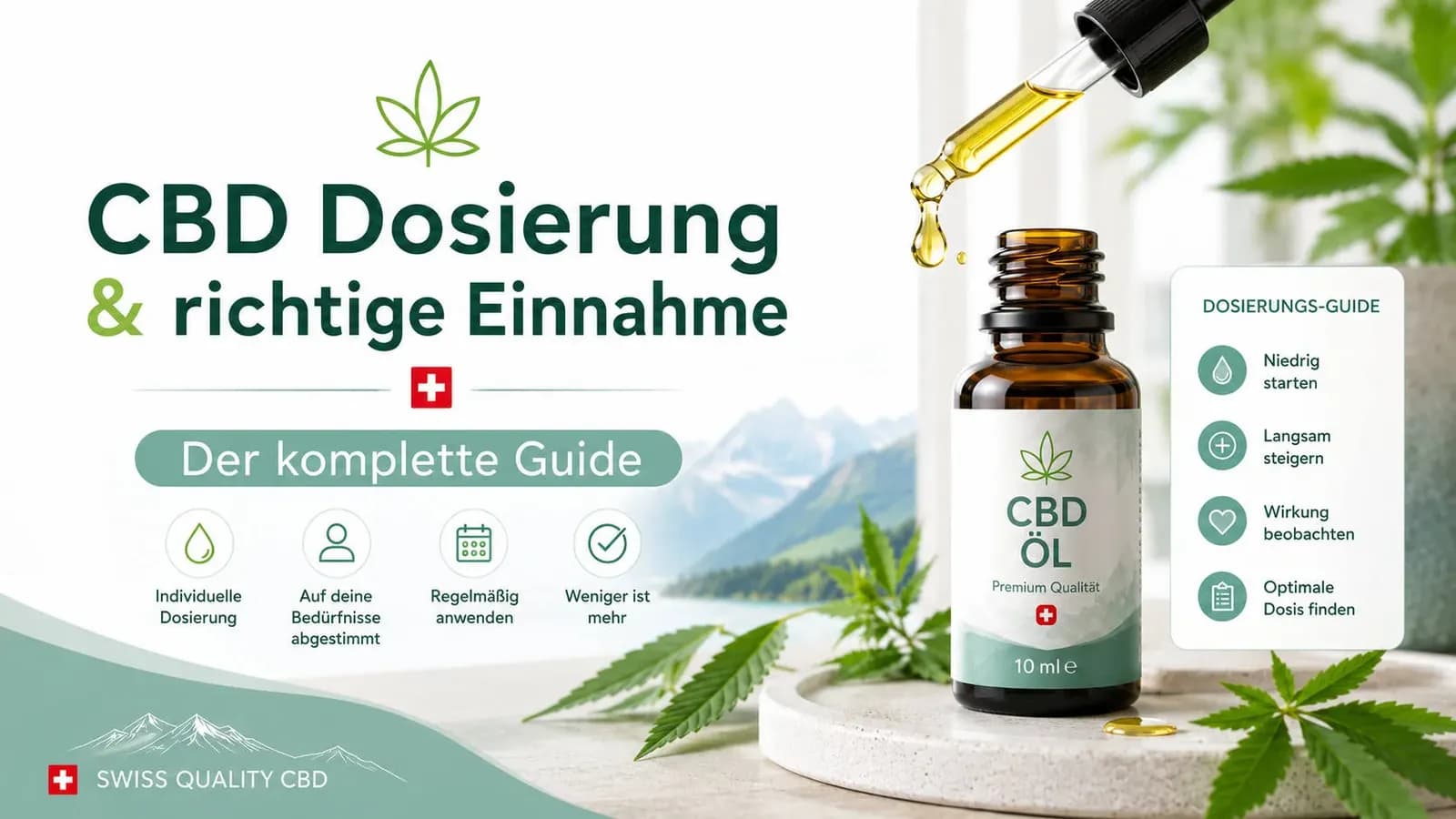
Use of CBD & taking CBD oil
The typical use of CBD is sublingual:
- Taking CBD oil: a few drops under the tongue
- Keep in the mouth for 60–90 seconds
- Then swallow
This applies generally to CBD drops and is not a recommendation for use for migraine or headaches.
Dosage – why there is no recommendation for migraine
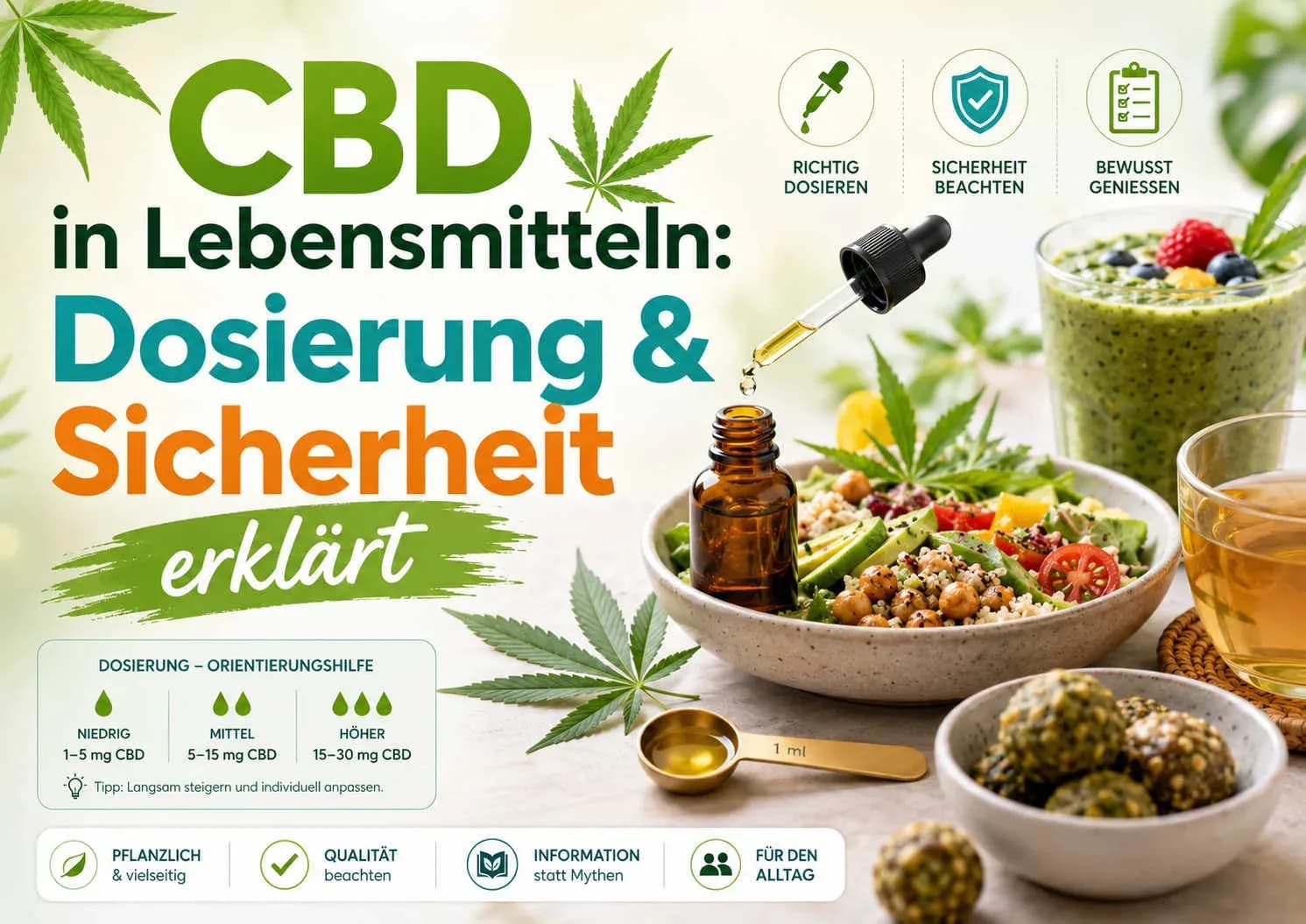
There is no proven dosage of CBD for headaches or migraine. General quantities depend on:
- body weight
- personal tolerance
- concentration of the CBD product
General information (not a medical recommendation)
- Follow the information on the product (mg CBD per drop)
- start with a low amount
- if you take medication, seek medical advice beforehand
Recurring or severe headaches and migraine should be assessed by a doctor. CBD products do not replace treatment.

High-quality CBD products – what should you look for?
A high-quality CBD product should:
- be lab-tested
- contain clear information on the CBD content
- have low amounts of THC (below 1 % in Switzerland)
CBD oils from controlled production are particularly preferred.
Side effects of CBD & interactions with medication
The side effects of CBD are considered mild. Possible ones include:
- tiredness
- dry mouth
- slight drop in blood pressure
Important: interactions with medication are possible. Anyone who regularly takes medication or uses medical cannabis should seek medical advice before use.
CBD migraine experiences – how should they be assessed?
Under the keyword CBD migraine experiences, you can find many reports on the internet.
Such individual reports are subjective, unverifiable and not proof of an effect.
CBD oil migraine experiences do not replace studies or medical advice either.
CBD for migraine or headaches – a realistic assessment
CBD for migraine or CBD for headaches does not replace medical therapy. Realistically:
✔ an effect has not been proven✔ CBD is generally considered well tolerated✔ interactions with medicines are possible
If you often suffer from headaches, you should have the cause assessed by a doctor.
Conclusion: CBD for headaches & migraine
This article was researched by experts and is updated regularly. It is for general information purposes and does not replace medical advice.
CBD is not a remedy. Regarding the current state of knowledge:
- CBD is being researched for migraine and headaches; evidence is lacking
- the treatment of migraine belongs in the hands of a doctor
- interactions with medicines are possible
If you want to try CBD products, look for tested quality and clarify the use of any medication with a doctor beforehand.

FAQ – CBD, headaches and migraine
Can CBD help with headaches?
There is no proof of efficacy. Whether CBD can play a role in headaches is being investigated in studies.
Can CBD help with migraine?
There is no reliable evidence so far. The study situation is preliminary; migraine requires medical treatment.
What is CBD oil for migraine?
CBD oil is a popular dosage form with flexible dosing.
How do you take CBD oil?
Usually sublingually: a few drops under the tongue.
Are there side effects of CBD?
Side effects are rare and usually mild.
Are there interactions with medication?
Yes, which is why you should seek medical advice before use.
Note
This article is intended solely for general information and does not constitute
medical advice. Cannabidiol (CBD) is not a medicinal product. No
healing or health claims are made.
Legal notice (Switzerland)
CBD products are legal in Switzerland provided the THC content is below 1 %.
The content refers exclusively to the legal situation in Switzerland.
Disclaimer
In the event of health complaints, a medical professional should always
be consulted.
You can find more background on the effects of CBD on pain and other areas of application in the comprehensive guide to CBD effects & areas of application.
Categories