Effects & Health
CBD for skin problems: what the research shows
By Vapor Spirit Fachteam
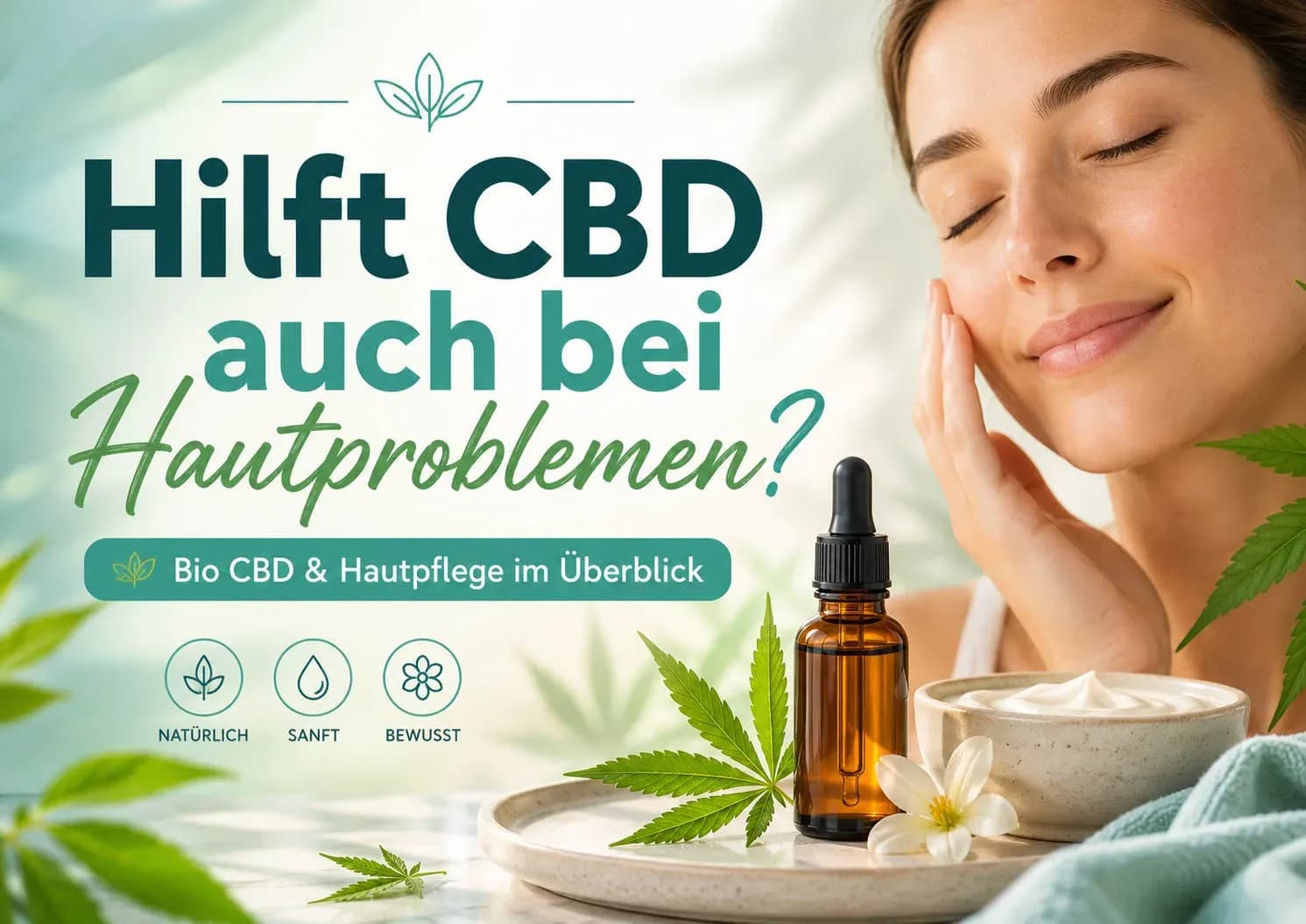
Briefly and honestly up front: CBD is not a medicinal product and is not approved for the treatment of skin diseases. There are no robust clinical studies that prove an effect on acne, atopic dermatitis or psoriasis. What does exist is basic research on the skin's endocannabinoid system and individual cell experiments – in other words, indications, not proof. In cosmetics, CBD is used as a care ingredient, not as a therapy. This article puts the research into context objectively and shows what you should pay attention to when using it.
Important note: Existing skin conditions such as atopic dermatitis, psoriasis or persistent acne should be assessed by a dermatologist. CBD cosmetics do not replace treatment prescribed by a doctor.
Why CBD is being researched in skin care
The skin is the largest human organ and is exposed every day to external influences such as pollution, stress or climate. The reason cannabidiol is being studied in connection with skin care at all lies in the endocannabinoid system: this regulatory network is active not only in the nervous system but can also be detected in the skin. It is associated with processes such as sebum production, barrier function and cell renewal.
This explains the scientific interest – but it does not prove any effect. How the system works in principle is explained in the article on the endocannabinoid system.
Which properties are attributed to CBD?
Several properties appear in the scientific literature. What matters is where each finding comes from – this overview makes that transparent:
Described property | Where the finding comes from | What it means |
Antioxidant properties | Laboratory studies on cell cultures | Preclinical, not transferable to human skin |
Soothing effects on the skin | Smaller studies and observational reports | Indications, no proven effect |
Influence on sebaceous glands | Cell experiments on sebum-producing cells | Basic research, no proof of efficacy for acne |
Interaction with the skin's ECS | Basic research on the endocannabinoid system | Explains the interest, does not prove any effect |
The assessment is the same for all points: this is mostly preclinical research on cell cultures or small studies. Large, controlled clinical trials are lacking for any reliable statements about the effect in humans.
CBD for blemished skin
Some research papers examine whether CBD could influence sebum-producing cells. This is where the interest in blemished skin comes from. Context is important: this work comes from basic research. There is no proof of efficacy for acne, and CBD cosmetics are not an acne treatment. For pronounced or inflammatory acne, the right step is a dermatological assessment.
CBD for dry and sensitive skin
Care products containing CBD are used as part of normal skin care routines. Whether a product suits dry or sensitive skin depends less on the CBD than on the overall formulation: carrier oils, emulsifiers, fragrances and preservatives play a major role in determining how well it is tolerated.
How CBD cream differs from pure hemp cream is explained in the article
CBD for atopic dermatitis and psoriasis: what applies
In scientific publications, cannabidiol is also studied in the context of inflammatory skin diseases such as atopic dermatitis (eczema) or psoriasis. Particular clarity is needed here:
CBD is not an approved medicinal product for the treatment of these conditions. The evidence is not sufficient to make therapeutic claims. If you suffer from atopic dermatitis or psoriasis, you should have the treatment assessed by a dermatologist – effective, established therapies exist for both conditions. A prescribed treatment must not be replaced with cosmetics on your own initiative.
CBD cosmetics and external use: the product forms
There are various forms for external use. Which one suits you depends on the area of skin and the intended use:
Product form | Application | Suitable for |
CBD cream / body lotion | Apply over the area and let it absorb | Daily care of larger areas of skin |
CBD facial care | Apply thinly, avoid the eye area | Facial care, including for sensitive skin |
CBD tincture for external use | Apply to specific spots | Targeted application on individual areas |
CBD oil for internal use | Drops under the tongue | For anyone who wants to take CBD in general |
You can find our range for external care under CBD Cosmetics. If you prefer a concentrated form that can be applied to specific spots, you will find it in the CBD tincture made from Swiss hemp – laboratory-tested, as a full spectrum extract and without artificial additives.
Application and patch test
For external use, the following applies: apply a small amount to the desired area of skin, first test tolerance on a small spot and avoid contact with the eyes and mucous membranes. The patch test is particularly important because some people can react allergically to cannabidiol, carrier oils or terpenes – more on this in the article
CBD and allergies: what is known.
What you should look for when buying
For CBD cosmetics, the same criteria apply as for other CBD products: a CBD content declared in milligrams or percent, a certificate of analysis for each batch, a complete list of ingredients (INCI) and a traceable origin. How to read a certificate of analysis is explained in the article on
CBD laboratory analysis. Also make sure that products are marketed as cosmetics – advertising that refers to diseases is not permitted for cosmetics and is a warning sign of dubious providers.
When you should see a dermatologist
Seek medical help for new, changing or weeping skin changes, for severe itching, if you suspect atopic dermatitis or psoriasis, for skin problems with accompanying symptoms such as fever, and whenever complaints persist for weeks. CBD cosmetics are care products – not diagnostics and not therapy.
Conclusion:
CBD is increasingly being researched in the field of skin care, and basic research on the skin's endocannabinoid system offers interesting approaches. However, the evidence is not sufficient for therapeutic claims. If you want to add CBD to your own care routine, pay attention to quality, declared ingredients and realistic expectations – and have existing skin conditions assessed by a dermatologist. You can find our care range under CBD Cosmetics.
Frequently asked questions about CBD and skin
Can CBD cure skin problems?
No. CBD is not a medicinal product and is not approved for the treatment or cure of skin diseases. It is used as part of general skin care and is being studied scientifically.
Does CBD help with acne?
There is no proof of efficacy. Individual cell experiments examine the influence on sebum-producing cells, but no treatment can be derived from them. For pronounced acne, a dermatological assessment is advisable.
Does CBD help with atopic dermatitis or psoriasis?
There is not enough evidence for this. CBD is not approved as a medicinal product for these conditions. Prescribed therapies should not be replaced with cosmetics.
Is CBD suitable for all skin types?
That depends on the overall formulation, not just on the CBD. For sensitive skin, a patch test on a small area is recommended.
Can CBD itself irritate the skin?
In individual cases, yes. Reactions can be triggered by CBD, carrier oils, fragrances or terpenes. If redness or itching occurs after use, you should stop using the product.
How is CBD used in skin care?
Products containing CBD are applied externally, either to specific spots or over larger areas depending on the product form. The manufacturer's recommendation should be followed.
Are CBD cosmetics legal in Switzerland?
Yes, CBD cosmetics are legal provided that the requirements of cosmetics law are met and the THC content is below 1 percent. Advertising that refers to diseases is not permitted.
Transparency note: This article was written on the basis of publicly available scientific sources and is intended for general information only. It does not replace individual medical advice and does not constitute a therapeutic recommendation. Cannabidiol (CBD) is not a medicinal product; no promises of healing or health benefits are made. If you have skin complaints, consult a medical professional. CBD products are legal in Switzerland provided the THC content is below 1 percent. Sold to adults only. Last reviewed: July 2026.
Categories