Products & Strains
Lowering Cholesterol with CBD? What Research Really Shows
By Vapor Spirit Fachteam
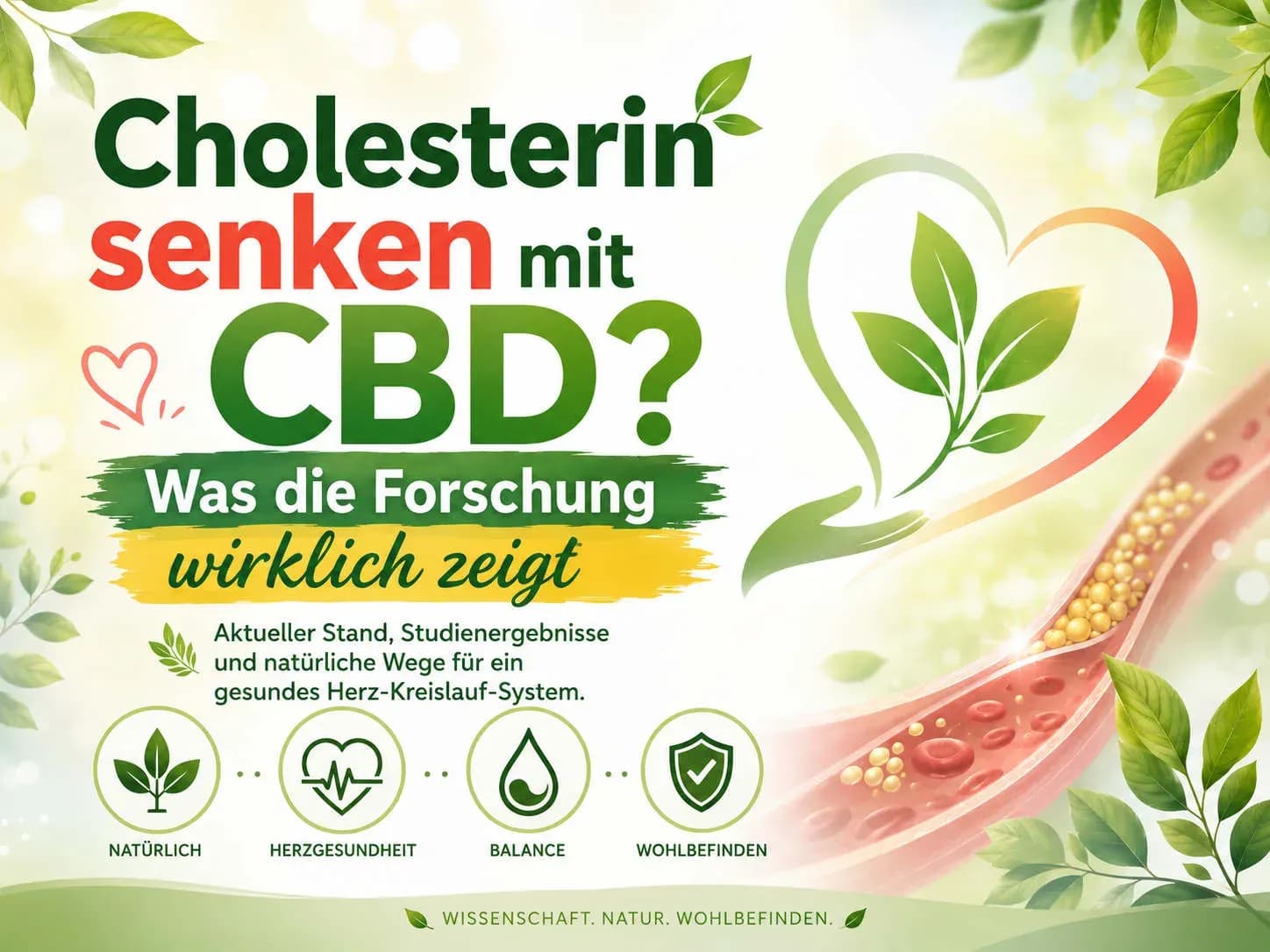
A brief and honest note up front: there is currently no scientific evidence that CBD lowers cholesterol levels in humans. CBD is not a cholesterol-lowering agent and does not replace medical treatment. Individual studies suggest that CBD could influence metabolic processes via the endocannabinoid system – but this does not prove a cholesterol-lowering effect. This article provides a neutral overview of CBD and cholesterol and explains what really matters with high cholesterol levels.
Important note: High cholesterol levels are a serious risk factor for cardiovascular disease. Prescribed medication such as statins must never be stopped on your own initiative or replaced by CBD. If your cholesterol levels are elevated, your doctor is always the right point of contact.
What is cholesterol?
Cholesterol is a fat-like substance that the body needs to build cells and hormones. It circulates in the blood, bound to transport proteins. What matters is the ratio of the two most important forms:
Value | Name | Role in the body |
LDL cholesterol | Low Density Lipoprotein | Transports cholesterol to the cells; known as “bad” cholesterol because it can build up in blood vessels |
HDL cholesterol | High Density Lipoprotein | Transports excess cholesterol back to the liver; known as “good” cholesterol |
Total cholesterol | Total amount in the blood | Assessed by a doctor together with the LDL/HDL ratio |
A persistently high proportion of LDL cholesterol in the blood is considered a risk factor for deposits in the blood vessels. Balanced cholesterol levels are therefore important for the cardiovascular system.
What is CBD?
CBD (cannabidiol) is a non-psychoactive component of the hemp plant. Unlike THC, it is not intoxicating. CBD interacts with the body's own endocannabinoid system (ECS), a regulatory network involved in many processes – from sleep and mood to metabolism. You can find more about the general effects of CBD in the linked article.
CBD and cholesterol: what does research say?
The question “lowering cholesterol with CBD” is asked frequently, but the scientific answer is cautious. Some studies suggest that CBD could be involved in regulating metabolic processes via the endocannabinoid system (ECS). In isolated cases, studies have described a possible influence on the lipid profile – that is, on the ratio of HDL cholesterol (High Density Lipoprotein) to LDL cholesterol (Low Density Lipoprotein).
Approach studied | What was observed | Assessment |
Lipid profile | Individual studies suggest a possible influence on the HDL/LDL ratio | Preliminary, mostly animal or small-scale studies |
Anti-inflammatory action | Anti-inflammatory properties are attributed to CBD | Laboratory findings, no evidence in humans regarding cholesterol |
Cardiovascular system | Studies suggest possible effects on blood vessels | Early research, no clinical recommendation |
What matters is the context: these indications come mainly from animal models and small studies. There is no proven cholesterol-lowering effect of CBD in humans. Claims such as “CBD against cholesterol” as an effective method are therefore not scientifically supported.
Why CBD is associated with cholesterol
The reason why CBD and cholesterol are discussed together at all lies in two properties attributed to CBD in laboratory studies. First, the anti-inflammatory properties: since chronic inflammation is associated with cardiovascular risks, an indirect link is suspected. Second, the interaction with the endocannabinoid system, which is also involved in regulating metabolism.
Both are starting points for research, not proven effects. Positive effects described by some users are subjective and cannot be generalised as a cholesterol-lowering effect.
Hemp oil, omega-3 and cholesterol: the important difference
CBD oil is often confused with hemp cooking oil – and the distinction is particularly important when it comes to cholesterol. Cold-pressed hemp cooking oil is a food and naturally provides omega-3 and omega-6 fatty acids in a favourable ratio. A balanced diet rich in unsaturated fatty acids is generally considered part of a heart-healthy lifestyle. However, this is a question of nutrition and not an effect of CBD. If you want to use hemp oil in the kitchen, you can find it under Buy hemp cooking oil. A CBD oil, on the other hand, is an extract containing cannabidiol and is not intended as food.
What really helps with high cholesterol levels
If your goal is to lower high cholesterol levels, the proven approaches are lifestyle changes and – where necessary – medication prescribed by a doctor. These include a balanced diet low in saturated fatty acids, regular exercise, not smoking, a healthy body weight and, if prescribed, consistently taking statins. These measures are scientifically supported – CBD is not in this context.
If you have elevated levels, always discuss the approach with your doctor. They can assess your individual risk and determine the appropriate treatment.
Trying CBD: what should you look out for?
If you want to try CBD regardless of the cholesterol topic, you should pay attention to quality: a CBD content declared in milligrams, a certificate of analysis per batch and traceable origin. The article on CBD laboratory analysis explains how to read a laboratory certificate. If you take medication – especially statins or blood pressure medication – clarify the use of a CBD product with a doctor beforehand, as there may be interactions with medication. Our CBD oil range is laboratory-tested and transparently declared.
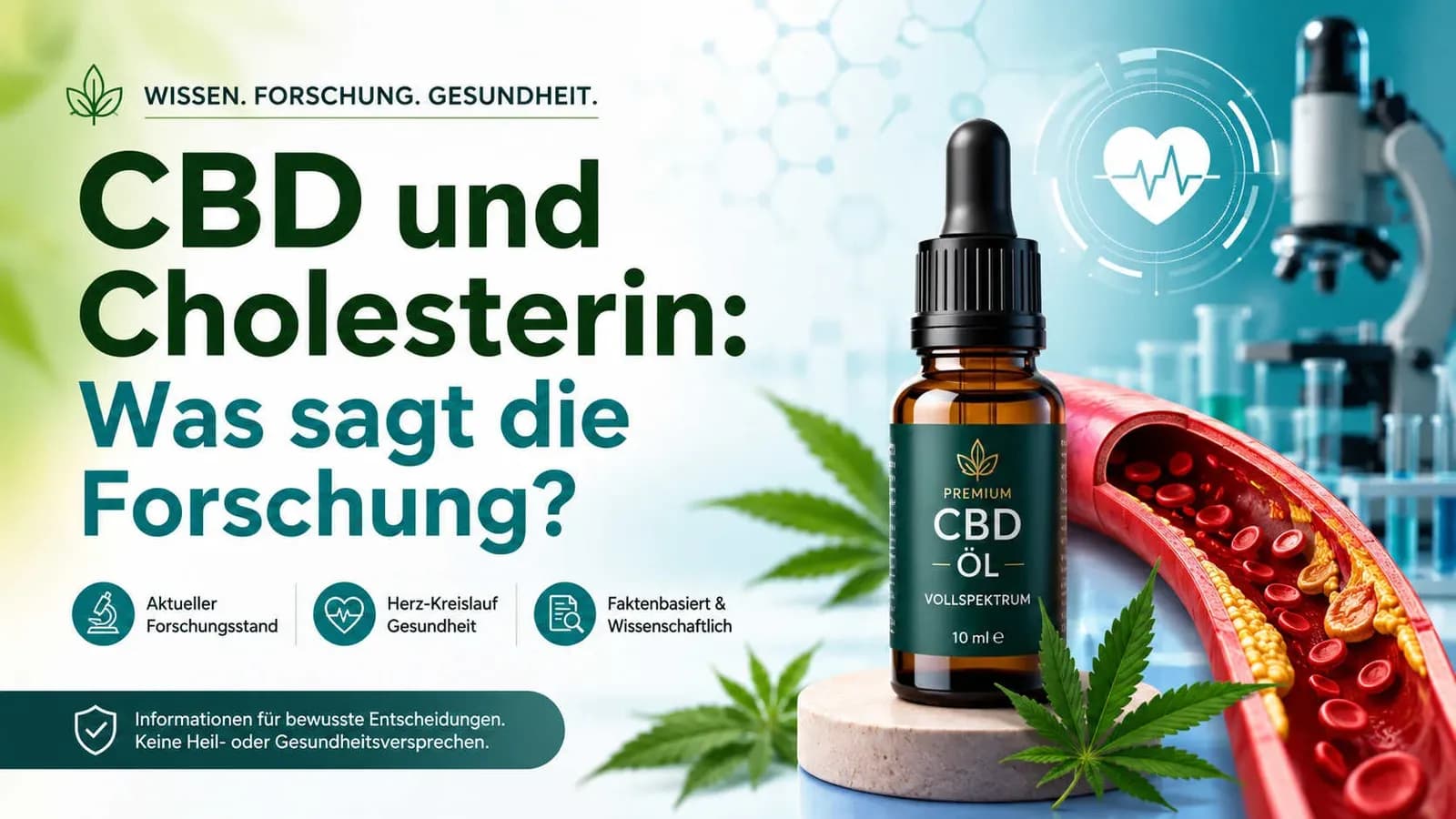
Frequently asked questions about CBD and cholesterol
Can CBD lower cholesterol levels?
There is no scientific evidence that CBD lowers cholesterol levels in humans. Individual studies suggest a possible influence on metabolism, nothing more.
Does CBD affect LDL and HDL cholesterol?
Individual animal and small-scale studies have described a possible influence on the lipid profile. There is no proven effect on LDL or HDL cholesterol in humans.
Is CBD a substitute for statins?
No. CBD is not a cholesterol-lowering agent and not a substitute for prescribed medication. Statins should never be replaced by CBD on your own initiative.
Does hemp oil help with high cholesterol?
Hemp cooking oil provides omega-3 and omega-6 fatty acids, which, as part of a balanced diet, can be part of a heart-healthy lifestyle. This is a question of nutrition and not a proven healing effect.
Should I discuss CBD with my doctor if I have high cholesterol?
Yes, definitely, especially if you are already taking medication. CBD can cause interactions, which is why its use should be clarified with a doctor.
Conclusion: according to current knowledge, lowering cholesterol with CBD is not proven. Although individual studies suggest a possible role of the endocannabinoid system in metabolism, a cholesterol-lowering effect of CBD in humans has not been demonstrated. If you have elevated cholesterol levels, rely on a healthy lifestyle and medical advice. CBD can be a worthwhile CBD oil for other reasons – as a cholesterol-lowering agent, it is not suitable.
Important note: CBD products are not medicinal products and are not intended to treat, relieve or prevent diseases. This article is for general information only, reflects the publicly available research and does not replace medical advice. If you have elevated cholesterol levels or cardiovascular complaints, contact a medical professional and never stop prescribed medication on your own initiative. The legal information refers to Switzerland. Sale to adults only. Last reviewed: July 2026.
Categories