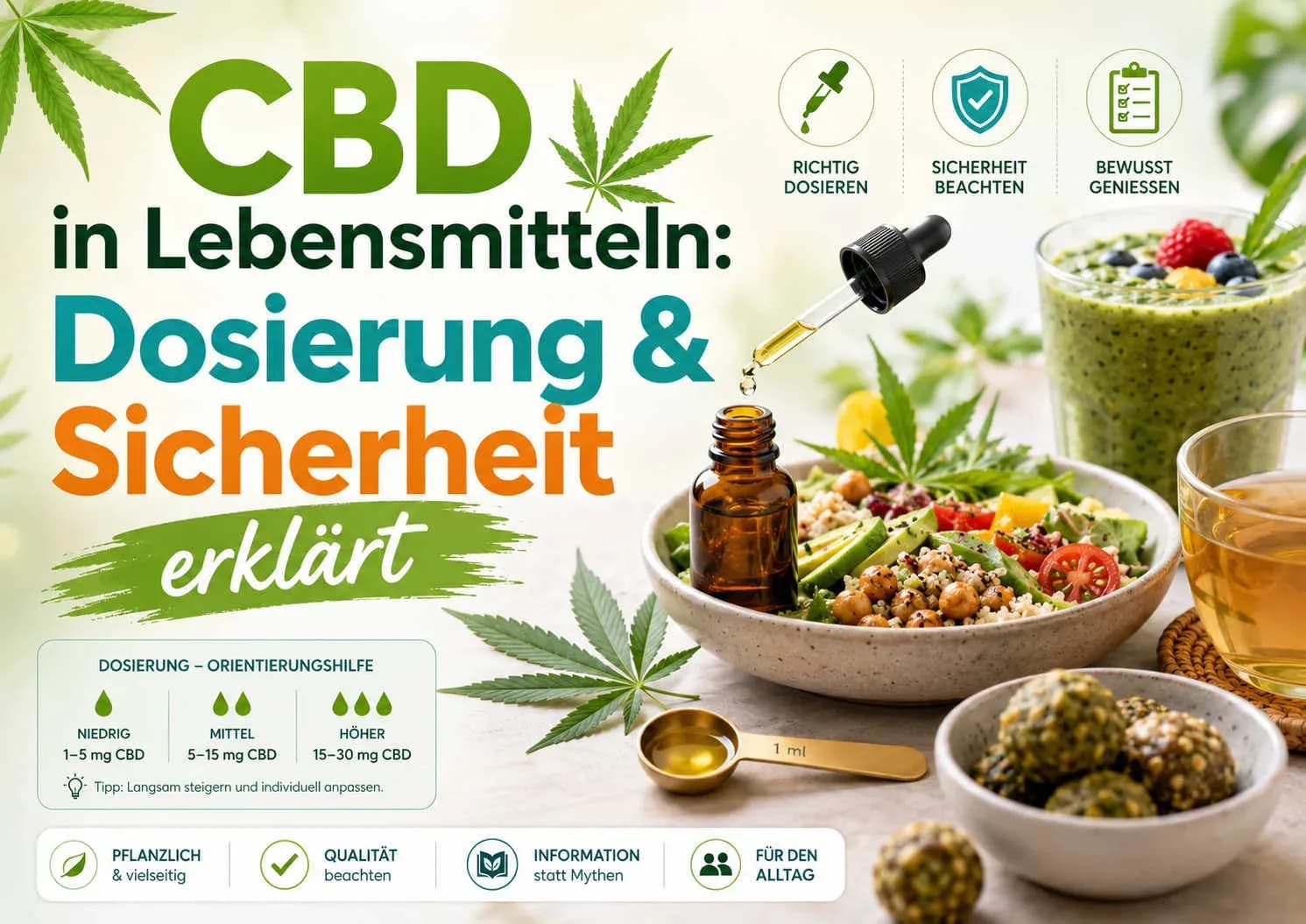
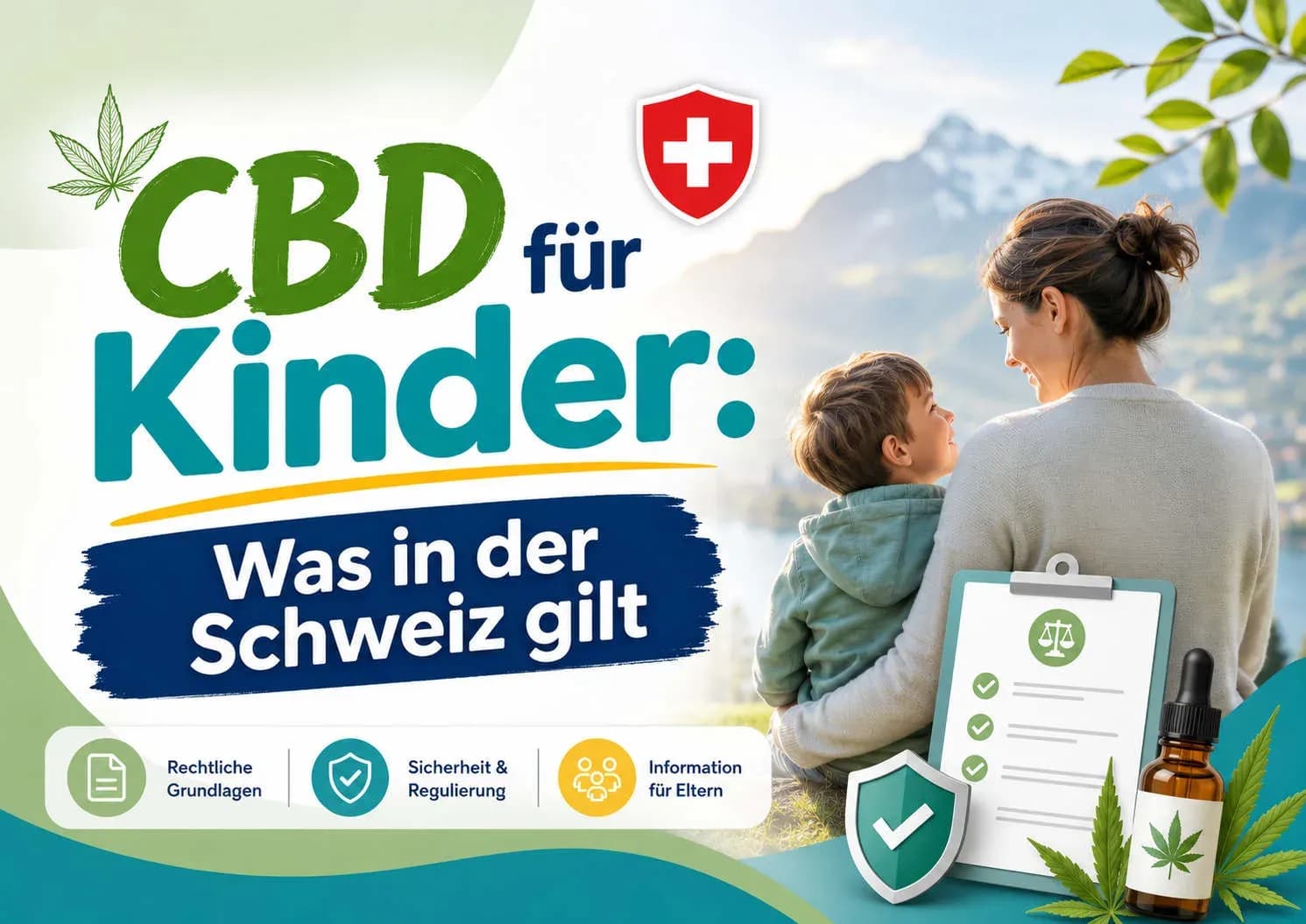
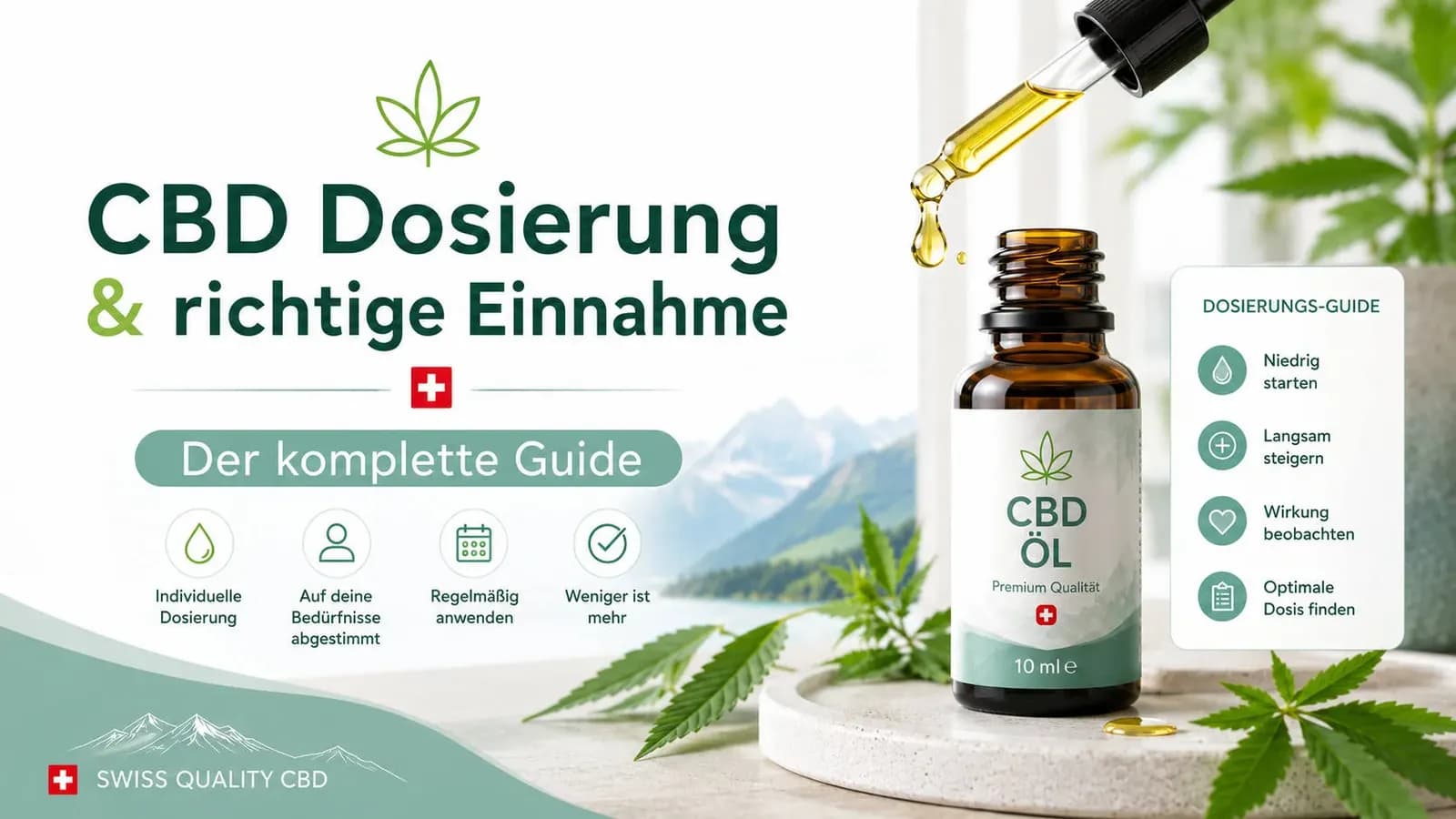
Use & Dosage
CBD Overdose: Safety, Side Effects & Dosage
By Vapor Spirit Fachteam
→ You can find the complete overview of dosage, forms of intake and safety in the
Cannabidiol – CBD for short – has been an established part of the Swiss market
for hemp products for years. As its use spreads, however, questions arise more and more often
about the correct classification, tolerability and possible
accompanying effects.
Many beginners want to know:
Can you overdose on CBD – and what should you pay attention to?
This article offers an objective, neutral classification based on the current
state of knowledge. You will learn what is meant by a CBD overdose, which temporary accompanying effects can occur and why product quality,
individual tolerability and possible interactions play an important role.
In this article you will learn:
- what is meant by “overdose” in the case of CBD
- which accompanying effects can occur
- why product quality is decisive
- what to look for when choosing a CBD product
- when particular caution is advisable
What does “overdose” mean with CBD?
The term “overdose” is often associated with acute medical emergencies,
such as those known from alcohol or certain medicines. With
CBD, however, the term is used differently.
In connection with cannabidiol, an overdose usually does not describe
classic poisoning, but rather an amount that is higher than what is individually perceived as pleasant
or tolerable.
Personal tolerability can differ considerably from person to person.
Factors that play a role include body weight, product concentration, individual
sensitivity, previous experience, accompanying substances and possible interactions with medication.
Current state of knowledge on the safety of CBD
According to current knowledge, pure cannabidiol is usually described in scientific
studies as well tolerated. At the same time, depending on the amount, product quality, individual sensitivity and possible interactions,
undesirable accompanying effects can occur.
International expert bodies point out that pure CBD shows no classic potential for dependence. However, these assessments do not replace individual
medical advice and do not automatically apply to every freely available
product.
The important point is therefore: the quality, composition and labelling of a product
play a central role.
What can occur with excessive amounts
If more CBD is used than is individually well tolerated,
temporary accompanying effects can occur. These are often described as mild,
but they should be taken seriously and monitored.
Possible accompanying effects may include:
- tiredness
- dizziness
- dry mouth
- feeling of warmth
- slight drop in blood pressure
- gastrointestinal discomfort
- rarely headaches or diarrhoea
Such reactions can vary depending on the person, the product and the amount.
If symptoms are more severe, last longer or there is any uncertainty,
medical professionals should be contacted.
Why accompanying effects can also be caused by the product
Undesirable reactions are not always directly related to cannabidiol itself.
Product quality, composition or accompanying substances can often also play
a role.
Differences can arise from:
- chemically modified cannabinoids
- synthetic additives
- low-quality carrier oils
- residues from unsuitable extraction methods
- contamination with pesticides or heavy metals
- inaccurate CBD or THC declarations
Transparent production, clear product information and independent laboratory analyses
are therefore particularly important.
What to look for in high-quality CBD oils
A high-quality product is characterised by verifiable information and
transparent production.
Important characteristics can be:
1. Natural full spectrum composition
A high-quality full spectrum product contains various components typical of the plant
in their natural form, provided this is within the legally permitted framework.
2. No chemically modified cannabinoids
Reputable products do without synthetic or chemically transformed
molecular forms.
3. Raw materials from controlled cultivation
Traceable origin and controlled cultivation are important factors for quality
and transparency.
4. Gentle extraction
Established extraction methods can help to obtain plant components as
cleanly as possible and without undesirable residues.
5. Regular laboratory analyses
Test reports can make information on the cannabinoid profile, THC content, purity and possible residues transparent.
6. Different concentrations
Different concentrations can help to better adapt a product to individual
needs and product information.
How much CBD is usually used?
The appropriate amount depends on several factors, including:
- product concentration
- individual tolerability
- body weight
- previous experience
- composition of the product
- possible interactions with medication
General dosage recommendations do not make sense, as CBD products
have different concentrations and people can react very differently.
Some sources of information mention low double-digit milligram ranges as guide values. However, such figures are not a general recommendation.
What matters is always the manufacturer’s product information and, in case of uncertainty,
consultation with medical professionals.
When particular caution is advisable
Particular caution is advisable if medication is being taken or
health problems exist. In individual cases, cannabidiol can
interact with medication, especially with active substances that are
metabolised by certain liver enzymes.
These include, among others:
- blood thinners
- certain painkillers
- anti-epileptic drugs
- some antidepressants
- other regularly taken medicines
In such cases, before using CBD products, medical
professionals should be involved.
What to pay attention to during use
If you use CBD products, you should pay particular attention to quality, product information and
personal tolerability.
Useful points of orientation are:
- read the product information carefully
- note the concentration per drop or serving
- do not use unnecessarily high amounts
- observe your body’s reactions
- seek professional advice if you take medication or have health problems
- only choose products with clear labelling and laboratory analyses
Especially with new products, conscious and careful use is important.
CBD oil overdose: what does it mean?
A CBD oil overdose refers to taking significantly more cannabidiol
than the body needs or tolerates well. Unlike many medicines, the
CBD effect is considered comparatively mild, and the World Health Organization generally classifies cannabidiol as well tolerated. What matters is the amount actually absorbed
of CBD: high-quality CBD oils contain different concentrations, which is why
the amount of active ingredient consumed can vary greatly. A fatal overdose has so far
not been documented – nevertheless, the dosage should always be chosen consciously.
CBD overdose side effects
If high CBD doses are taken, undesirable side effects can occur.
The most frequently described reactions include tiredness, diarrhoea,
dry mouth, changes in appetite and slightly lowered blood pressure.
These effects are usually temporary and subside as soon as the CBD dose is reduced.
It is also important to know that cannabidiol can influence the breakdown of certain medicines via the
liver enzymes – if you take medication at the same time, medical
advice is therefore advisable.
CBD overdose symptoms
With a significant overdose, various symptoms can occur, which are usually mild.
These include pronounced drowsiness, light-headedness, nausea or mild circulatory problems.
Particularly high doses can lead to difficulty concentrating in some users
or to a general feeling of weakness. Such symptoms are not considered
life-threatening and usually disappear on their own as soon as the active ingredient has been
broken down again.
Too many CBD drops
If you take too many CBD drops, you often unknowingly exceed the amount that suits you.
It makes sense to start with a low dose and increase it slowly until the desired
effect is reached. Oral intake via drops under the tongue allows good
control over the amount of active ingredient. In principle, the intake of CBD should always be adapted to
your own body weight and individual sensitivity.
CBD oil overdose
The best way to avoid a CBD oil overdose is to follow the correct
cannabidiol CBD dosage from the start. Scientific reviews,
for example by Bergamaschi et al., show that even high daily doses in the range of several
hundred milligrams were well tolerated in studies. However, this does not mean that any amount
should be taken – the reaction to cannabidiol differs from person to person.
Gradually working your way towards the right dosage remains the safest method.
CBD drops overdose
Even with a CBD drops overdose, there is usually no reason to panic, as cannabidiol
has no intoxicating effect. For context: even in areas such as medical cannabis,
CBD preparations are valued for their favourable safety profile. If you are still unsure
or notice persistent symptoms, you should seek medical advice – this way the intake can be
made safe and pleasant.
Conclusion: can you overdose on CBD?
According to current knowledge, a classic toxic overdose from pure CBD is
not known. Nevertheless, excessive amounts or unsuitable products can
cause temporary accompanying effects.
The decisive factors are above all:
- product quality
- transparent production
- clear labelling
- realistic use
- individual tolerability
- possible interactions with medication
CBD should not be understood as a medicine. If you have health problems,
take medication, are pregnant or breastfeeding, you should seek medical advice
before use.
Additional context on dosage, safety and the state of research
When using CBD oil, a realistic and individual assessment is particularly
important. Even though cannabidiol is often described as well tolerated,
experience and scientific studies show that the body can react differently
depending on the person.
A classic CBD overdose in the toxicological sense is not known. Nevertheless,
higher amounts can cause temporary accompanying effects. These include,
for example, tiredness, slight dizziness, dry mouth or gastrointestinal
discomfort.
An important factor is the CBD content of the respective product. With oils in particular, it is
useful to know how much CBD is contained per drop in order to better
understand the product information. With CBD capsules, too, you should look for clear labelling of the
amount contained, as these usually have a standardised dose and
can be adjusted less flexibly than oil.
International assessments and scientific publications show that even
high amounts have been examined in studies. However, these data serve exclusively
for scientific evaluation and do not constitute a recommendation for everyday use.
For consumers, the following therefore applies: quality, transparency, personal
tolerability and conscious use are more important than general quantity guidelines.
FAQ – CBD overdose & safety
Can you overdose on CBD?
According to current knowledge, a classic toxic overdose from pure CBD is
not known. However, excessive amounts can cause temporary accompanying effects
such as tiredness, dizziness or gastrointestinal discomfort.
How much CBD is considered usual?
That depends on the respective product, the concentration and individual tolerability.
General dosage recommendations do not make sense. What matters is the
manufacturer’s product information and, in case of uncertainty, consultation with
medical professionals.
What happens if you take too much CBD?
Possible accompanying effects can be tiredness, dry mouth, dizziness or
gastrointestinal discomfort. These reactions can vary
from person to person.
Is CBD toxic?
According to current knowledge, CBD is mostly described as well tolerated. Nevertheless,
product quality, amount, individual sensitivity and possible
interactions can play a role.
Can CBD cause diarrhoea?
In individual cases, gastrointestinal complaints or diarrhoea can occur. Often,
carrier oils, additives or unsuitable product quality can also play a role.
Can CBD interact with medication?
Yes, interactions are possible in individual cases. Especially if you take medication
regularly, before using CBD products
you should consult medical professionals.
Note
This article is for general information purposes only and does not
constitute medical advice. Cannabidiol is not a medicine and does not replace medical
treatment. No healing or health claims are made.
Legal notice Switzerland
CBD products are legal in Switzerland provided the THC content is below 1% and the
legal regulations are observed.
Disclaimer
In case of health problems, existing illnesses, pregnancy, breastfeeding
or the use of medication, a medical professional should always
be consulted.
Categories