CBD Knowledge
Cannabinoids explained simply – the big overview
By Vapor Spirit Fachteam

On this page we give you a clear, factual overview of the most important cannabinoids, their differences and how they are classified, without making sweeping claims about their effects.
More than a hundred different cannabinoids have been identified so far. The best known is cannabidiol (CBD), which is non-intoxicating and widely used in Switzerland. Other cannabinoids are also attracting increasing attention. We summarise what science is investigating in this area under what the research says.
What are cannabinoids?
Cannabinoids are the characteristic active compounds of the hemp plant. Some of them differ considerably in their properties and their legal classification. The best known is CBD, which is non-intoxicating.
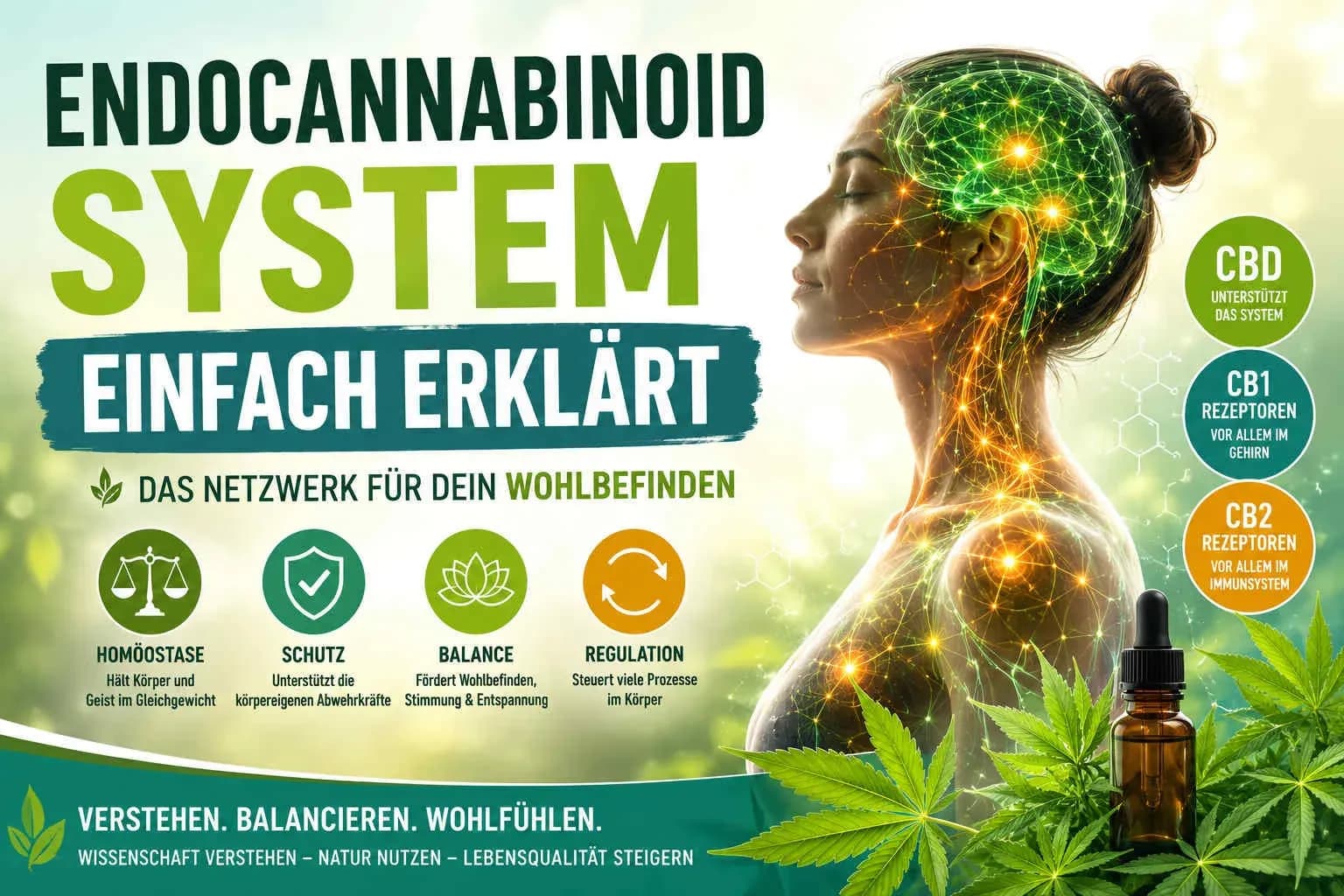
The endocannabinoid system explained clearly
Cannabinoids interact with the body’s own endocannabinoid system, a regulatory system involved in numerous physiological processes. Exactly how individual cannabinoids interact with it is the subject of ongoing research; definitive statements are not yet possible.
The most important cannabinoids at a glance
CBD (cannabidiol)
The best-known non-intoxicating cannabinoid, legally available in Switzerland provided the THC content is below the legal limit. You can find more about the effects of CBD in our guide section.
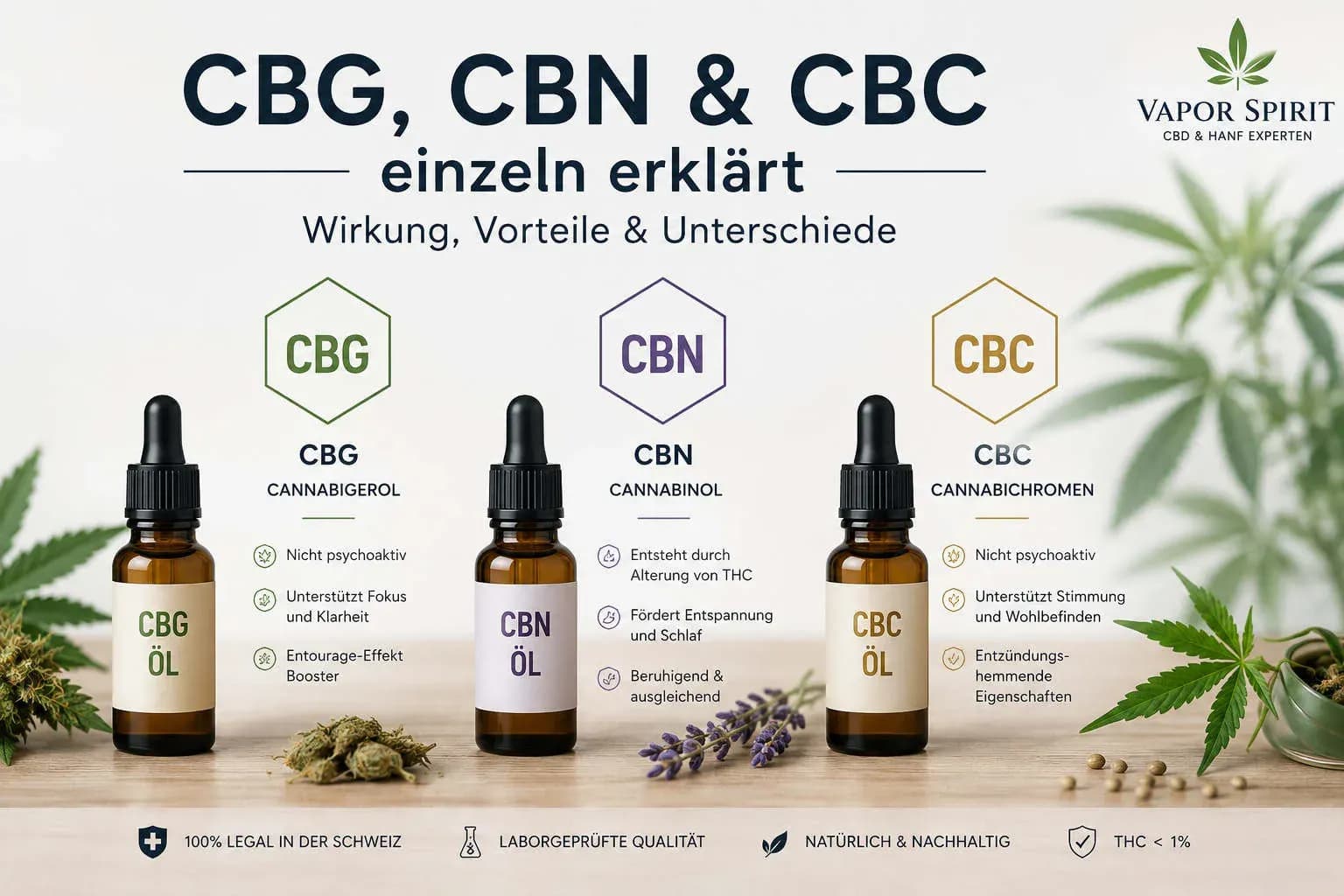
CBG (cannabigerol)
Often called the “mother cannabinoid”, because other cannabinoids are formed from its precursor. CBG is increasingly becoming a focus of research and products.
CBN (cannabinol)
Forms through the breakdown of THC and is present only in small amounts. CBN is increasingly the subject of scientific research.
CBC (cannabichromene)
A lesser-known, non-intoxicating cannabinoid which, like CBD, is formed from the acidic precursor CBGA. CBC is mostly studied in combination with other cannabinoids (keyword: entourage effect). Reliable statements about its effects are still lacking.
CBN (cannabinol)
Forms through the natural breakdown of THC and is present in somewhat higher amounts in aged hemp. CBN is discussed mainly in connection with sleep and evening relaxation and is increasingly the subject of scientific research. There is no confirmed evidence of its effects so far.
CBG (cannabigerol)
Often called the “mother cannabinoid”, because other cannabinoids such as CBD and THC are formed from its acidic precursor CBGA. In the plant, CBG is usually present only in small amounts and is therefore considered comparatively rare. It is increasingly becoming a focus of research and products – for example as CBG isolate.
THC (tetrahydrocannabinol)
The best-known intoxicating cannabinoid. In Switzerland, products may only have a very low THC content below the legal limit. Higher levels are subject to narcotics law.
Before buying, you should check the current legal situation in Switzerland. We deliberately make no claims about the effects of these substances.
Full spectrum, broad spectrum and isolate
These terms describe which cannabinoids a product contains. Full spectrum products contain a broad natural spectrum, whereas isolates contain only a single cannabinoid. Initial studies suggest that the interaction of several cannabinoids (often called the “entourage effect”) could play a role.
Vapor Spirit – buy CBD oil and the best CBD Vape to buy since 2015.
Frequently asked questions about cannabinoids (FAQ)
What are cannabinoids?
Cannabinoids are the active compounds of the hemp plant. More than a hundred different ones are known, including CBD, CBG, CBN and THC.
What is the difference between CBD and THC?
CBD is non-intoxicating, THC is intoxicating. In Switzerland, only products with a THC content below the legal limit are freely available. See also Is CBD legal?.
What is CBN used for?
CBN is mainly associated with sleep and evening relaxation and is being studied scientifically. No reliable claims about its effects can be derived from this.
What is CBC?
CBC (cannabichromene) is a non-intoxicating cannabinoid which, like CBD, is formed from the precursor CBGA and is mostly studied in combination with other cannabinoids.
What is the endocannabinoid system?
A regulatory system of the body with which cannabinoids interact. Research on it is not yet complete.
Are all cannabinoids legal in Switzerland?
No. The legal status differs from substance to substance and can change.
What does full spectrum mean?
Full spectrum means that a product contains a broad, natural spectrum of cannabinoids rather than just a single one.
Note: This content is for information purposes only and does not replace medical advice or diagnosis.
Categories