Products & Strains
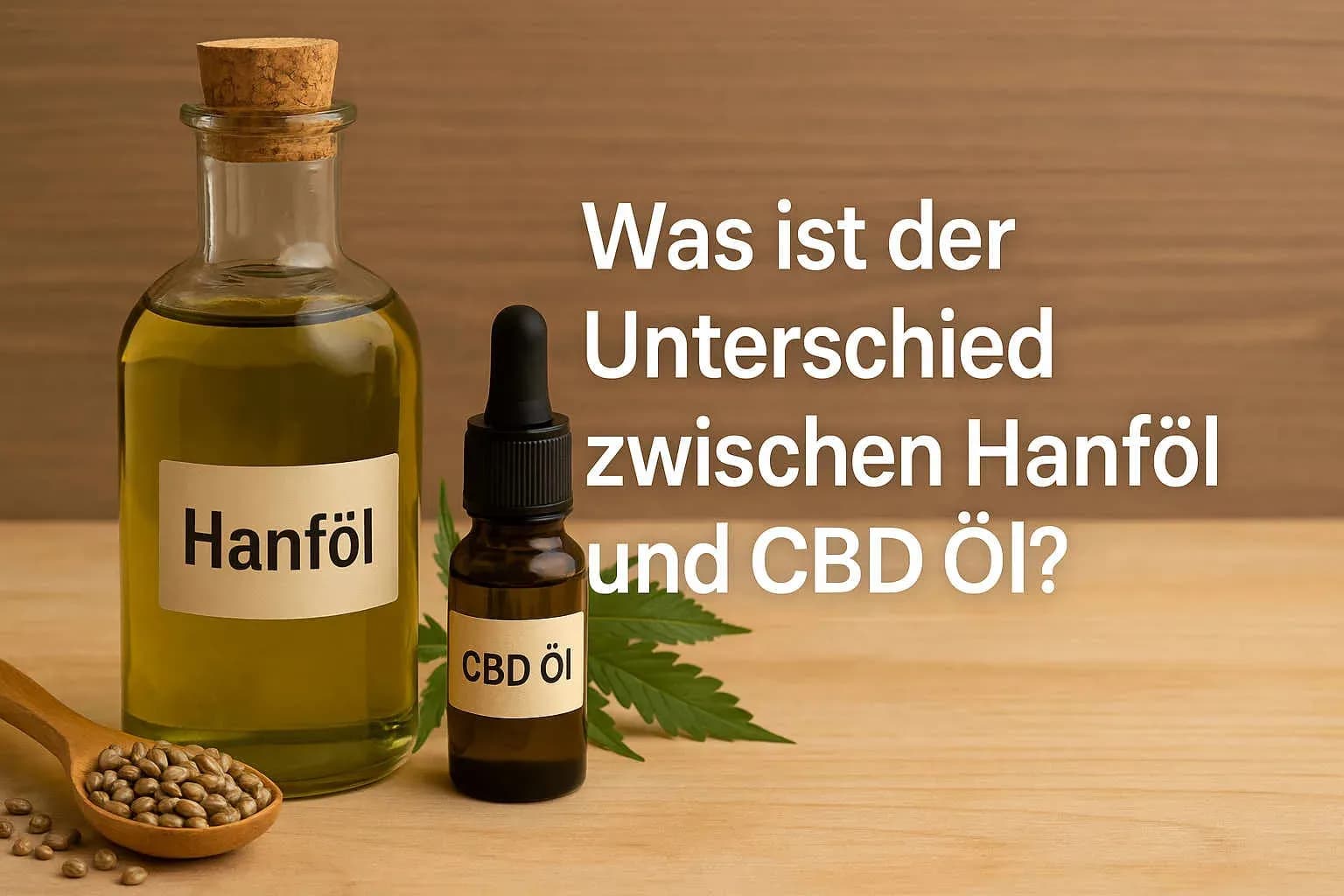
What is the difference between hemp oil and CBD oil?
By Vapor Spirit Fachteam
More and more people are interested in natural plant oils, and in particular
in products made from the hemp plant. At the same time, in German-speaking countries there is
a widespread confusion between two oils that sound similar but
have fundamentally different properties: hemp oil and CBD oil.
Common questions are:
How do the two oils differ?
What are they used for?
And why is one product considerably cheaper than the other?
This article offers clear, factual guidance and explains the differences
between hemp oil and CBD oil in an understandable and transparent way. The aim is to clear up common
misunderstandings and to allow a well-founded assessment.
Hemp oil vs. CBD oil – why these two oils are often confused
Hemp oil and CBD oil both come from the hemp plant (Cannabis Sativa). The
decisive differences, however, lie not in the plant itself, but in
the plant parts used and the substances they contain.
- Hemp oil is obtained from the seeds
- CBD oil is extracted from flowers and leaves
This difference affects composition, area of use and
product properties.
What is hemp oil? – A plant-based edible oil without cannabinoids
Production from hemp seeds
Hemp oil is made by cold-pressing hemp seeds. The seeds contain no
cannabinoids such as cannabidiol (CBD) or tetrahydrocannabinol (THC).
Typical components of hemp oil are:
- Omega-3 and omega-6 fatty acids
- Vitamin E
- essential amino acids
- minerals
- natural antioxidants
Hemp oil is therefore comparable to other plant-based edible oils such as
olive oil or linseed oil.
Nutrient profile of hemp oil – use as a food
Hemp oil is valued as a food, particularly because of its balanced
ratio of omega-3 to omega-6 fatty acids (often approx. 1:3). It is used as part
of a balanced diet.
Important:
Hemp oil contains no cannabinoids and is not related to the
endocannabinoid system.
Uses of hemp oil
Hemp oil is typically used as:
- an edible oil for cold dishes
- a component of salad dressings
- an ingredient in smoothies
- a care oil for skin and hair
- a carrier oil in cosmetic products
It is a food, not an active-ingredient product.
What is CBD oil? – An extract from the hemp flower
Unlike hemp oil, CBD oil is a plant extract that is
obtained from plant parts containing cannabinoids.
Production of CBD oil
CBD oil is extracted from:
- flowers
- leaves
- trichomes
These plant parts contain natural plant compounds such as:
- Cannabidiol (CBD)
- other cannabinoids
- terpenes
- flavonoids
After extraction, the plant extract is combined with a carrier oil (e.g. MCT oil or
hemp seed oil).
Classification of CBD oil
CBD oil is used in the wellness and lifestyle sector. Many users report
personal experiences related to relaxation, balance or
recovery. These reports are not medical statements and do not replace
professional advice.
The perceived product properties may vary depending on quality, composition
and individual use.
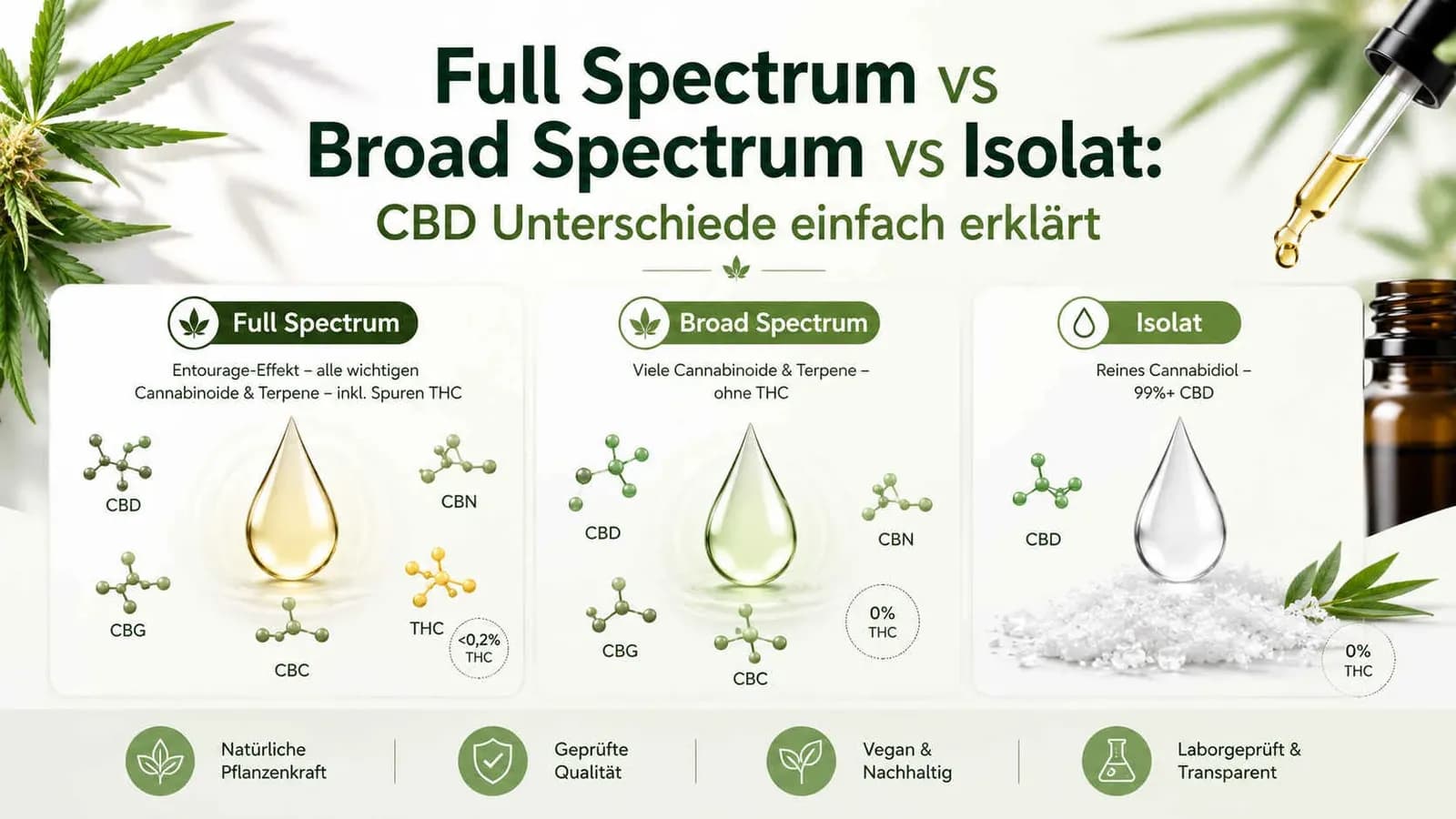
Full spectrum and the entourage effect – explained objectively
Full spectrum CBD oils contain several natural plant components from the
hemp plant. The entourage effect is the term often used in the specialist literature
for this interplay.
Isolate products, on the other hand, contain only a single plant compound.
Hemp oil vs. CBD oil – the differences at a glance
Production
- Hemp oil: pressed seeds
- CBD oil: extract from flowers
Ingredients
- Hemp oil: no cannabinoids
- CBD oil: cannabidiol and other plant compounds
Use
- Hemp oil: nutrition & cosmetics
- CBD oil: wellness use
Price
- Hemp oil: inexpensive
- CBD oil: higher price due to complex processing
How to recognise products without CBD
When buying, you should look for the following information:
- CBD content in milligrams
- independent laboratory analyses
- clear declaration of ingredients
- information on the THC content
- origin and manufacturer information
Names such as “Hemp Oil” or “hemp seed oil” without any CBD information usually indicate
a pure edible oil.
Which oil is suitable when?
Hemp oil if you:
- are looking for a plant-based edible oil
- want to supplement fatty acids
- use a cosmetic or skin care oil
CBD oil if you:
- are looking for a plant product containing cannabinoids
- are interested in the wellness sector
- value tested quality
Conclusion: hemp oil and CBD oil are not comparable
Hemp oil and CBD oil are two completely different products:
- Hemp oil is a food
- CBD oil is a plant extract containing cannabinoids
The choice depends on the desired area of use and the product
composition.
FAQ – hemp oil vs. CBD oil
What is the main difference between hemp oil and CBD oil?
The most important difference lies in the part of the plant used. Hemp oil is made from the
seeds of the hemp plant and contains no cannabinoids. CBD oil is obtained from
flowers and leaves and contains cannabidiol as well as other plant
compounds.
Does hemp oil contain cannabidiol (CBD)?
No. Hemp oil naturally contains no cannabidiol and no other cannabinoids.
It is a plant-based edible oil.
Is hemp oil the same as CBD oil?
No. Despite their similar names, hemp oil and CBD oil are two completely different
products with different properties and areas of use.
What is hemp oil used for?
Hemp oil is mainly used as a food or in cosmetics, for
example as an edible oil, skin care oil or carrier oil in care products.
What is CBD oil used for?
CBD oil is used in the wellness and lifestyle sector. Users report
individual experiences, which can vary depending on product quality and personal
use.
Is CBD oil legal in Switzerland?
Yes. CBD products are legal in Switzerland provided the THC content is below 1 % and
the legal requirements are met.
Why is CBD oil more expensive than hemp oil?
CBD oil is usually considerably more costly than hemp oil because of the complex extraction from flowers and the necessary
quality controls.
How can I tell whether a product really contains CBD?
A genuine CBD oil states the CBD content in milligrams, has
laboratory analyses and transparently names the THC value and the manufacturer.
Note
This article is for general information only and does not replace
medical or therapeutic advice. Cannabidiol (CBD) is not a medicinal product. No
healing or health claims are made.
Legal notice (Switzerland)
CBD products are legal in Switzerland provided the THC content is below 1 %. The
content refers exclusively to the legal situation in Switzerland.
Disclaimer
For health questions, you should consult a qualified medical
professional.
Categories