Law & Safety
Driving in Switzerland with CBD - Can you drive a car with CBD?
By Vapor Spirit Fachteam
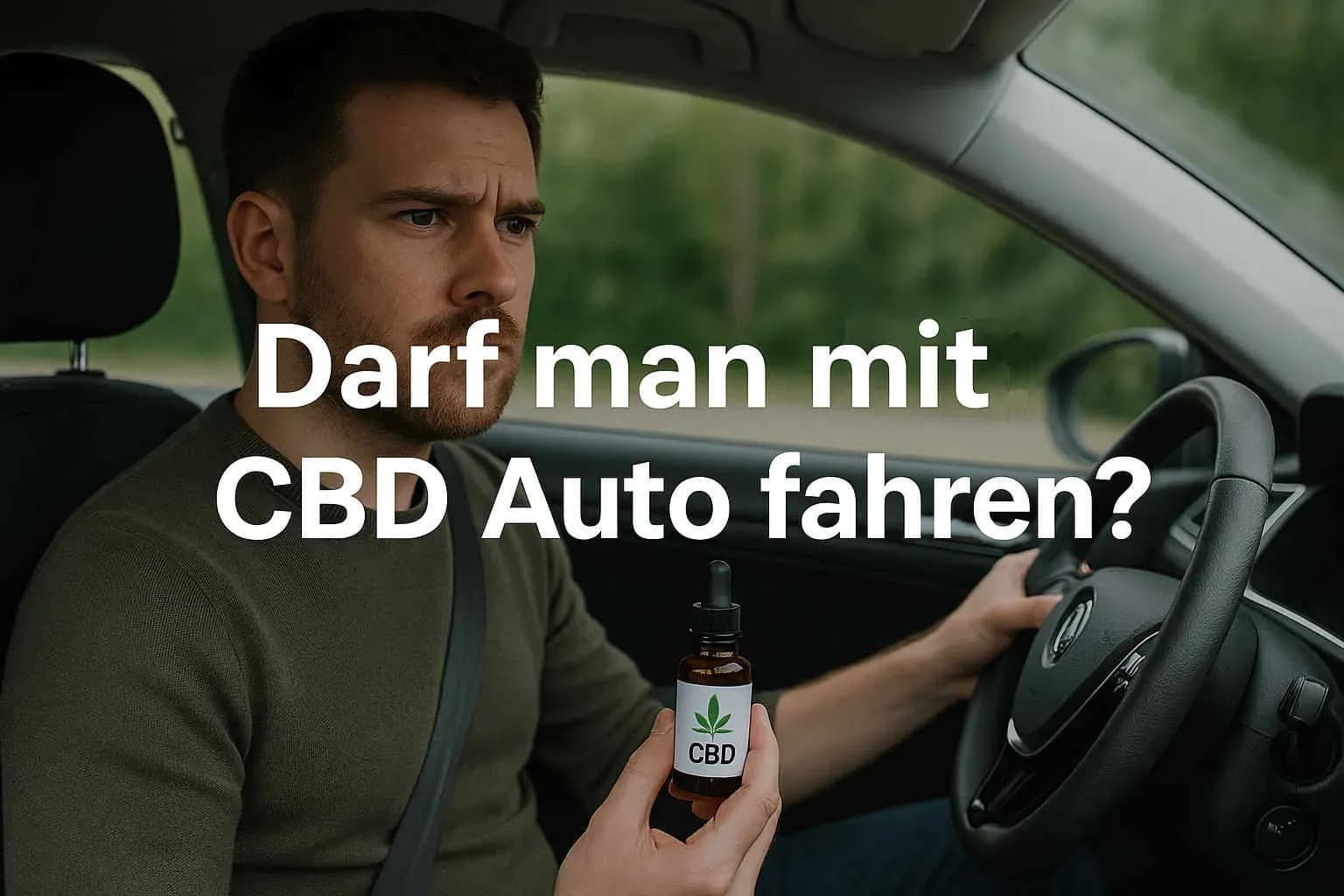
Are you allowed to drive in Switzerland after consuming CBD? CBD products are legal as long as the THC content is below 1 %.
However, they can contain THC, and a strict limit applies to THC in road traffic.
Even small amounts can lead to unfitness to drive and
a positive drug test. Therefore: do not drive a vehicle after consuming CBD products.
Is it permitted to drive after consuming CBD?
The short answer is: you should not drive a vehicle after consuming CBD products.
In the following article you will learn why, which THC limits apply
and what can happen during police checks.
Legal situation in Switzerland: CBD and road traffic
What does the law say?
In Switzerland, CBD products with a THC content below 1 % are legal. This means:
You may buy and consume them. For driving, however, the following applies: even legal
CBD products can contain THC – you should not drive a vehicle after consuming them.
- CBD (cannabidiol) is not psychoactive, so it does not get you “high”.
- THC (tetrahydrocannabinol), on the other hand, is psychoactive and can affect your ability to react.
- If you consume a product with too high a THC content, this can lead to problems – even if you feel completely sober.
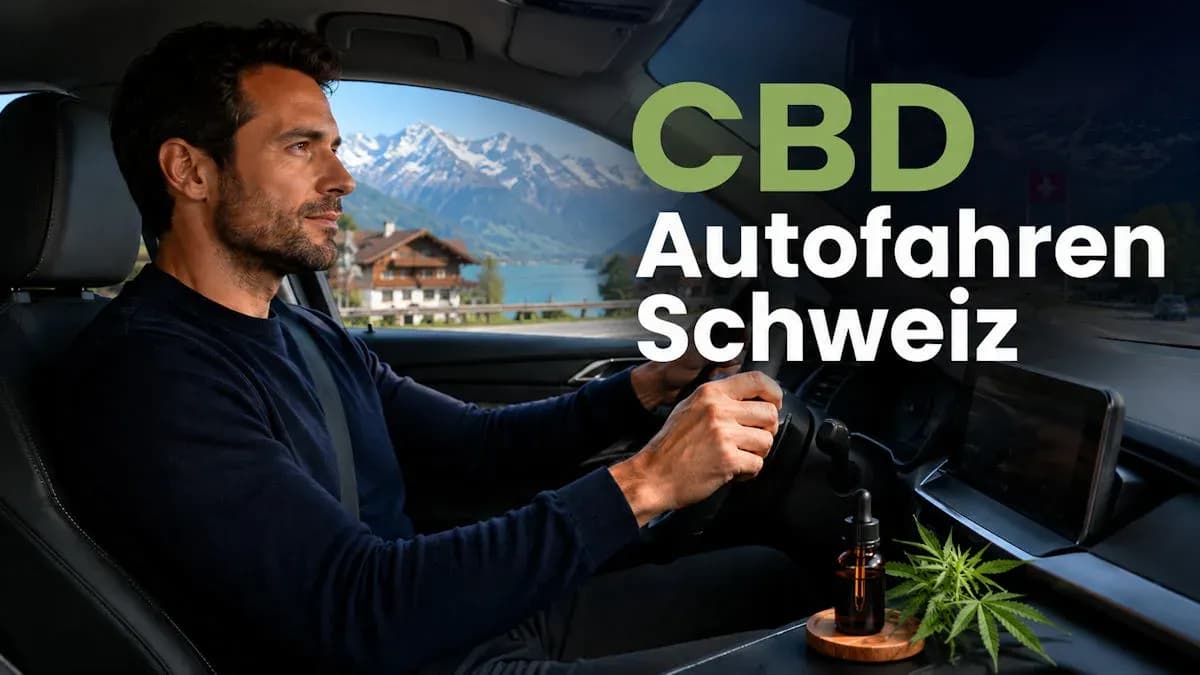
How does CBD affect the body when driving?
Cannabidiol interacts with the endocannabinoid system (ECS) in the body. This system regulates many important processes – including concentration, sleep, relaxation and stress responses.
Effect on fitness to drive
- CBD is not intoxicating, but it is perceived differently from person to person.
- CBD products can contain THC, which impairs the ability to drive.
- In very high doses, cannabidiol can also make you tired.
👉 Tip: Do not drive a vehicle after consuming CBD products – even if you feel sober.
Police checks & drug tests – what you should know
What happens during a traffic check?
If drugs are suspected, the police do not test for cannabidiol but for THC or its metabolites (THC-COOH).
With full spectrum cannabidiol products, it can happen that tiny amounts of THC in the
blood are detectable, even though the CBD consumption was legal.
Possible consequences
If the THC level in the blood exceeds the legal limit (1.5 µg/L), you face
a driving ban or a report for driving under the influence.
That is why certified manufacturers with transparent laboratory analyses are what you should
look for.
Driving and CBD products: what drivers need to look out for
Not every CBD product is the same – especially when it comes to driving, the
difference is decisive:
Full spectrum products
- Contain all cannabinoids of the plant – including THC (below 1 %).
- Offer the entourage effect, but small traces of THC can show up in a test.
Broad spectrum products
- Contain many cannabinoids, but no THC. Broad spectrum / THC-free
- Lower risk of THC detection – still, do not drive a vehicle after consumption.
Isolates: pure CBD 100%
- Contain only cannabidiol, no THC whatsoever.
- Contains no THC – but even this is not a free pass for driving.
Vaporspirit.ch offers exclusively high-quality, laboratory-tested products made with Bio Suisse
& Demeter raw materials, without trans-cannabinoids and with a guaranteed legal THC content
below 1 %. Pure CBD isolates from Switzerland.
When is it better not to drive?
Even though CBD is legal: you should not drive a vehicle after consuming CBD products. This is particularly important:
- with full spectrum products such as CBD oil, which can contain THC,
- if you take medication or suspect an interaction,
- if you feel tired or exhausted.
💬 Basic rule: Anyone who has consumed CBD products or feels sleepy, dazed or unsteady must not drive a vehicle.
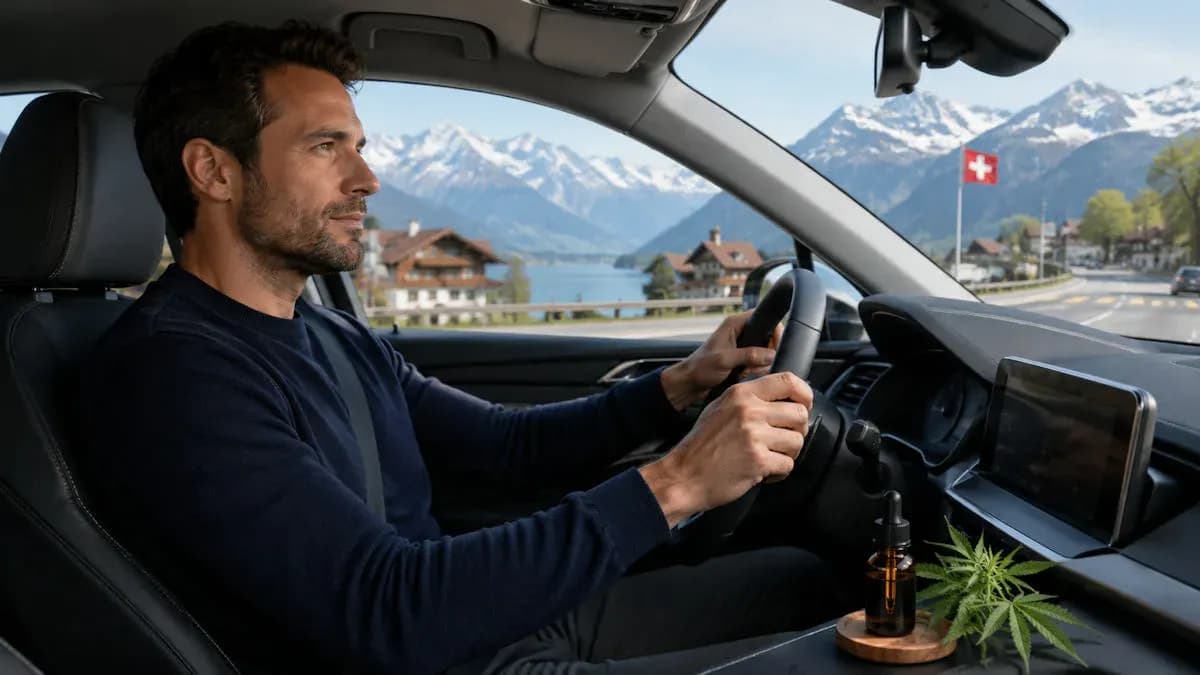
What to look out for when buying for driving
Laboratory certificates & transparency
Reputable manufacturers such as Vaporspirit make laboratory analyses public. These guarantee
that:
- the THC content is below 1 %,
- no synthetic additives or trans-cannabinoids are contained,
- and the products are manufactured organically & free of harmful substances.
This ensures that you use legal, declared products. For driving, however, the rule remains: do not drive a vehicle after consumption.
Driving in Switzerland with CBD: difference between Switzerland and the EU
In Switzerland, products with less than 1 % THC are permitted.
In the EU, however, a limit of 0,2 % THC applies.
So if you travel abroad with products or drive there, you should
definitely check whether your product is EU-compliant.
Conclusion: CBD and driving – responsibility comes first
CBD is not intoxicating and legal in Switzerland, as long as the THC content is below 1 %
and stays there.
However, this limit concerns the THC content of the product – not your ability to drive. A strict limit applies to THC in the blood in road traffic.
You should therefore:
- not drive a vehicle after consuming CBD products,
- only use certified Swiss products,
- and always pay attention to your own well-being.
👉 Vaporspirit.ch has been offering the purest, organically certified full spectrum oils since 2015, without
trans-cannabinoids – perfect for anyone who values quality, safety and trust.
FAQ – Frequently asked questions about CBD and driving
1. Is CBD detected in a drug test?
No. Drug tests check for THC, not for cannabidiol. With full spectrum products, however,
a small amount of THC can appear in the blood.
2. Can CBD impair my fitness to drive?
Yes, that is possible. CBD is not intoxicating but can make you tired, and CBD products can contain THC.
You should therefore not drive a vehicle after consumption.
3. What happens if I take CBD with 0.8 % THC?
Buying and consuming such a product is legal in Switzerland. However, it contains THC, which can be detectable in the blood
and can impair the ability to drive – do not drive a vehicle after consumption.
4. Which products are safe for drivers?
No CBD product is a free pass for driving. Broad spectrum or isolate products – for example laboratory-tested by Vaporspirit – contain
no or hardly any THC; after consumption the rule still applies: do not drive a vehicle.
5. Can I travel abroad with CBD products?
Only if the product complies with the THC limit of the destination country. In the EU, only
products with less than 0.2 % THC are permitted.
Driving in Switzerland with CBD: what is important
CBD and driving in Switzerland:
When driving in Switzerland, what matters is whether THC is detectable in the blood. Cannabidiol itself does not produce a psychoactive effect
like THC. Nevertheless, many products contain small amounts of THC, which can accumulate in the body with regular consumption. Especially with products with a high
CBD content, there is a greater risk that drug tests react and that a false positive result
is produced.
Enjoy CBD with caution when driving
Cannabidiol may be consumed in Switzerland, but caution is advised when driving.
Although cannabidiol itself does not have a psychoactive effect like THC, products can
contain THC and CBD – sometimes in traces of up to 1 %. With a high intake of CBD
or regular use over at least three months, this THC content can
accumulate in the body. This can lead to a false positive result in a drug test,
similar to after consuming cannabis, even though there is no intoxication.
👉 Enjoy responsibly – and do not drive after consumption.
Using CBD when driving often raises questions, especially when a test
comes back positive. What matters is whether products were purchased legally and have a
low THC content. Legal CBD products with high cannabidiol content and from
CBD-rich hemp strains do not have a strong psychotropic effect. The main problem is
the psychotropic effects of THC. Depending on the measurement, values such as
1,5 micrograms per litre or figures in ng ml in the blood may be relevant.
Consumers should therefore look for tested quality, laboratory analyses and
THC-compliant products when buying.
Note
This article is for general information only and does not constitute
medical advice. Cannabidiol (CBD) is not a medicinal product. No
healing or health claims are made.
Legal notice (Switzerland)
CBD products are legal in Switzerland provided the THC content is below 1 %.
The content refers exclusively to the legal situation in Switzerland.
Disclaimer
In the event of health complaints, a medical professional should always
be consulted.
Categories